
SEO Automation Software: Tools Compared by Task for 2026
27 November 2026
Dieser Artikel ist noch nicht auf Deutsch verfügbar und wird daher auf Englisch angezeigt.
Your product catalog keeps growing, your backlog of missing meta titles sits untouched in a spreadsheet, and your editorial calendar slipped another two weeks. You don't need another dashboard telling you that forty product pages lack alt text. You need software that takes repetitive work off your plate without breaking live pages or publishing thin copy.
Teams often get burned when buying SEO automation software because they expect one subscription to handle the whole search workflow. In practice, search automation splits into five distinct tasks: keyword and competitor research, technical crawling, on-page content optimization, site-wide implementation, and visual search publishing for channels like Pinterest. According to a 2024 survey attributed to Semrush and cited by Gaugius, 63% of marketers reported using SEO automation tools for tasks like rank tracking, auditing, or content optimization. Yet most platforms only automate one or two of those stages well.
Automating a report isn't the same as automating execution. Before you pay for any platform, name the exact step where your team gets stuck every week.
Below, nine tools are grouped by the specific workflow step they automate, alongside plain notes on which steps each tool skips so you can assemble a lean stack instead of chasing a mythical all-in-one winner.
Table of Contents
- 1. Outrank
- 2. Pin Generator
- 3. Semrush
- 4. Ahrefs
- 5. SE Ranking
- 6. Screaming Frog SEO Spider
- 7. Surfer
- 8. Alli AI
- 9. seoClarity
- How the SEO automation software compares by task, scope, and pricing visibility
- Building a Stack That Matches Your Actual Bottleneck
1. Outrank
If your primary bottleneck is turning target keywords into finished, published blog posts, SEO automation software like Outrank targets the drafting-to-publishing loop directly. Instead of handing you a spreadsheet of keyword gaps and leaving your writers to do the rest, it runs AI-driven keyword research, drafts long-form articles of up to 3,000 words, generates custom on-brand images, and pushes finished posts straight into your CMS.
Here is a look at how Outrank frames its end-to-end article automation workflow.
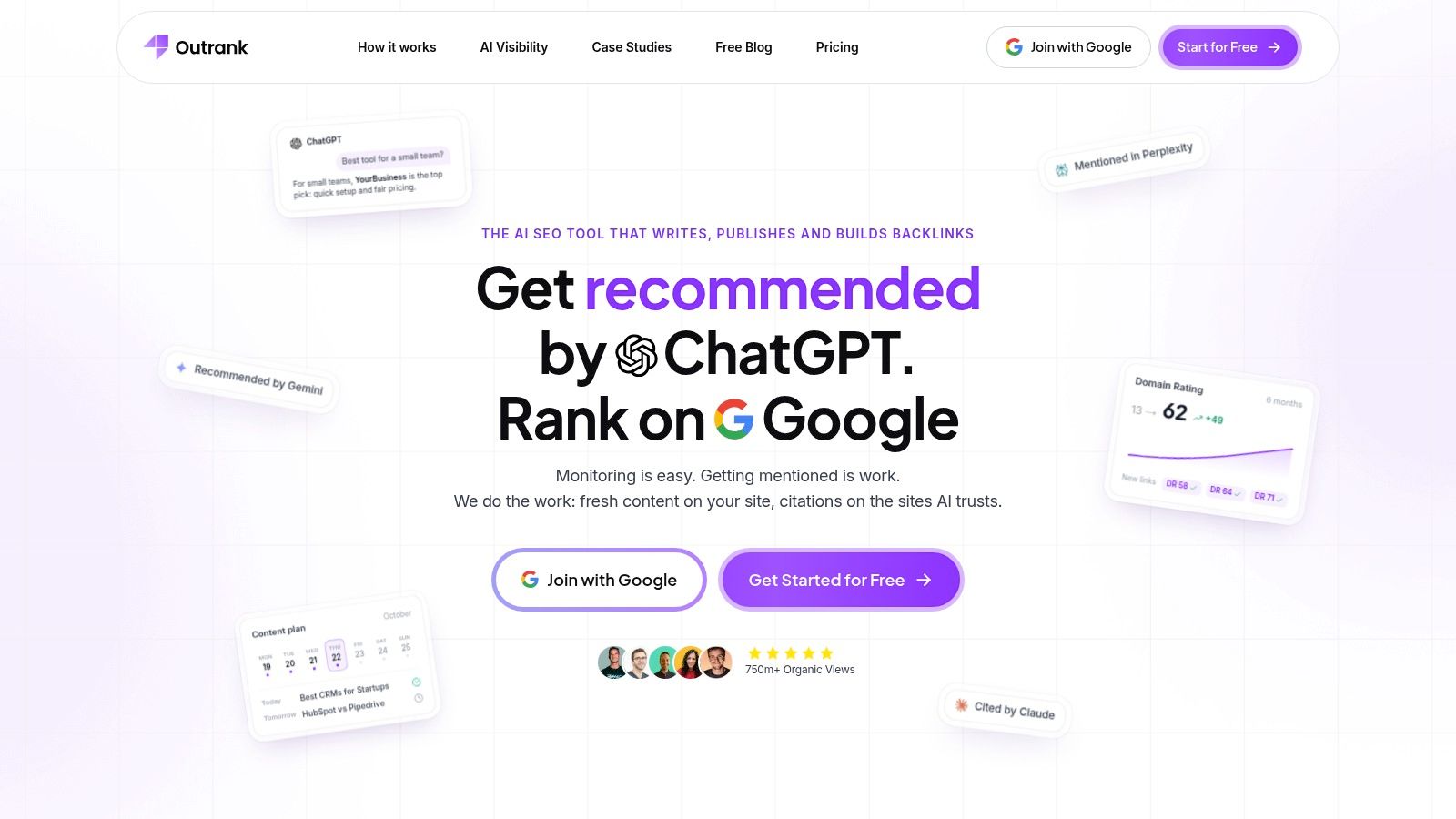
For lean marketing teams or founders who struggle to ship consistent editorial content, native uploads to WordPress, Webflow, and Notion remove the copy-paste friction that kills momentum. You can tailor output to match your brand's voice, run unlimited AI rewrites when a draft misses the mark, and invite teammates through multi-user access. Teams with custom pipelines can also hook into its API integrations, backed by 24/7 support through a dedicated channel.
Where Outrank fits and where it stops
- Automates content production: Covers keyword selection, long-form drafting, custom visuals, and direct CMS publishing in a single pass.
- Supports team review: Multi-user seats and unlimited rewrites make it workable for small agencies or in-house editors managing multiple sites.
- Skips technical crawling and backlinks: Outrank won't audit redirect chains, diagnose JavaScript rendering bugs, or monitor your backlink profile.
- Skips visual social distribution: Publishing a blog post doesn't turn it into shoppable pins or recurring Pinterest boards.
Speed creates its own governance risk. Google Search documentation on AI-generated content warns that generating many pages with automation without adding user value may constitute scaled content abuse, while stressing accuracy, relevance, and clear oversight. I'd only turn on automated publishing with Outrank after building a human editorial check for product claims, citations, and search intent.
2. Pin Generator
Traditional SEO suites optimize pages for Google while ignoring visual search engines that drive steady referral traffic for eCommerce stores, bloggers, and affiliate sites. We built our Pinterest automation platform to cover the publishing step those stacks miss: turning products, articles, and feeds into scheduled pins with minimal manual effort. A guided nine-step setup wizard walks you through frequency, source, content, design, SEO, profile, AI options, boards, and confirmation, so a catalog stays active every week.
The workspace combines visual templates, AI copy, and scheduling controls in one dashboard.
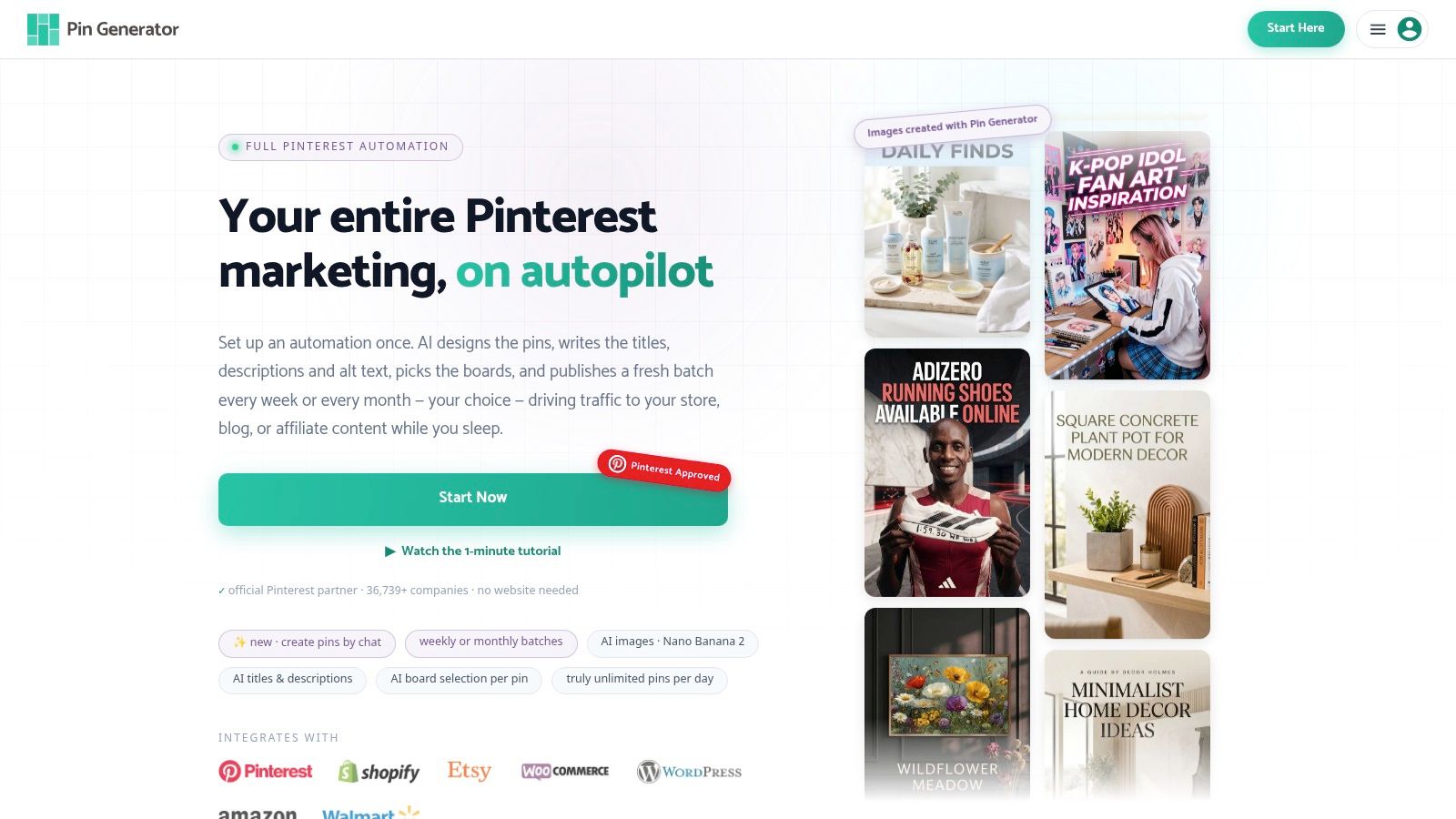
Instead of manually exporting product photos into a design app, the tool connects directly to Shopify, Etsy, WooCommerce, Amazon, Walmart, WordPress, any website via sitemap scraping, RSS and Atom feeds, CSV files, and a REST API. Once connected, a one-click brand analysis builds a reusable design profile from your site or images, capturing brand colors, style keywords, mood, and font feel. Automatic SEO researches relevant Pinterest keywords for each batch and weaves them into AI-generated titles, descriptions, and alt text, while Smart Scheduling posts pins at optimal times and supports repeating pins. For deeper workflow setups, see our guide to Pinterest automation software.
Practical capabilities and credit math
- Transparent usage credits: Automatic SEO costs 2 credits per URL researched, and automatic SEO with trend targeting uses 2 credits per post. Generating AI text costs 0.5 credits, while a Nano Banana 2 high-quality AI image uses 24 credits.
- Cross-channel reach: The Content Generator extends automated publishing beyond Pinterest to Instagram, LinkedIn, X, and Facebook from one workspace.
- Risk-free testing: Free accounts include pin credits to test brand analysis, AI pins, and scheduling with no website needed, and setting up a free automation that generates preview pins in your brand colors requires no credit card.
- Time savings at scale: Users save 10+ hours per week on pin creation and scheduling. Live leaderboards show anonymized profile results, though individual outcomes vary.
Governance check: Even with brand profiles, reusable templates, and bulk editing, review AI-generated copy, keyword matches, and board assignments on new catalogs before letting weekly batches run unattended.
The publishing step is where our coverage ends. Pin Generator won't run technical Google crawls, audit backlink profiles, or push long-form articles into WordPress, so pair it with a research suite or CMS publisher when web search and visual search both matter.
3. Semrush
When teams ask for an all-in-one monitoring and research hub, Semrush is usually the benchmark they picture. It automates the recurring intelligence layer of SEO: scheduled Site Audit crawls with prioritized issue lists, Position Tracking across target keywords, competitor research, and scheduled reporting. That broad footprint reflects why multi-function suites anchor most search budgets. A 2025 market analysis published via GlobeNewswire estimated the global SEO software market at USD 74.82 billion in 2024, with projected growth to USD 84.94 billion in 2025 and USD 265.91 billion by 2034, a 13.52% compound annual growth rate from 2025 through 2034.
In day-to-day practice, Semrush saves hours by pulling site health, keyword movements, and rival domains into one recurring digest. You set crawl schedules once, flag high-priority technical errors, and export client or leadership reports automatically. Higher-tier plans add API access for custom BI pipelines.
Where Semrush falls short for lean teams
- No automated code deployment: Site Audit flags broken canonicals and slow templates, but a developer or SEO specialist still has to open the CMS and apply the fixes.
- Feature bloat for small sites: Solo founders often pay for dozens of modules they never open while still lacking automated content publishing.
- Traditional web focus: Keyword databases center on standard search engines rather than visual discovery networks. If Pinterest drives part of your store traffic, pairing Semrush with our Pinterest keyword research tool covers the demand signals web trackers miss.
Semrush earns its seat when you need continuous competitive visibility and recurring client reporting, provided you already have people or other tools to execute on the findings.
4. Ahrefs
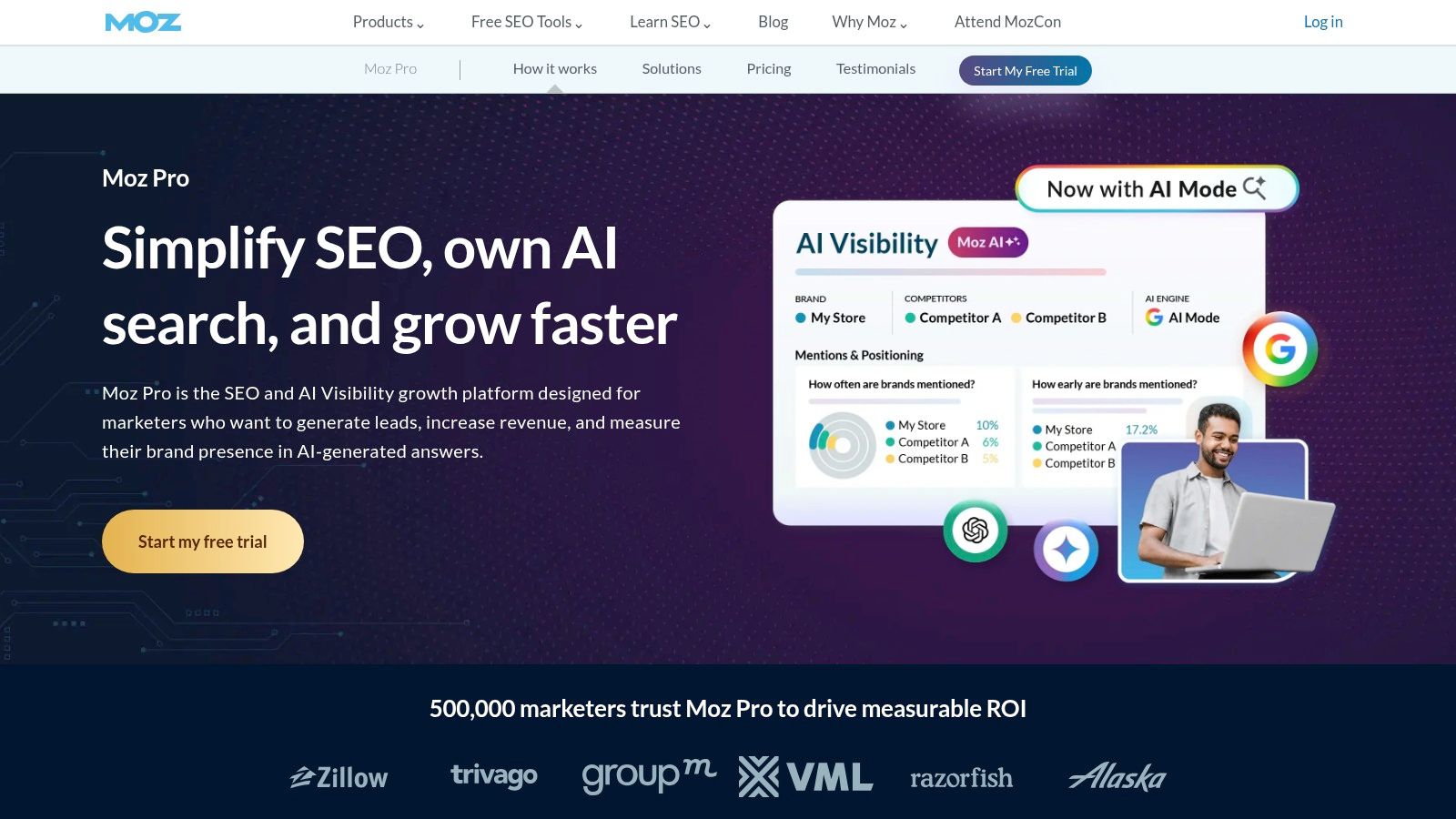
Say a specialty eCommerce brand notices organic traffic slipping on twenty category pages while two newer competitors climb past them. Running a quick check in Ahrefs tells you within minutes whether rivals earned fresh editorial links, published deeper buying guides, or fixed internal linking structures. Its strength lies in automating backlink intelligence, competitor research, keyword discovery, Rank Tracker updates, and recurring Site Audit checks.
Below is the main workspace entry point for Ahrefs' research and monitoring suite.
A separate 2024 to 2030 industry estimate from Global Information placed the global SEO software market at USD 14.6 billion in 2024, projected to reach USD 29.9 billion by 2030 at a 12.7% compound annual growth rate, with the U.S. market alone at USD 4.0 billion in 2024. That report highlighted artificial intelligence and machine learning shifting modern tools toward automated competitor intelligence, backlink analysis, and predictive keyword volatility tracking, which sits right in Ahrefs' wheelhouse.
Decision intelligence versus execution
Site Explorer remains one of the clearest ways to inspect referring domains, anchor text patterns, and top-performing competitor pages without building custom scrapers. Automated audit schedules also catch newly broken links or sudden meta-tag drops before rankings crater.
The trade-off is straightforward: Ahrefs is an insight engine, not an execution engine. It doesn't rewrite your product descriptions, push schema to your live storefront, or schedule social creatives. Premium pricing and strict plan usage limits can also sting if you only manage a single small website, so check credit and crawl allowances against your actual monthly queries before committing.
Buy Ahrefs when your bottleneck is knowing which pages and links actually move the needle, not when you're looking for hands-free publishing.
5. SE Ranking
Small agencies and growing in-house teams often get squeezed between stripped-down rank trackers and costly enterprise suites. SE Ranking fills that middle tier by automating daily rank tracking, website audits, keyword and competitor research, and page-change monitoring (available on Growth plans and above) inside a structured, project-based layout.
Here is an overview of SE Ranking's interface for tracking search performance and site health.
What separates SE Ranking from older monitoring tools is how it adapts to modern search surfaces, pairing traditional SERP tracking with AI visibility tracking options, API and MCP access, and published tier limits that make capacity easy to budget.
- Automated change alerts: Page-change monitoring notifies your team when a developer, plugin update, or client edits a title tag, robots directive, or canonical URL without warning.
- AI search monitoring: Recent Google Search updates documentation emphasizes evaluating performance in AI experiences, making visibility checks beyond ten blue links essential for teams watching impressions climb while click-through rates dip.
- Clear capacity planning: Defined project, keyword, and audit-page limits let agencies estimate costs per client before onboarding.
Trade-offs to check before signing up
SE Ranking automates monitoring and reporting well, yet add-ons for agency reporting or expanded features can raise your monthly bill faster than expected. Always map your total tracked keywords and crawlable URLs against the plan caps.
Just like Semrush and Ahrefs, SE Ranking stops at diagnosis and tracking. It won't deploy template-level fixes to your CMS or automate visual asset pipelines, so you'll still pair it with an editor, a developer, or an execution tool.
6. Screaming Frog SEO Spider
When a large eCommerce site loses indexation overnight, cloud dashboards often sample too shallowly or obscure the root cause. That's where Screaming Frog SEO Spider earns its reputation. It's a desktop website crawler for Windows, macOS, and Linux built specifically to automate deep technical SEO audits, surfacing broken links, redirect chains, duplicate metadata, canonical conflicts, and orphan pages at granular scale.
Below is a view of Screaming Frog's technical auditing capabilities in action.
According to a Research and Markets report, the global SEO software market was estimated at roughly $14.6 billion in 2025 and is projected to reach $35.7 billion by 2032 at a 13.6% compound annual growth rate, propelled in part by marketing teams demanding automated audits and structured prioritization. With a paid licence, Screaming Frog schedules recurring crawls, renders JavaScript, runs crawl-over-crawl comparisons, and pulls live performance metrics from Google Analytics, Google Search Console, and PageSpeed Insights.
Strengths and hard boundaries
- Low barrier to test: The free version crawls up to 500 URLs per crawl, making it ideal for small blogs or quick spot checks before buying a licence.
- Custom extraction power: Teams can scrape price tags, schema fields, or stock statuses across thousands of pages into clean CSV exports.
- Hardware dependency: Massive crawls demand substantial local RAM or a configured cloud machine, or the crawl stalls.
- Zero execution or content workflow: Screaming Frog isn't a keyword database, content editor, or deployment tool. You need technical SEO judgment to separate critical crawl traps from harmless noise, and another system to ship the fixes.
7. Surfer
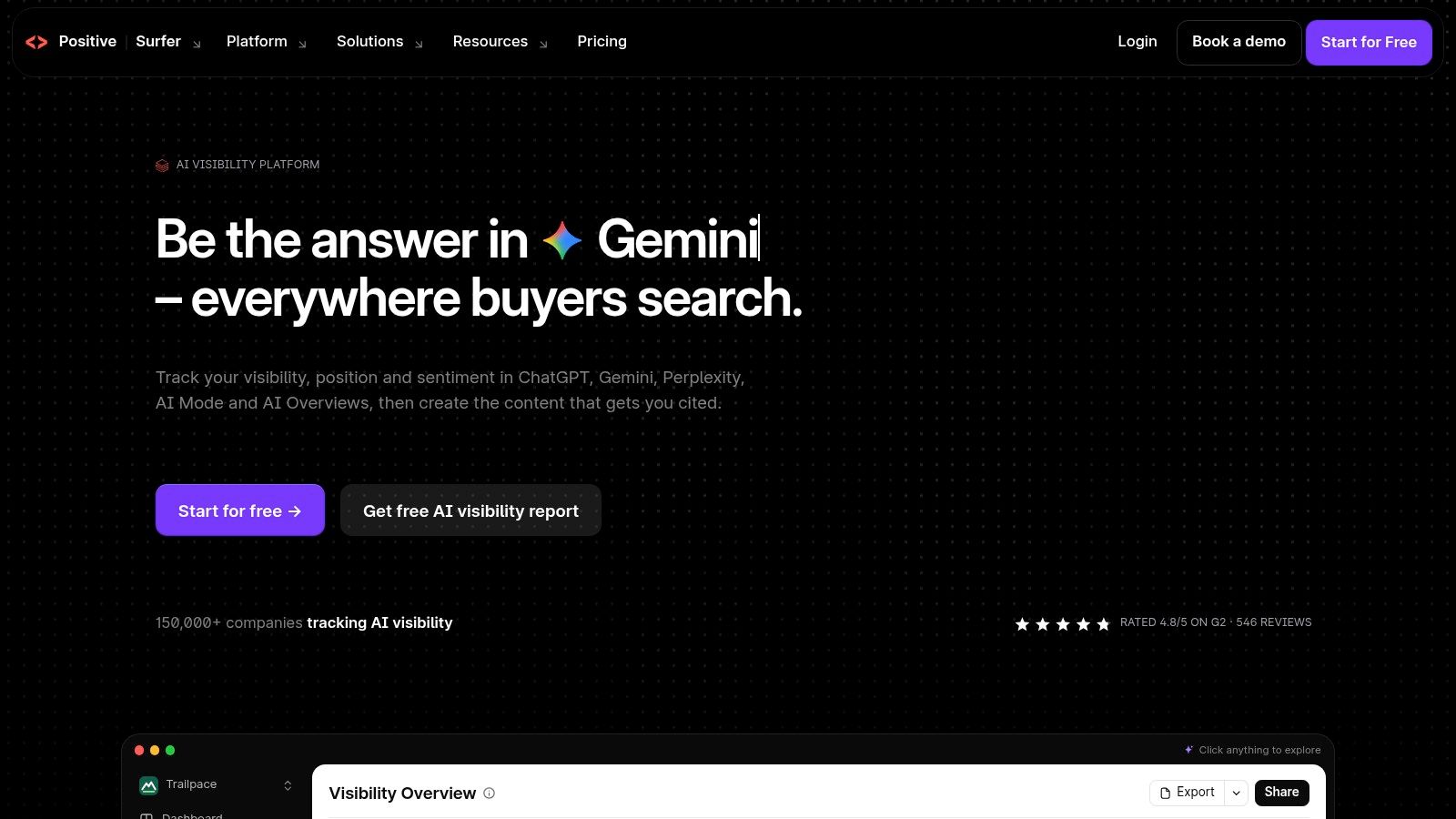
Some teams already know which keywords they want and have writers ready, yet their published articles stall on page two because drafts miss key subtopics or structural cues. Surfer automates that specific on-page optimization and content refresh step. Its Content Editor grades drafts in real time against live search-result patterns, suggesting relevant terms, heading structures, and word-count ranges while writers work.
Beyond single articles, Topical Maps help editors plan interconnected clusters so you don't accidentally write three overlapping posts that cannibalize the same query. Eligible plans also include AI article generation to accelerate first drafts, while Content Audit scans published URLs to flag aging pages that are easiest to refresh for quick ranking gains.
Where Surfer belongs in your stack
- Built for collaborative writing: Writers, editors, and freelancers can share briefs and live scores without passing messy spreadsheets back and forth.
- Fast refresh triage: Content Audit removes guesswork when deciding which older blog posts deserve an update first.
- Score discipline matters: High optimization scores don't guarantee accuracy or originality. Treat term suggestions as guardrails rather than stuffing awkward phrases into clean prose.
- Not a technical or link platform: Surfer doesn't replace a desktop crawler like Screaming Frog, a backlink suite like Ahrefs, or a visual publishing engine for Pinterest.
Check monthly article and audit allowances carefully before choosing a tier, because high-volume content teams hit credit ceilings quickly.
8. Alli AI
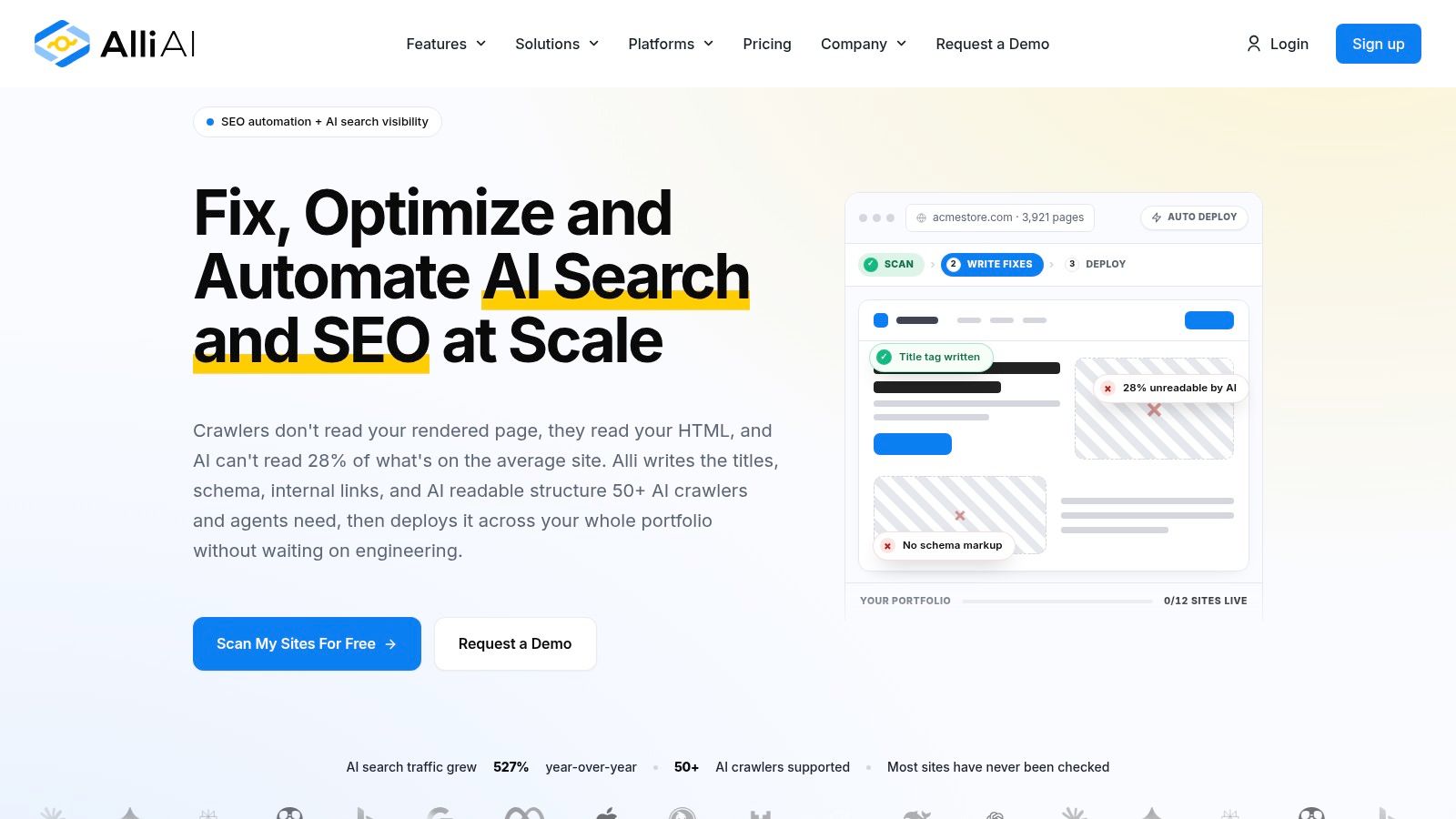
Every experienced SEO lead has watched a perfectly good technical audit sit in an engineering Jira backlog for six months. Alli AI exists to break that exact implementation bottleneck. Instead of waiting for sprint cycles to update meta titles, internal links, or on-page elements across thousands of URLs, it lets SEO teams build site-wide optimization rules and deploy changes in bulk through an installed snippet.
Here is how Alli AI presents its bulk deployment and optimization platform.
Alongside bulk deployment, current plans bundle keyword tracking, reporting, site-speed tools, and AI search visibility features, plus a trial period so teams can test workflow fit. Agencies juggling multiple client CMS setups appreciate managing bulk on-page edits from a single interface rather than logging into ten different admin panels.
Speed versus site governance
Deploying live edits outside your primary codebase carries real risk if no one checks the rules before pushing them live. A loose wildcard rule can overwrite carefully crafted landing page headlines or strip brand phrasing across an entire category in seconds.
Deployment guardrail: Never approve bulk site-wide rules without testing on a narrow URL group first, logging every edit, and confirming with your engineering team that snippet-based injection meets your site's security and governance standards.
Alli AI also carries a higher starting price than many self-serve research tools. It solves live deployment friction, not deep link intelligence, long-form editorial creation, or Pinterest catalog distribution.
9. seoClarity
Large publishers and multi-region eCommerce brands outgrow single-purpose plugins fast. When you manage millions of URLs across separate product, engineering, and regional marketing teams, seoClarity connects enterprise SEO data, technical analysis, content workflows, and live execution inside one governed system. Its ClarityAutomate layer lets authorized SEO specialists deploy site-wide changes, manage structured data, and run controlled SEO tests without filing a developer ticket for every tweak.
Below is a glimpse at how seoClarity frames visibility and enterprise search operations.
Structured data automation illustrates why closed-loop measurement matters at enterprise scale. As Google Search documentation on structured data explains, valid schema gives search engines explicit clues about page meaning and can make pages eligible for richer search appearances, yet implementation never guarantees a rich result. Google specifically recommends recording performance over time, which is why pairing deployment with seoClarity's on-page change monitoring and BI or task-management integrations beats fire-and-forget automation.
Built for scale, not small blogs
- Full execution layer: ClarityAutomate bridges the gap between enterprise diagnostics and live production updates, including schema and split testing.
- Cross-team integrations: Native ties into analytics platforms, business intelligence dashboards, and project trackers align SEO changes with engineering workflows.
- Heavy onboarding commitment: Getting real value requires cross-department alignment, clear approval workflows, and dedicated internal owners.
- Quote-led enterprise pricing: Because packages are built for complex organizations, smaller stores and lean creator teams will find the scope and cost far beyond what they need.
seoClarity excels at web-scale search operations, though it still doesn't automate visual pin design or recurring social board publishing.
How the SEO automation software compares by task, scope, and pricing visibility
This comparison works best by workflow step, not by overall ranking. Each tool covers a different slice of research, crawling, optimization, implementation, and publishing. The key is knowing what each one leaves to another product.
| Item | Best for | Primary automated task | Deploys changes automatically | Pricing visibility |
|---|---|---|---|---|
| Outrank | Teams automating SEO content production | Generates and publishes SEO articles | Yes, publishes to supported platforms | Pricing details not given in this comparison |
| Pin Generator (recommended) | Pinterest marketers and online stores | Creates, optimizes, and schedules pins | Yes, schedules pins for publishing | Free automation setup, no card needed, 2 credits per URL researched, 2 credits for automatic SEO and trend targeting per post |
| Semrush | Teams needing an all-in-one SEO research suite | Audits sites, tracks rankings, and researches keywords | No, recommendations need implementation | Pricing details not given in this comparison |
| Ahrefs | Teams focused on backlinks and competitor research | Analyzes links, keywords, rankings, and site issues | No, findings generally require manual implementation | Premium pricing, plan details should be checked |
| SE Ranking | Small businesses and agencies managing SEO projects | Tracks rankings, audits sites, and researches competitors | No, primarily monitors and reports | Published plans, allowances vary |
| Screaming Frog SEO Spider | SEO specialists conducting technical audits | Crawls sites to find technical and on-page issues | No, users interpret and fix findings | Free tier available, paid licence for scheduling |
| Surfer | Teams producing or refreshing articles | Guides content optimization and audits pages | No, focused on content guidance | Plan allowances vary, prices not specified |
| Alli AI | Teams implementing SEO changes across many pages | Applies on-page and technical optimizations at scale | Yes, deploys changes across sites | Higher starting price noted, exact price not specified |
| seoClarity | Enterprises managing large-scale SEO execution | Analyzes SEO and implements site-wide changes | Yes, supports execution at scale | Quote-led for many packages |
For research teams, Semrush and Ahrefs cover keyword, ranking, and competitor work, but they do not execute the fixes or publish the content for you. SE Ranking sits in a similar monitoring and reporting lane, with project workflows for agencies and smaller teams. None of these tools handles visual pin creation or recurring Pinterest publishing, so they pair best with a separate visual pipeline.
For technical crawling, Screaming Frog SEO Spider finds site issues, then leaves interpretation and implementation to the SEO specialist. Alli AI and seoClarity move closer to execution, applying site-wide changes after decisions are made. Their trade-off is scope: they solve implementation bottlenecks, not content research or social scheduling.
For content optimization and publishing, Outrank and Surfer serve different needs. Outrank generates and publishes SEO articles, while Surfer guides writers and refreshes existing pages. Pin Generator covers the visual publishing layer, using website or store inputs, sitemap and RSS feeds, keyword research, brand design profiles, and scheduled pins. Its setup follows a guided wizard covering frequency, source, content, design, SEO, profile, AI options, boards, and confirm. It does not replace a technical crawler or a backlink research platform, which is why the strongest stack usually combines one research tool, one implementation tool, and one publishing tool.
Building a Stack That Matches Your Actual Bottleneck
Spending across search marketing keeps climbing because no single product solves every channel or task. According to Sci-Tech Today, the SEO industry was estimated at roughly US$90 billion in 2024, up from US$75 billion in 2023. Teams waste a surprising share of that budget buying overlapping dashboards while leaving their true operational bottleneck untouched.
Instead of hunting for one platform that promises total autopilot, map your weakest weekly step to the category built for it:
- Research and competitive monitoring: Choose Semrush, Ahrefs, or SE Ranking when you don't know which keywords, backlinks, or AI citations deserve priority.
- Technical fault-finding: Run Screaming Frog SEO Spider when indexation, redirect chains, or JavaScript rendering break organic visibility.
- Drafting and on-page scoring: Pick Outrank if you need end-to-end article generation and CMS publishing, or Surfer if human writers need structured scoring and refresh guidance.
- Site-wide implementation: Evaluate Alli AI or seoClarity when approved fixes sit stuck in developer queues for months.
- Visual search and Pinterest publishing: Use a dedicated visual pipeline when product catalogs and blog feeds need recurring designs, keyword-backed descriptions, and scheduled pins.
How to pilot without breaking your site
Before signing an annual contract, audit three things: usage limits (URLs crawled, tracked keywords, or credit burn per batch), CMS or store integrations, and human approval gates. Automation multiplies mistakes just as fast as it multiplies output. Require a human check on factual claims, price synchronization, and site-wide template rules before anything goes live.
Pick one bottleneck and pilot one tool for 30 days. Track whether it cuts hours off your weekly routine and improves measurable discovery, not just vanity output volume. Once that single loop runs cleanly with clear oversight, decide whether a second tool is even necessary.
If your store or blog already produces great products and articles but your Pinterest account sits dormant because designing and writing pins every week takes too long, test Pin Generator with a free automation right now. Connect your website, sitemap, or store to generate preview pins in your brand colors with zero credit card required, see how our nine-step workflow handles keyword research and scheduling, and reclaim ten or more hours every week.
Start by scanning a single URL to generate pins in one click, bulk edit the batch so every title and description matches your brand voice, and synchronize your product catalog with Pinterest whenever you're ready to scale. You'll turn a stalled visual channel into a repeatable, measurable publishing loop without adding another manual chore to your week.