
How to Make Money with Affiliate Marketing Using Pinterest
7 August 2025
Want to make money with affiliate marketing? The core idea is simple: you earn a commission by promoting products you trust to an engaged audience. Every time someone buys through your unique referral link, you get paid. This guide will walk you through the fundamentals of affiliate marketing and show you how to leverage Pinterest—a powerful visual search engine—to drive traffic and sales, especially with the help of a tool like Pin Generator.
Your Path to Affiliate Marketing Success
Affiliate marketing isn't a get-rich-quick scheme; it's a legitimate business model that rewards expertise and trust. It allows you to partner with brands you admire and get paid for sending customers their way. When someone clicks your link and makes a purchase, you get a slice of the profit. It’s a performance-based model that puts you in control of your earnings.
The opportunity is massive and growing. The global affiliate marketing market is expected to jump from $18.5 billion in 2025 to a staggering $31.7 billion by 2031. With over 80% of advertisers running affiliate programs, it's clear that brands see this as a key way to find new customers.
Understanding the Core Components
To build a sustainable affiliate income, you need a solid foundation. This means moving beyond just randomly sharing links and hoping for the best. What you really need is a smart, strategic approach. The most successful affiliates are those who become the go-to resource in their niche.
Let's break down what a successful affiliate strategy really needs. It's not just one thing, but how these core pieces work together to create a system that generates sales.
Core Components of a Successful Affiliate Strategy
| Component | Description | Why It Matters |
|---|---|---|
| A Profitable Niche | A specific topic you're passionate about that also has commercial potential. | This combination keeps you motivated while ensuring you're targeting an audience ready to buy. |
| High-Quality Programs | Partnerships with reputable companies offering fair commissions and valuable products. | Your reputation is on the line. Good partners ensure you're promoting things that actually help your audience. |
| A Consistent Traffic Source | A platform where you can consistently reach your target audience. | No traffic means no clicks and no sales. A reliable source like Pinterest provides a steady stream of potential buyers. |
At the end of the day, a strong strategy is built on these pillars. Get them right, and you're setting yourself up for success from the very beginning.
At its heart, making money with affiliate marketing is about helping people. When you guide your audience to the right solutions for their problems, the commissions naturally follow. It’s a win-win scenario built on trust.
Paving the Way for Traffic and Sales
Okay, so your next move is picking a platform to build an audience and start driving traffic to your affiliate offers. Sure, a blog or YouTube channel are the classic choices, but they often come with a brutal learning curve, endless SEO battles, and intense competition. This is exactly where Pinterest offers a unique—and often overlooked—advantage.
Unlike other social media platforms where people are just doom-scrolling, Pinterest users are planners and buyers. They're on the platform to discover ideas, find inspiration, and actively shop for products to improve their lives. This makes them incredibly receptive to well-placed affiliate recommendations.
By creating visually stunning Pins that link directly to your affiliate products, you can tap into a nonstop flow of traffic from users who are already in a buying mindset. If you're just getting started, digging into some essential affiliate marketing tips for beginners can give you a really solid foundation.
Later on, we'll dive into how you can use Pin Generator to put this entire process on autopilot.
Finding Your Niche and High-Value Affiliate Programs
The absolute first thing you need to do to make money with affiliate marketing is pick the right niche. This isn't just about choosing a random topic; it's about finding that sweet spot where what you're genuinely passionate about slams right into what people are willing to pay for. If you don’t have the passion, you'll burn out. If there's no profit, you’ve just got a hobby.
Think of it this way: your niche is your own little corner of the internet where you become the go-to, trusted expert. It could be anything, from sustainable living for tiny apartment dwellers to high-performance gaming gear for Twitch streamers. The trick is to get specific. Forget "fitness"—think "postpartum fitness for new moms." Ditch "cooking" and try "30-minute vegan meals for busy families."
This laser-focused approach is how you connect with a real, dedicated audience that’s actively looking for answers you can provide.
Brainstorming and Validating Your Niche
Start by just listing out your interests, skills, and things you actually enjoy talking about. What do your friends and family always ask for your advice on? What problems have you solved for yourself that you know others are struggling with too?
Once you've got a list, it's time for a quick reality check:
- Audience Interest: Are people really searching for this stuff? A quick look on Pinterest or Google for your niche ideas will tell you a lot. If you see active communities, popular blogs, and a ton of "how-to" content, you're onto something.
- Monetization Potential: Can you naturally recommend products or services? If your niche is "home organization," you could promote storage containers, cool planners, or even online courses.
- Competition Level: Seeing a little competition is a good sign—it proves a market exists. But you probably want to steer clear of topics completely dominated by massive, established blogs unless you have a truly unique angle.
Choosing the right niche is the foundation for building a real business on a platform like Pinterest. In fact, understanding how to use Pinterest for business is nearly impossible without first having a clear audience and topic.
Identifying and Selecting Affiliate Programs
With your niche locked in, it's time to find companies to partner with. When you're ready to find your niche, it's essential to understand how to start identifying valuable affiliate programs that actually make sense for your content. You’ve basically got two main routes to take here.
You can go through Affiliate Networks, which are massive marketplaces like ShareASale or Rakuten. They act as the middleman, hosting thousands of brands under one roof, which makes it super easy to find and apply to a bunch of programs at once.
Or, you can find Direct Programs. Lots of companies run their own affiliate programs right from their websites. These can sometimes offer better commission rates or more direct support since you’re working straight with the brand.
This infographic lays out the typical workflow for an affiliate marketer, starting with what we just talked about: researching profitable topics and products.
As you can see, it all begins with locking down that niche—a step that shapes every single thing you'll do on your affiliate marketing journey.
Whatever you do, don't just chase the highest commission rate. Your reputation is everything. Promoting a garbage product just for a bigger payout will absolutely torch the trust you've worked so hard to build with your audience.
When you're looking at a potential affiliate partner, just ask yourself one simple question: "Would I honestly recommend this to a friend?" If the answer is no, walk away. Your audience's trust is worth way more than any single commission check.
Brands know how powerful this trust is. On average, companies that use affiliate marketing see a return on investment (ROI) of $15 for every $1 spent. This works especially well in popular niches like travel, beauty, education, and home decor, where people are actively looking for recommendations they can trust.
This data really shows why picking a partner that provides real value is so important—it’s a win for everyone involved. Once you have a solid niche and have partnered with quality brands, you have the building blocks for success. The next piece of the puzzle is getting your recommendations in front of the right eyeballs, and that's where a visual discovery engine like Pinterest really shines.
Why Pinterest Is a Goldmine for Affiliate Traffic
While many aspiring affiliate marketers fight for attention on Google, there's a massive, often-overlooked opportunity waiting on Pinterest. It's easy to dismiss it as just another social media app, but that's a huge mistake. Pinterest isn't social media; it's a visual discovery engine. Millions of people go there daily to find inspiration, plan projects, and—most importantly for affiliates—to shop.
That distinction is everything. Unlike someone passively scrolling a social feed, Pinterest users are actively looking ahead. They are planning everything from tonight's dinner to a full home remodel. This "planning" mindset means they aren't just open to product recommendations; they're actively searching for them. This creates the perfect environment to make money with affiliate marketing.
The Unique Power of the Pinterest User
Let's walk through a typical user journey. Someone is dreaming up a home office remodel. They hop on Pinterest and search for "small home office ideas," instantly seeing thousands of gorgeous, inspiring images. Their eyes land on a Pin showcasing a sleek, minimalist desk that would be perfect for their tiny spare room.
This is where the magic happens for an affiliate. If that Pin links to your blog post reviewing the best minimalist desks—or even goes straight to the product page with your affiliate link—you've just connected with a buyer at the exact moment they're looking for a solution.
This audience isn't just window shopping; they have high commercial intent. In fact, a huge chunk of weekly Pinners have actually bought something based on the Pins they've seen. They come to the platform ready to act, which makes them incredibly valuable for affiliates.
Pinterest users aren't just looking for products; they're looking for possibilities. Your job as an affiliate marketer is to show them how your recommended products can help them achieve their vision, whether it's a cozier living room, a healthier meal plan, or a more organized life.
This user behavior gives you a direct line to motivated buyers without needing a PhD in SEO or a massive ad budget.
Tapping into a Sustainable Traffic Stream
One of the most powerful things about Pinterest is the longevity of your content. A well-crafted Pin can send you traffic and sales for months, or even years, after you first post it. This is a world away from other platforms where a post's lifespan is often measured in hours.
Here's why Pinterest really shines as a traffic source for affiliate marketing:
- Visual Search: We process images faster than text. A compelling Pin can stop a user mid-scroll and communicate an idea instantly, making it a super-effective way to showcase products.
- Lower Barrier to Entry: You don't need an established website to get noticed. A new account can start driving traffic quickly by creating great, relevant content for a specific niche.
- Direct Linking Opportunities: Pinterest's rules are affiliate-friendly. You can often link directly from your Pin to an affiliate offer (just be sure to follow the program's rules and disclose it properly!), which shortens the path to a sale.
This blend of a purchase-ready audience and long-lasting content creates a sustainable traffic engine that can consistently send engaged visitors to your affiliate offers.
Scaling Your Efforts with Pin Generator
The key to succeeding on Pinterest is consistency. The algorithm rewards creators who regularly publish fresh, new Pins. But manually creating dozens of Pins every week is a fast track to burnout, especially when you're also managing a blog, finding products, and tracking earnings.
This is where automation becomes your secret weapon, and a tool like Pin Generator can be a game-changer. It's designed to solve the problem of content volume for affiliate marketers. Instead of painstakingly designing each Pin one by one, you can use Pin Generator to automatically create dozens of unique, eye-catching Pins from a single URL, like a blog post or a product page.
Imagine writing one killer product review and having Pin Generator create 30 different Pin variations for it, complete with AI-generated titles and descriptions optimized for Pinterest search. You can then schedule these Pins to go live at the best times, ensuring a steady stream of content that keeps the algorithm happy and drives traffic 24/7. By letting it handle the heavy lifting of Pin creation and scheduling, you're free to focus on the bigger picture—finding new affiliate opportunities and creating great content. That's how you truly scale your efforts and make money with affiliate marketing for the long haul.
Creating Pinterest Content That Actually Converts

Getting your Pins seen on Pinterest is a fantastic start, but let's be real—views alone don't pay the bills. If you want to make money with affiliate marketing, you need to create content that does more than just look pretty. It has to get clicks, build trust, and convince someone to buy.
This means you need to stop thinking like a casual pinner and start acting like a strategic marketer. A high-converting Pin isn't an accident; it's a carefully crafted asset designed to stop a user mid-scroll and pull them toward your affiliate offer.
The Anatomy Of A High-Performing Pin
Think of your Pin as a tiny, visual billboard. You have a split second to grab someone's attention and get your message across. Every single element needs to work together to guide that user from browsing to clicking your affiliate link.
Here are the non-negotiables that make a Pin work:
- Vertical Aspect Ratio: Always, always use a 2:3 ratio (like 1000 x 1500 pixels). This format is king on mobile. It takes up the most screen space, making your content practically impossible to ignore.
- High-Quality Imagery: This is a no-brainer. Use bright, clear, and engaging photos or videos. Nobody clicks on dark, blurry visuals. Your image should showcase the product or, even better, the aspirational result of using it.
- Bold Text Overlay: Don't count on people reading your Pin's description. Your main hook needs to be right on the image. Use a big, easy-to-read font to shout out a benefit or solution, like "5 Genius Kitchen Organization Hacks" or "The Coziest Chunky Knit Blanket."
- Subtle Branding: Pop your blog name or logo on every single Pin. It builds brand recognition over time and discourages content thieves.
These elements aren't just about aesthetics. They build a professional and trustworthy impression, which is absolutely critical when someone is deciding whether to trust your recommendation and make a purchase.
Pin Content Type Comparison for Affiliates
Not all Pins are created equal, and different formats serve different purposes in your affiliate strategy. Knowing when to use a Standard Pin versus an Idea Pin can make a huge difference in your results.
| Pin Format | Best For | Affiliate Strategy |
|---|---|---|
| Standard Image Pin | Driving direct traffic, quick tips, product highlights. | The workhorse of affiliate marketing. Use a strong text overlay and a clear CTA to send users directly to a blog post or affiliate product page. |
| Video Pin | Demonstrations, tutorials, showing a product in action. | Perfect for showing how a product solves a problem. A quick video of a cleaning hack or a recipe being made is incredibly powerful. |
| Idea Pin (Multi-slide) | Storytelling, step-by-step guides, roundups. | Great for building authority and engagement. Use the final slide for a strong CTA to a related blog post with your affiliate links. Direct linking is limited, so the goal is to drive profile or site traffic. |
| Product Pin | Showcasing e-commerce products with live pricing/stock info. | If your affiliate program supports Rich Pins, this is a must. It automatically pulls product data, making your Pin look more like a native shopping ad and building trust. |
Choosing the right format for your message is key. A mix-and-match approach often works best, keeping your feed fresh and engaging for your audience.
Crafting Calls To Action That Actually Work
Your call-to-action (CTA) is the most important piece of text on your Pin. It’s the specific instruction that tells the user what you want them to do next. Weak, vague CTAs like "Learn More" just don't cut it anymore. You need to be direct and action-oriented.
Instead of a generic CTA, try something more compelling:
- "Click for the full tutorial"
- "Shop this look now"
- "Grab the free checklist"
- "Get the recipe here"
A strong CTA creates clarity and a sense of urgency. It closes the gap between someone passively admiring your Pin and actively clicking through. This one small tweak can have a massive impact on your click-through rates and, by extension, your affiliate income.
Remember, the goal of your Pin is not just to be saved—it's to be clicked. Every design choice, from the font you pick to the words you use, should be focused on encouraging that next step.
Writing Keyword-Rich Descriptions
While the visuals grab the initial attention, the Pin's description is what gets you found. This is your on-page SEO for Pinterest. A well-written description, loaded with relevant keywords, helps your Pin show up in search results for months—sometimes even years—to come.
Weave your keywords into the description naturally. If your Pin is about a DIY coffee table, your description should include terms like "DIY coffee table," "living room decor ideas," "budget home projects," and "weekend DIY." This helps you connect with a much broader audience that’s actively searching for the solutions you're offering.
Finally, always be transparent. Add a proper affiliate disclosure like #ad or #affiliatelink to comply with FTC guidelines and Pinterest’s own policies. Honesty is everything for building long-term trust with your audience. Combine these stunning visuals with strategic copy, and you'll be creating Pins that don't just look good—they convert.
Automating Your Pinterest Growth with Pin Generator
If you want to make money with affiliate marketing on Pinterest, there's one word you need to live by: consistency. It’s non-negotiable. The Pinterest algorithm absolutely loves creators who show up day after day with fresh, high-quality Pins.
But here’s the reality check: manually designing, writing, and scheduling a ton of content is a one-way ticket to burnout. It's especially draining when you’re also juggling a blog, hunting for new affiliate products, and trying to keep track of your earnings.
This is where automation becomes your secret weapon. To really scale your efforts and turn Pinterest into a reliable income stream, you need a system. A system that takes care of the repetitive, soul-crushing tasks for you. This frees you up to think about the big picture—like building relationships with brands or creating that next killer blog post.
The Grind of Manual Pin Creation
Let's get real about the workflow for just one blog post. To promote it properly, you should be creating 15-20 unique Pin variations. Yes, really. Each one needs a slightly different image, a new catchy headline, a unique description, and all of it has to be optimized for the right keywords.
Doing this by hand for every single piece of content you create? It's just not sustainable.
You quickly find yourself buried in Canva for hours, tweaking fonts and moving pixels, instead of doing the things that actually grow your business. This is the exact bottleneck that holds so many affiliate marketers back on Pinterest. They just can't keep up with the sheer volume of content needed to win.
The secret to long-term affiliate success on Pinterest isn't about working harder; it's about working smarter. By automating the right tasks, you create a content engine that works for you 24/7, driving traffic and sales even while you sleep.
This is precisely the problem a tool like Pin Generator was built to solve. It's designed to help you scale your content production without scaling your workload.
How Pin Generator Flips the Script on Your Workflow
Pin Generator is a Pinterest marketing and automation tool that takes the manual labor completely out of Pin creation and scheduling. It allows you to shift from being a content factory to a content strategist, guiding the machine to do all the heavy lifting.
Here’s what a typical workflow looks like. It’s all about simplifying the process of turning a single link into a mountain of fresh Pins.
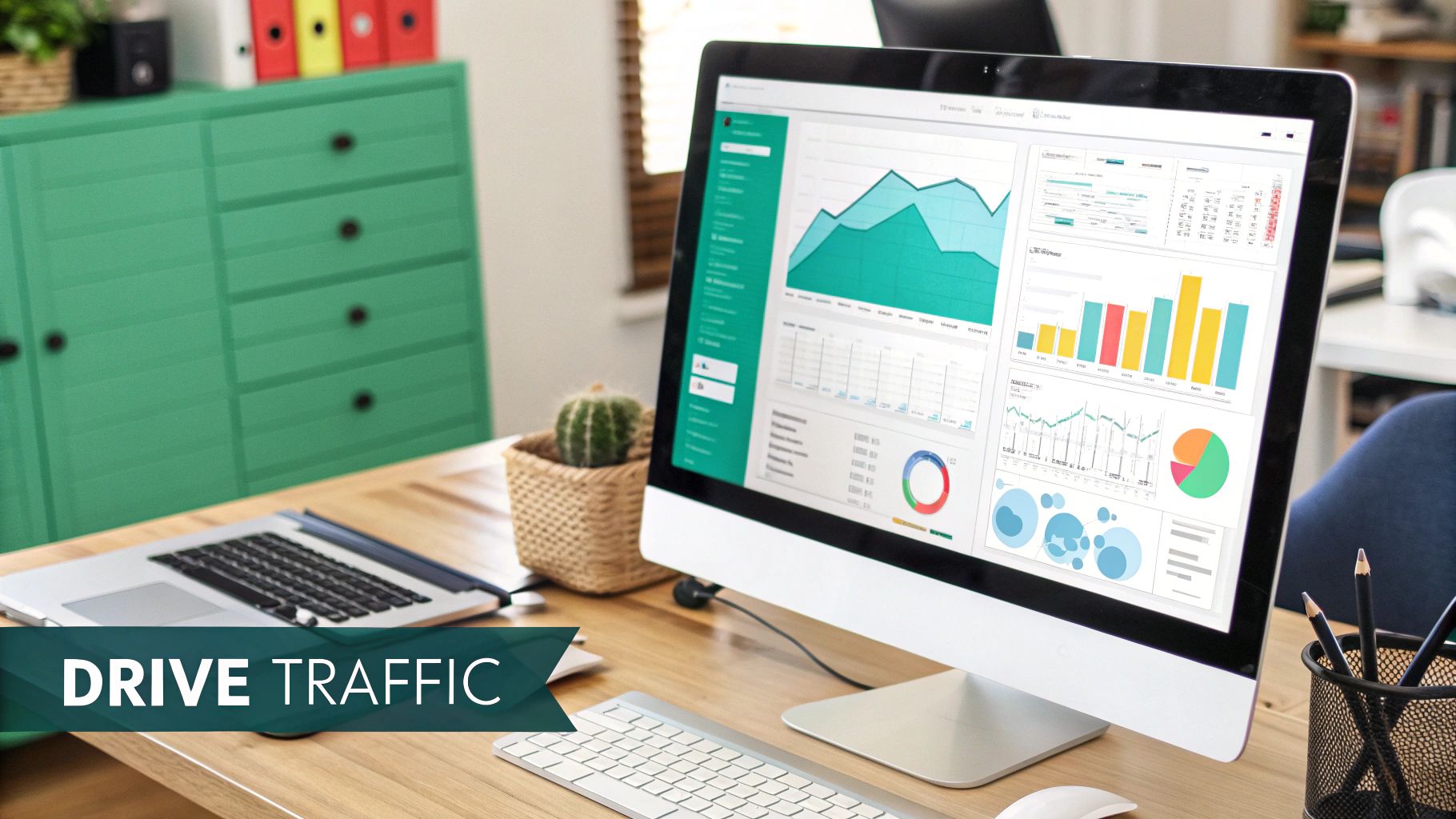
The entire interface is built to turn any URL into dozens of unique, ready-to-post Pins in just a few clicks.
Here’s how it tackles the biggest headaches of Pinterest marketing head-on:
- Bulk Pin Creation: Just paste a URL—from your blog or even an affiliate product page. Pin Generator instantly pulls images and text, using them to generate dozens of distinct Pin designs from proven, high-performing templates.
- AI-Powered Copywriting: Stuck staring at a blank screen? The tool uses AI to write multiple engaging titles and descriptions for your Pins. Better yet, it bakes in relevant keywords to help you rank higher in Pinterest search.
- Smart Scheduling: Being consistent is one thing, but posting at the right time is another. Pin Generator’s smart scheduler lets you automatically publish your new Pins when your audience is most active. You can set it up once and let it run, guaranteeing a steady stream of content without you lifting a finger.
This kind of automation essentially puts your affiliate marketing on autopilot. You can spend an hour setting up a week's—or even a month's—worth of content, freeing you up to focus on strategy.
From Traffic to Conversions: Building a Scalable System
By automating your Pin creation, you're building a powerful engine for consistent traffic. But traffic alone doesn't pay the bills.
To make sure your Pinterest efforts lead to real affiliate income, you need to dive into advanced SEO conversion optimisation strategies. This is all about fine-tuning your landing pages and blog posts to turn those hard-won visitors into buyers.
Pin Generator gets the right people to your site; your on-page strategy is what closes the deal. This two-part approach is how you build a truly scalable system to make money with affiliate marketing. You automate the traffic generation, which gives you the time and energy to perfect the conversion process. It's this powerful combination that separates the hobbyists from those who build a sustainable, profitable online business.
Tracking Your Success and Scaling Your Earnings
Getting your first few pins live is a fantastic first step, but the real journey begins now. If you want to make money with affiliate marketing for the long haul, you have to shift from just creating content to analyzing what's actually working. Success isn't a "set it and forget it" game; it's about constantly watching, testing, and adjusting your strategy based on real data.
Your most valuable tools for this are your Pinterest Analytics and your individual affiliate dashboards. These aren't just for checking vanity metrics like views. They're treasure troves of information, telling you exactly what’s resonating with your audience and what’s falling flat. By digging into these numbers, you can stop guessing and start making smart, data-driven decisions that directly boost your income.
Decoding Your Analytics for Higher Profits
Your first stop should always be your Pinterest Analytics dashboard. It's easy to get lost in total impressions, but you need to look deeper at the metrics that signal genuine user interest.
Your top Pins, especially when sorted by outbound clicks and saves, are your North Star. These are the Pins that don't just grab attention; they convince people to take the next step.
Once you’ve found these winners, it’s time to play detective. Ask yourself:
- Which topics are driving the most clicks? Is it "small kitchen organization" or "DIY bookshelf ideas"? This points you directly to your audience's biggest needs.
- What's the winning visual style? Are pins with bright, bold text outperforming your more muted, minimalist designs? Visuals are everything on Pinterest.
- Which text overlays are most compelling? Do questions like "Tired of Clutter?" get more clicks than benefit-focused headlines like "5 Hacks for a Tidy Home"?
Now, take that intel and cross-reference it with your affiliate dashboards. This is where you connect the dots between clicks and cash. You might find that your "budget home decor" pins get tons of clicks, but it's a single, high-ticket "ergonomic office chair" pin that's actually making you the most money. That's a huge insight.
You could have one Pin with 100,000 impressions and five sales, and another with just 1,000 impressions but ten sales. That second Pin is infinitely more valuable. Your goal is to find these high-converting gems and figure out how to replicate their success.
This whole process is about identifying your best-performing content and then simply doing more of what works. Create more pins that use that successful visual style, target the same high-value keywords, and promote the products that have already proven they can sell.
Strategies for Scaling Your Affiliate Income
Once you've got a reliable income stream, it’s time to think bigger. Scaling isn't just about churning out more content; it's about strategically growing your business and getting more value from the traffic you already have.
Here are a few ways to level up:
- Negotiate Higher Commissions: If you're sending a steady stream of sales to a brand, don't be afraid to ask for a better rate. Many companies are happy to bump up commissions to keep a top-performing affiliate in their corner. Just show them your numbers and make your case.
- Diversify Your Partnerships: Putting all your eggs in one basket, like relying solely on Amazon, is risky. Commission rates can and do change overnight. Start looking for direct affiliate programs with smaller brands in your niche. They often pay more and offer better support.
- Expand into New Verticals: Found success with "home office organization"? That's great! Now think about related topics your audience would love, like "productivity planners" or "work-from-home tech." This lets you promote a wider range of products to the same people you've already built trust with.
By constantly analyzing your data and strategically scaling your efforts, you can turn your affiliate marketing activities from a simple side hustle into a sustainable, long-term business.
Common Questions About Affiliate Marketing on Pinterest
As you dive into making money with affiliate marketing on Pinterest, you're bound to have some questions. It's totally normal. Pinterest has its own quirks, and what works on a regular blog doesn't always fly here. Let's clear up some of the most common sticking points so you can move forward with confidence.
First up, the big one: can you even put affiliate links directly on Pinterest? The answer is a big, fat yes. But—and this is important—you have to play by the rules. You absolutely must disclose that it's an affiliate link. A simple #ad, #affiliate, or #sponsored hashtag does the trick. Transparency isn't just about following FTC guidelines; it's about building trust with your audience.
Also, make it a habit to double-check the terms of service for every affiliate program you join. Some programs, like Amazon Associates, have very specific rules about where and how you can share their links.
How Quickly Can You Start Earning?
Ah, the million-dollar question. The great thing about Pinterest is that it can send you traffic much faster than waiting for Google to notice your blog. A brand-new account can see Pins start to get traction within days or weeks, as long as the content is top-notch and optimized correctly.
But let's be real: traffic doesn't instantly turn into cash. How much you earn, and how quickly, really comes down to a few key things:
- Your Niche: Selling a high-ticket item from a home tech blog could land you a nice commission from just one sale. On the other hand, if you're promoting low-cost craft supplies, you'll need a lot more sales volume to see similar numbers.
- Content Quality: Your Pins have to be good enough to make someone stop scrolling and actually click. This is where great design and a compelling call-to-action make all the difference.
- Audience Trust: People buy from people they trust. If you consistently share valuable, helpful content, your conversion rates will naturally climb over time.
Realistically, you could see your first few dollars roll in within a few weeks. Building a steady, reliable income stream, however, usually takes a few months of consistent effort.
Do You Need a Blog to Succeed?
While having a blog is a huge advantage, it’s not a deal-breaker when you're just starting out. You can absolutely link a Pin directly to an affiliate product page. This approach shortens the customer's journey and is a fantastic way to test different products to see what clicks with your audience, all without the work of maintaining a full website.
Key Takeaway: Linking directly to affiliate offers is the fastest way to get started. But the most sustainable, long-term strategy is using Pinterest to send traffic to your own blog. That's where you can build real trust, grow an email list, and promote multiple products.
In the long run, a hybrid approach often wins. As your presence grows, think of Pinterest as the top of your sales funnel, driving engaged users to your blog posts. This gives you way more control and builds a stable, long-term asset that you actually own.
If you want to dive deeper into these strategies, you can learn more about how to make money on Pinterest, both with and without a blog.
Ready to stop the manual grind and put your Pinterest growth on autopilot? Pin Generator automates the creation and scheduling of hundreds of unique, high-quality Pins, freeing you up to focus on strategy and watch your affiliate income grow. Start your free trial today and see the difference automation can make.