
Pinterest For Ecommerce: Proven Strategies To Boost Sales
11 June 2025
Why Pinterest For Ecommerce Outperforms Social Platforms
Pinterest isn't just another social media platform. It's a visual search engine where potential customers actively search for products. Unlike platforms where users passively scroll, Pinterest users often arrive with purchase intent. This makes it an ideal platform for ecommerce businesses. It offers a unique opportunity to connect with a highly engaged audience ready to buy.
The Power of Visual Search
Think of Pinterest as a digital shopping mall. Users arrive with a shopping list in mind, visually searching for inspiration and products. This proactive search behavior differs greatly from other platforms. On sites like Facebook, users primarily focus on socializing and consuming content. On Pinterest, your products are discovered by users actively seeking solutions.
Intent-Driven Audience
This intent-driven audience is key to why Pinterest for ecommerce is so effective. Consider the difference between someone scrolling through Facebook and someone searching for "rustic farmhouse decor" on Pinterest. The Facebook user might see an ad, but they weren’t actively looking for home decor.
The Pinterest user, however, is actively seeking products and inspiration. They are much more likely to make a purchase. This difference in user intent is crucial for ecommerce success. In fact, 93% of Pinterest users use the platform to plan purchases. This is a strong indicator of its effectiveness in driving sales and conversions. Furthermore, 88% of users reported purchasing a product after seeing it on Pinterest. This highlights the platform's influence on consumer decisions. Discover more insights about Pinterest Statistics
Pinterest's Algorithm Works for You
Pinterest's algorithm is designed to surface relevant content based on user interests and searches. If your products align with what users are looking for, Pinterest will actively work to show your pins to the right audience.
This is a significant advantage for ecommerce businesses. It allows them to reach potential customers who are ready to buy. This targeted approach maximizes the impact of your marketing efforts, connecting you with active buyers.
Long-Term Engagement and Discovery
Pinterest content has a longer lifespan than posts on other social media platforms. Pins can be discovered and repinned for months, even years, after they are initially posted. This longevity provides ongoing exposure for your products.
This increases brand awareness and drives traffic to your ecommerce store over time. This sustained visibility ensures your products remain discoverable, maximizing their potential to reach new customers and generate sales long after they’re pinned.
Understanding Pinterest's High-Value Audience Demographics
Not all social media platforms offer the same advantages for e-commerce. Pinterest stands out by attracting a demographic particularly open to online shopping, especially for higher-end products. Let's explore what makes Pinterest users such valuable customers.
Income and Spending Power
Pinterest users tend to have more disposable income than users on other social media platforms. This makes them a prime audience for e-commerce businesses selling premium products or experiences. This greater purchasing power translates into a willingness to invest in quality. For example, 45% of U.S. Pinterest users have household incomes exceeding $100,000, making the platform particularly appealing to premium brands.
Furthermore, these users tend to spend more per order. The average order value on Pinterest is 85% higher than on other social platforms. This shows that Pinterest users aren't just browsing; they're actively purchasing and spending significantly more. Combined with the fact that users spend 2x more monthly, Pinterest offers a lucrative opportunity. Learn more about these Pinterest statistics.
Purchase Intent and Planning
Unlike platforms where users primarily focus on entertainment and socializing, Pinterest users often have a clear purchase intent. They actively search for products, gathering ideas and inspiration for future purchases. This proactive approach makes them ripe for e-commerce conversions.
It's like digital window shopping, where users actively seek products to buy rather than passively scrolling. This forward-thinking behavior is reflected in the platform's user activity. A significant portion of Pinterest users utilize the platform to plan purchases, researching products and adding them to wish lists and boards. This behavior indicates a strong purchase intent, making them high-value targets for e-commerce businesses.
Engaged and Loyal Customers
Because Pinterest users actively seek solutions and engage with content aligned with their interests, they are more likely to become loyal customers. This high engagement level fosters stronger customer relationships. This engagement extends beyond single purchases. Pinterest users are more inclined to follow brands they admire, building long-term connections.
Similar to using HubSpot CRMs with other platforms, connecting your e-commerce tools, such as integrating with Jira, can streamline workflows. You can learn more about platform integration with this HubSpot Jira integration. This ongoing connection keeps your brand at the forefront of their minds, increasing the chance of repeat purchases. This loyalty builds a sustainable customer base and contributes to higher customer lifetime value.
Targeting the Right Audience
Understanding these demographic and behavioral traits is key to determining if your target audience aligns with Pinterest's user base. If your products or services cater to a demographic with higher disposable income, a tendency towards online shopping, and an appreciation for visually appealing content, Pinterest is likely an excellent platform for your e-commerce strategy.
This involves identifying your target audience's specific needs and interests and tailoring your Pinterest approach accordingly. By creating compelling content that speaks directly to their aspirations and desires, you can effectively connect with these high-intent shoppers and drive significant sales growth.
Setting Up Your Pinterest Business Account For Success
Your Pinterest Business Account is the bedrock of your e-commerce strategy on the platform. A poorly constructed account can limit your visibility and damage your brand's credibility. Conversely, a well-optimized profile can significantly expand your reach and boost conversions. This section provides a step-by-step guide to setting up your Pinterest Business Account for maximum impact.
Claiming Your Website and Optimizing Your Profile
First, claim your website. This verification step confirms your business's legitimacy and unlocks valuable analytics tools within Pinterest. Next, optimize your profile for visibility. Choose a clear, professional profile picture and incorporate relevant keywords into your business name. Your profile description should succinctly communicate your brand's value and clearly identify your target audience. This ensures your profile projects a professional and trustworthy image.
Categorizing Your Business and Verification
Select the category that most accurately reflects your core products or services. Proper categorization helps Pinterest understand your offerings and display your pins to the right audience. This precise targeting is key to connecting with users actively searching for what you sell.
Next, verify your account. Verification strengthens your credibility with both Pinterest and potential customers, signaling trustworthiness and professionalism. Verified accounts also unlock access to enhanced features and analytics, giving you valuable data to further refine your strategy. Research shows that verified Pinterest Business Accounts see 35% more engagement and have 2.3x higher conversion rates compared to unverified accounts. Well-optimized profiles generate 67% more website traffic. Find more detailed statistics here. These impressive statistics demonstrate the importance of verification for driving engagement and boosting conversions.
Essential Settings and Account Structure
Beyond the fundamental steps, some crucial settings are often overlooked. Enabling rich pins allows you to display extra product information directly on your pins, such as pricing and availability. This added information enhances the user experience and encourages direct purchases. Consider automating some of your Pinterest tasks. How to master Pinterest automation. Automation can significantly streamline your Pinterest marketing efforts.
A strategically structured account sets the stage for long-term growth. Create boards focused on specific product categories or themes. Organize these boards logically and use descriptive, keyword-rich names. This structured approach simplifies navigation for users, helping them easily discover products that interest them.
Converting Profiles and Credibility Boosters
What distinguishes high-converting business profiles from those that fade into obscurity? Attention to detail. Think of your profile as your digital storefront. Ensure it's visually appealing, easy to navigate, and provides all the essential information potential customers need. A compelling profile builds trust and encourages users to explore your offerings.
Finally, prioritize the overall user experience. Is your profile easy to navigate? Does it effectively communicate your brand's value? These seemingly minor details can significantly impact your success on Pinterest. By creating a user-friendly and informative experience, you'll position your brand as a trusted and valuable resource. This, in turn, drives engagement, strengthens trust, and ultimately leads to increased conversions.
Creating Pinterest Boards That Drive Product Discovery
Strategic board creation is essential for e-commerce success on Pinterest. Many businesses overlook this crucial aspect, missing out on significant sales potential. Well-structured boards guide customers through your products and improve visibility within Pinterest's search algorithm. Let's explore how to structure your boards for maximum product discovery and increased sales.
The Psychology of Effective Board Naming
Board names are more than just labels; they are vital tools for attracting your ideal customer. Think from their perspective. What keywords would they use when searching for products similar to yours? Incorporate these keywords into your board names. For example, instead of "Shoes," use more specific names like "Women's Running Shoes" or "Leather Boots for Men." This targeted approach ensures your boards appear in relevant customer searches.
Balancing Product and Lifestyle Content
Product-focused boards are a must, but adding lifestyle content creates depth and builds desire. Think of it as creating an appealing storefront window. You display your products within a scene that inspires customers to imagine them in their own lives. If you sell kitchenware, create boards showcasing attractive table settings or delicious recipes. This inspires users and subtly encourages them to purchase.
The Optimal Number of Boards
The ideal number of boards depends on your business size and product range. A smaller, niche business may only need a few highly focused boards. Larger businesses with diverse offerings benefit from more boards, each targeting a specific product category or audience. Start with a core set and strategically expand as your business grows.
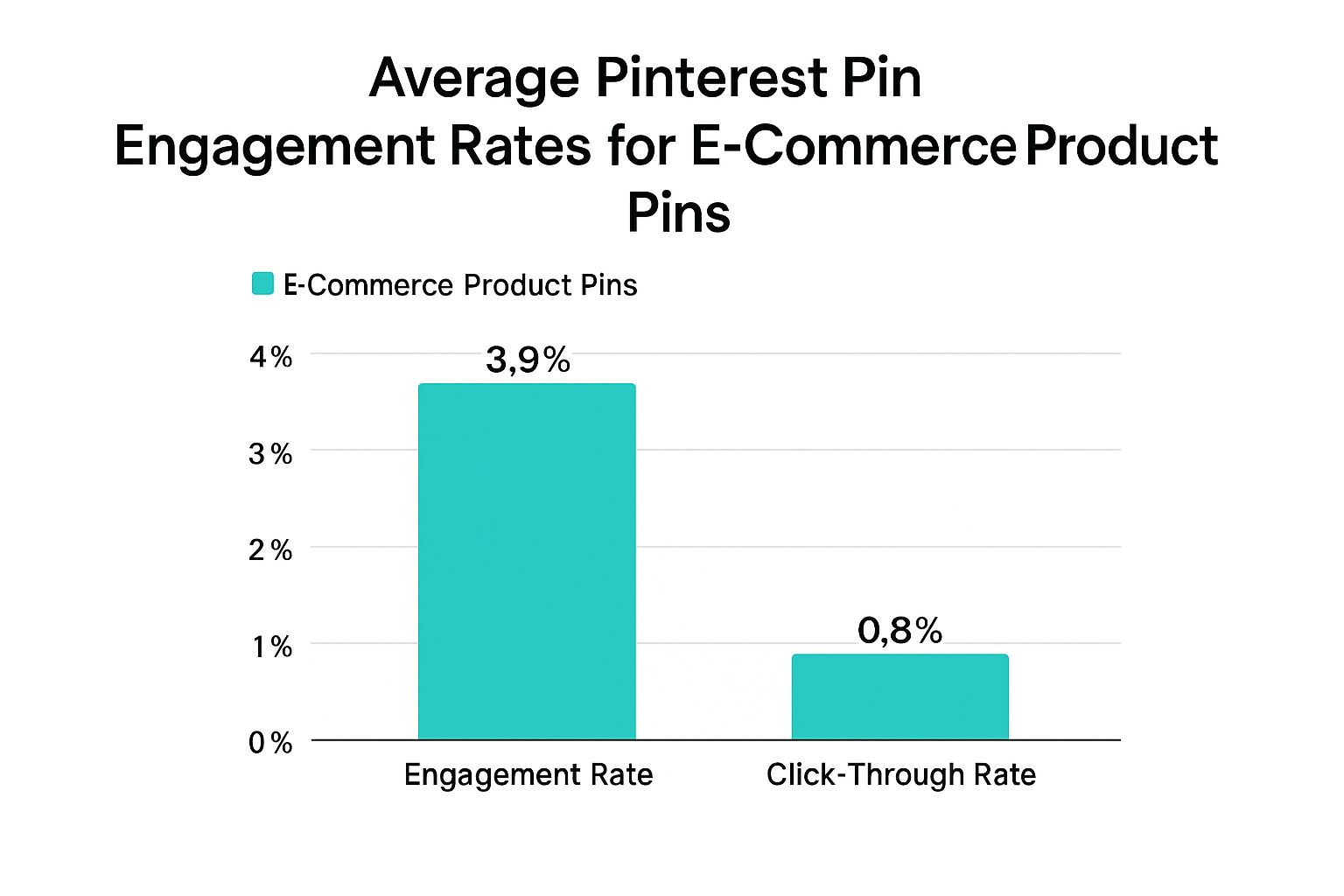
The infographic above compares average engagement and click-through rates for e-commerce product pins on Pinterest. The data shows substantial engagement and click-through rates, highlighting Pinterest’s potential for driving traffic and sales. This underscores the importance of optimizing your pins and boards for maximum visibility.
Organizing Products to Encourage Browsing and Cross-Selling
Organizing products strategically within boards is crucial for encouraging browsing and cross-selling. Group related products to create a natural flow, guiding customers through your offerings. For instance, if a user is viewing a specific shoe, showcase complementary items like socks or shoe care products on the same board. This aids product discovery and increases the chance of multiple purchases.
Leveraging Seasonal and Trending Boards
Seasonal and trending boards capture timely traffic when customers actively seek specific items. Create boards dedicated to holidays, seasonal trends, or current events. A clothing retailer, for example, could create "Summer Fashion Trends" or "Holiday Gift Ideas" boards. This capitalizes on current shopping trends, putting your products in front of engaged audiences.
Advanced Techniques for Board Optimization
Use secret boards to plan and test content before publishing. Experiment with different pin styles and board layouts to determine what resonates with your audience. This allows you to refine your strategy. Also, regularly analyze board performance using Pinterest Analytics. Identify high-performing boards in terms of engagement and conversions. This data-driven approach focuses your efforts on effective strategies. Tools like Pin Generator can automate and streamline pin creation and scheduling, freeing up your time for strategic board development and content optimization.
The following table summarizes various Pinterest board strategies:
Pinterest Board Strategy Comparison
Compare different board organization strategies and their impact on ecommerce performance.
| Board Strategy | Best For | Average Engagement | Conversion Potential |
|---|---|---|---|
| Product-Focused Boards | Showcasing specific product categories | Moderate | Moderate |
| Lifestyle Boards | Inspiring customers and showcasing products in context | High | Moderate |
| Seasonal/Trending Boards | Capitalizing on timely events and trends | High | High |
| Niche Boards | Targeting specific customer interests and segments | Moderate | High |
| Secret Boards | Planning and testing content before public release | N/A | N/A |
This table highlights how different board strategies can impact engagement and conversions. While Lifestyle and Seasonal/Trending boards often generate high engagement, Niche boards can be very effective for driving conversions due to their targeted nature. Using a mix of strategies is usually recommended for best results.
Optimizing Product Pins For Maximum Sales Impact
Your Pinterest pins act as a digital storefront. Optimizing them effectively can significantly boost your e-commerce success. Let's delve into creating high-performing product pins designed to drive sales.
Image Composition and Text Overlay Strategies
Visual appeal is crucial for your pins. High-quality images that present your products attractively are essential. Consider lifestyle imagery, allowing potential customers to envision your products in their own lives. This approach resonates better than simple product shots on a white background.
Also, use text overlays to spotlight key features, benefits, or promotions. These overlays should be visually engaging and easily readable, grabbing attention and quickly conveying vital information.
SEO-Optimized Descriptions: Speaking Pinterest's Language
Pinterest functions as a visual search engine. Optimizing your pin descriptions with relevant keywords is key. Think from your target customer's perspective. Which words would they use to search for your product?
Naturally incorporate these keywords into your descriptions, including a compelling call to action. This ensures your pins appear in relevant searches, directing targeted traffic to your online store. Providing context and information within the description helps customers understand your product's value. For example, when selling a handmade scarf, describe the material, its unique attributes, and styling suggestions.
Furthermore, rich pins, which dynamically display pricing and availability, enhance the customer experience and encourage direct purchases. This extra information helps customers make informed decisions, smoothing the path to purchase. Analysis of 50,000 product pins reveals that optimized pins with strong SEO descriptions and high-quality images generate 4.7x more clicks and achieve 89% higher conversion rates compared to basic pins. Learn more at Pinterest pin optimization.
Technical Specifications and Common Mistakes
Certain technical details can influence pin performance. The recommended 2:3 aspect ratio (1000px by 1500px) ensures proper display across devices. Avoid overly compressed images, which appear pixelated and detract from your brand.
A common mistake is excessive text. Pinterest is a visual platform. Prioritize high-quality images and use text overlays strategically, highlighting key information. Check out this resource: How to make money on Pinterest.
Advanced Techniques for Engagement and Conversions
Creating engaging and conversion-focused pins requires a balance of aesthetics and strategy. Consider video pins to showcase products in action or provide tutorials. These dynamic visuals grab attention and create a more engaging customer experience.
Using rich pins displays additional product details, such as pricing and availability, directly on the pin. This feature streamlines buying and can significantly improve conversion rates.
Idea Pins, multi-page pins ideal for storytelling and showcasing multiple products, offer a richer, more immersive experience, captivating users and fostering deeper engagement.
Consistency is vital. Maintain a regular pinning schedule for visibility and audience engagement. Experiment with different pin formats and analyze your results to understand what resonates with your audience. This data-driven approach allows for continuous optimization and maximum impact.
Mastering Pinterest SEO For Ecommerce Visibility

Pinterest functions much like a search engine. This makes Pinterest SEO crucial for getting your ecommerce products seen. Understanding how people search on Pinterest is key. Optimizing your presence based on this understanding can drive traffic and sales. This requires a combined approach. You'll need keyword research, optimized pins, and strategic use of Pinterest's features.
Keyword Research: Understanding Pinterest Search Behavior
Keyword research on Pinterest is different from traditional search engines like Google. Google users often search for specific facts. Pinterest users are looking for inspiration and visual ideas. Your keyword strategy should focus on broader themes. Think lifestyle concepts related to your products.
For example, imagine you sell handmade jewelry. Instead of only using keywords like "silver earrings," think broader. Consider terms like "boho jewelry," "wedding accessories," or "gift ideas for her." This wider approach helps you reach a larger audience. These are the users browsing for inspiration and ideas. Tools like the Pinterest keyword research tool within Pin Generator can help. It can identify keywords and trends within your specific area.
Optimizing Pin Descriptions, Board Descriptions, and Your Profile
After finding relevant keywords, strategically add them to your content. This includes your pin descriptions, board descriptions, and profile. Pin descriptions should be short and engaging. Highlight the benefits of your product. Include a clear call to action to encourage clicks to your website.
Similarly, optimize your board descriptions. Use relevant keywords and phrases. Describe the board's theme and included products. A well-optimized profile is also essential. This includes your business name and bio. It helps users understand your brand and what you offer.
Leveraging Pinterest's Guided Search and Hashtags
Pinterest's guided search suggests related search terms as a user types. This gives valuable insight into popular queries. Consider these suggestions. Include relevant terms in your keyword strategy. This helps your pins show up in guided search results. This expands visibility to a broader audience.
Hashtags are less vital on Pinterest than on other social media. They can still help with discoverability. This is especially true for trending topics. Use a few relevant hashtags per pin. Avoid overusing them, as this can seem spammy. Focus on using specific keywords in descriptions and board titles to get better targeted traffic.
The Importance of Keywords vs. Hashtags
Keywords are more important than hashtags for Pinterest SEO. Keywords are found in pin and board descriptions. They are crucial to how Pinterest understands and matches your content to user searches. Hashtags can aid discovery. They act more as a way to categorize content. Thorough keyword research and placement in descriptions should be prioritized.
The following table displays how different SEO elements on Pinterest contribute to visibility and engagement over time:
Pinterest SEO Elements Performance Data
Show the impact of different SEO optimization elements on pin visibility and engagement
| SEO Element | Impact on Visibility | Time to Results | Difficulty Level |
|---|---|---|---|
| Keyword Optimization in Pin Descriptions | High | Medium (Weeks) | Easy |
| Keyword Optimization in Board Descriptions | Medium | Medium (Weeks) | Easy |
| Profile Optimization | Low | Long (Months) | Easy |
| Guided Search Optimization | Medium | Short (Days) | Medium |
| Hashtag Usage | Low | Short (Days) | Easy |
| Rich Pins | High | Short (Days) | Medium |
As the table shows, some elements offer quicker boosts while others require more effort but yield higher impact in the long term. A balanced strategy that uses all of the above elements is recommended.
Implementing Proven Strategies for Increased Visibility
Use the following best practices to ensure your products show up in relevant searches:
- Create high-quality, visually appealing pins: Images are essential on Pinterest.
- Use rich pins: These add more product information directly on the pin.
- Maintain a consistent pinning schedule: Regularly posting fresh content is key.
- Analyze your Pinterest analytics: Track performance to see what's working.
By using these strategies, you can improve your visibility on Pinterest. You'll connect with customers looking for products like yours. This focused approach maximizes your reach and conversions. It turns browsers into buyers. Remember: Pinterest users often intend to purchase something. Optimizing your presence for ecommerce on Pinterest is key. This helps maximize sales and brand growth.
Measuring Success And Scaling Your Pinterest Strategy
Understanding what connects with your audience and expanding on those wins is key for any thriving Pinterest ecommerce business. This means shifting away from vanity metrics like follower count and digging into data-driven insights that actually boost your business. This involves a deep dive into Pinterest Analytics and understanding which metrics truly matter.
Key Metrics That Matter for Ecommerce
Likes and repins offer a surface-level view of engagement. For ecommerce, the real focus should be on metrics tied to your bottom line:
- Link clicks: These show how well your pins drive traffic to your website.
- Conversions: Track purchases, sign-ups, or other key actions from your Pinterest traffic.
- Checkout page visits: This metric reveals how far users move through your sales funnel from Pinterest.
- Average order value: This shows how much Pinterest customers are spending.
These metrics offer actionable insights into what works and where you can improve. For example, high link clicks paired with low conversions may suggest issues with your website experience or pricing.
Setting Up Proper Tracking Systems
Accurate tracking is crucial for gauging your Pinterest ROI. Install the Pinterest Tag on your website to track conversions and user behavior. This connects website actions to your Pinterest campaigns, giving you a clear view of their impact. Also, connect your Google Analytics account for a holistic view of how Pinterest contributes to your overall website traffic and conversions.
Interpreting Pinterest Analytics for Actionable Insights
Pinterest Analytics offers a wealth of information on your audience, pin performance, and campaign effectiveness. Use this data to find:
- Top-performing pins: See which pins are driving the most traffic and conversions.
- Audience demographics: Learn who is engaging with your content and adjust your strategy.
- Trending topics: Uncover popular keywords and themes relevant to your products.
This data helps refine your strategy, focusing on what resonates with your audience and maximizing your ROI. This data-driven approach ensures continual optimization for better results. Ecommerce businesses utilizing data-driven Pinterest strategies with proper analytics tracking see 247% higher ROI and scale their traffic 5.2x faster than those relying on basic engagement metrics. Explore this topic further.
Identifying and Replicating Top-Performing Content
After pinpointing your best-performing pins, analyze their success factors:
- Image style: Are lifestyle images more effective than product shots?
- Pin format: Are video pins generating more engagement?
- Keywords: Which keywords are driving the most traffic?
Reproduce these elements in future content. This approach allows you to consistently create engaging and effective pins that drive results. Scaling your Pinterest strategy may influence your Shopify sales. If that is the case, consider this resource on How to Increase Shopify Sales.
Scaling Successful Campaigns Without Diluting Effectiveness
Expanding your reach on Pinterest requires strategic scaling. Increasing your budget without optimization can lead to diminishing returns. Test different targeting options, explore new pin formats, and continuously analyze your results.
Optimizing Your Budget Allocation for Maximum ROI
As your Pinterest strategy evolves, so should your budget allocation. Pinpoint which campaigns yield the best results and adjust your spending accordingly. This maximizes your return on investment.
Building Sustainable Growth Systems
A sustainable Pinterest strategy needs ongoing optimization. Regularly review performance, stay current with Pinterest best practices, and be open to experimenting with new features. This proactive approach positions you for long-term success.
Boost your Pinterest marketing with Pin Generator! Streamline your content creation, scheduling, and analytics with our powerful tools. Get started with Pin Generator today!