
Pinterest Keyword Research: Boost Your Pin Success
11 June 2025
Understanding Pinterest's Search Revolution
The Pinterest marketing landscape has shifted. If your keyword strategy involves guesswork, you're likely falling behind. Conversations with successful Pinterest creators highlight how changes to the platform's algorithm have unlocked valuable keyword insights. They're leveraging hidden features, such as specific Ideas pages, to uncover actual search volume data. This newfound transparency is crucial for an effective content strategy, and top performers are using it to dominate their respective niches.
This change allows you to truly understand Pinterest's keyword landscape and surpass competitors who haven't adapted. Imagine knowing precisely what your audience searches for before creating a single Pin. This insight enables you to tailor your content to meet that demand, leading to increased engagement and a broader reach. It's not just about accumulating saves; it's about connecting with the right audience at the optimal moment.
Unveiling Hidden Keyword Data
Pinterest's approach to keyword research underwent a significant transformation in 2025. The introduction of search volume data on specific Ideas pages, though somewhat hidden, revolutionized how marketers identify high-traffic topics. For example, a keyword like "home decor ideas bathroom" now displays approximately 2,000 monthly searches directly within Pinterest. Through tools like PinClicks, users can access over 10 million unique Interest pages revealing keyword search volumes.
This data-driven approach replaces guesswork with strategic content creation. Watch this video to discover more insights about keyword research on Pinterest: Pinterest Keyword Research. You can also find helpful information here: How to master Pinterest Keyword Research with our tool.
Why Keyword Transparency Matters
This increased transparency empowers you to:
- Focus on Relevant Topics: Craft content centered around proven search terms.
- Maximize Reach: Target keywords with substantial search volume.
- Outsmart Competitors: Gain a competitive advantage by understanding audience desires.
By understanding the data behind Pinterest searches, you can create Pins that connect with a wider audience. Consider it like fishing: you want to cast your line where the fish are actively biting. Keyword research helps you pinpoint these high-traffic areas on Pinterest, increasing your chances of success. Learn more in our article about Pinterest keyword research tools.

Essential Tools That Actually Work for Research
Finding the right keywords is crucial for any successful Pinterest strategy. While Pinterest Trends is a good starting point, experienced creators use a variety of tools and techniques to discover hidden keyword opportunities. This section explores both free and paid options, helping you select the best fit for your budget and needs. You'll learn how to get the most out of Pinterest's built-in features and explore more advanced platforms.
Mastering Pinterest's Built-in Keyword Features
Pinterest offers powerful, yet often overlooked, keyword research tools. The search bar's auto-complete feature is a great resource. As you type, Pinterest suggests related terms based on current search trends. This provides immediate insight into what users are actively looking for. For example, typing "wedding" might suggest keywords like "wedding dresses," "wedding decorations," or "wedding hairstyles."
Exploring related Pins and Ideas pages can also reveal valuable keywords. Notice the keywords used in popular Pins within your niche. This shows you what resonates with your target audience. For additional context on Pinterest's evolution, check out this article on holiday pinning: Pinning for the Holidays.
Leveraging External Tools for Deeper Insights
While Pinterest's built-in features are helpful, external tools offer more detailed information. PinClicks, for example, provides access to millions of Interest pages with keyword search volumes. This data helps you identify high-traffic keywords with less competition. You can learn more about using these tools effectively here: How to master Pinterest keyword research tools. Other tools, such as Keysearch, offer free keyword research, which is particularly useful for creators on a budget.
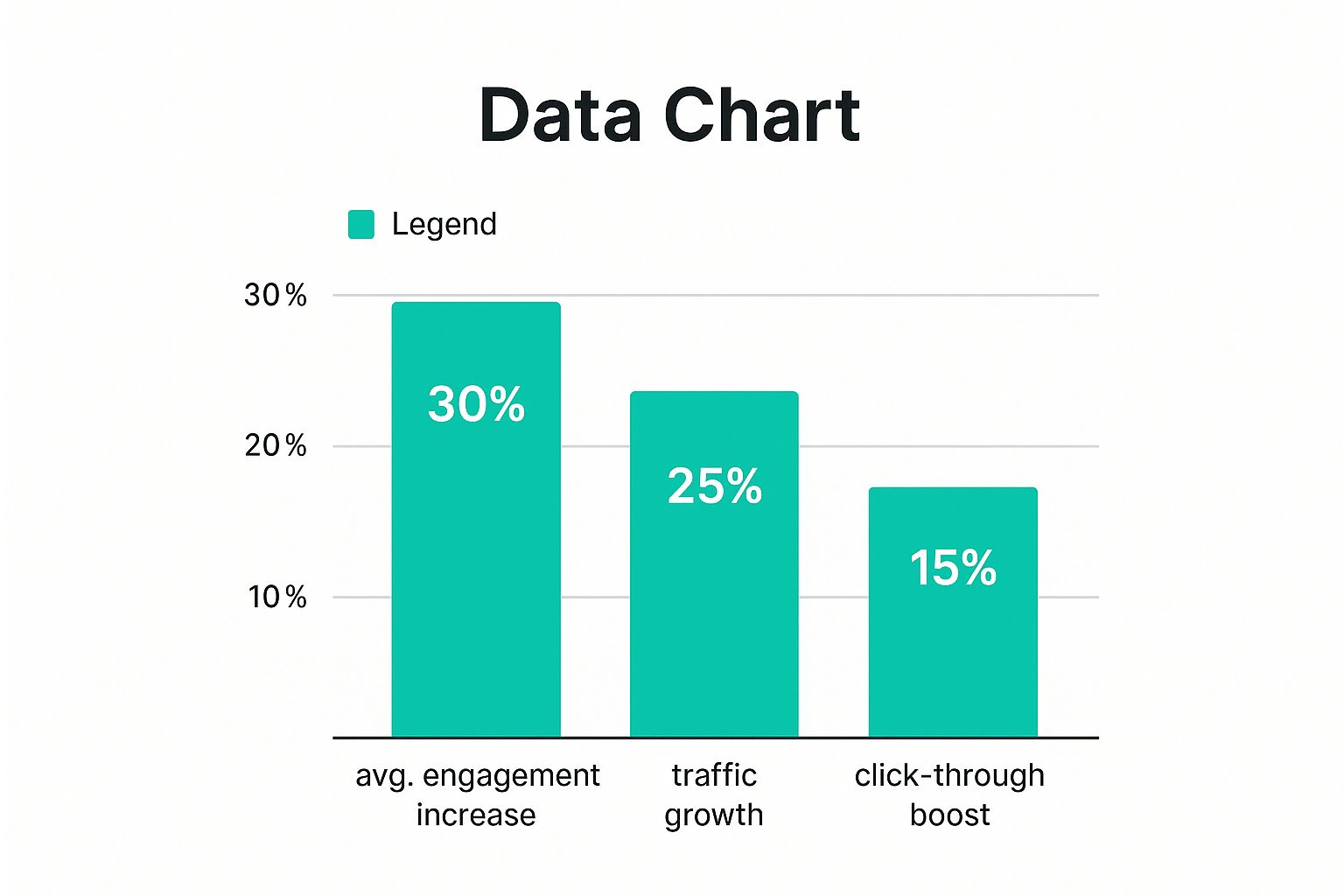
The infographic above shows the potential impact of effective Pinterest keyword research. By strategically targeting the right keywords, you can see an average 30% increase in engagement, a 25% boost in traffic, and a 15% improvement in click-through rates. These results highlight the importance of a solid keyword strategy for your Pinterest marketing.
The following table compares several popular Pinterest keyword research tools. It highlights their key features, pricing, ideal use cases, and data access capabilities to help you choose the best one for your needs.
Pinterest Keyword Research Tools Comparison
| Tool Name | Key Features | Pricing | Best For | Data Access |
|---|---|---|---|---|
| Pinterest Trends | Built-in, real-time search trends | Free | Quick overview of trending topics | Limited to Pinterest platform |
| PinClicks | Millions of Interest pages with search volumes | Paid | In-depth keyword analysis | Extensive Pinterest data |
| Keysearch | Free keyword research options | Freemium | Budget-conscious creators | Limited free access, more data with paid plans |
This table summarizes the different options available, from free built-in tools to more advanced paid platforms. Consider your budget and the depth of data you require when selecting a tool.
Choosing the Right Tool for Your Needs
The best Pinterest keyword research tool depends on your specific situation. Agencies managing multiple clients may find a premium tool with comprehensive data worthwhile. However, individual creators or small businesses can often achieve great results by combining Pinterest's built-in features with free or low-cost tools. The most effective approach combines smart tool usage with an understanding of your audience and their search habits.
Tapping Into Pinterest's Massive Search Volume
Pinterest offers incredible keyword research opportunities due to its sheer size. Millions of users actively search and save content, making understanding their behavior key to success. It's not just about being on Pinterest; it's about leveraging its search volume to connect with your audience.
The Power of Pinterest's Global Reach
Pinterest's global user base presents diverse keyword possibilities. Different cultures and markets have unique search habits and interests. A popular keyword in the United States might not perform as well in another country, like France. Recognizing these regional nuances allows you to tailor keywords for specific audiences, expanding your reach and maximizing your impact.
Understanding Demographic Influences
Demographics significantly impact Pinterest keyword research. The platform's user base concentrates within specific age groups and is predominantly female, offering tailored keyword opportunities. Understanding these demographics is crucial for effective targeting. For instance, keywords related to home decor and fashion tend to perform well with Pinterest's primary demographic.
Additionally, user engagement on Pinterest is remarkably high. As of late 2024, Pinterest boasts 553 million monthly active users, with 275 million engaging weekly. Users save approximately 1.5 billion pins. This vibrant ecosystem highlights the potential for keyword-focused content to be discovered. Aligning your keyword research with this high engagement ensures your content appears at the right time and place. Find more detailed statistics here: Pinterest Statistics.
Connecting With User Intent
Pinterest users often search with specific intent, seeking inspiration or solutions. Understanding this intent-driven behavior is central to successful Pinterest keyword research. Consider what a user might type into the search bar. Think like they think. Often, users are looking for resources and services. For example, understanding how to compare funeral homes can be a crucial step in a difficult time.
Maximizing Visibility and Reach
By understanding Pinterest's search volume, user intent, and demographic patterns, you're developing a strategic framework for your content, not just randomly selecting keywords. This strategic approach maximizes visibility and reach, driving more traffic to your profile and, ultimately, your business.

Decoding How Pinterest Users Actually Search
Pinterest works differently than other social media platforms. Understanding this difference is crucial for effective Pinterest keyword research. While users on platforms like Instagram might follow brands, Pinterest users conduct intent-driven searches, looking for inspiration and solutions. This means your content must align with what users actively search for, not just promote your brand.
Understanding Search Intent
Pinterest searches typically fall into two categories: inspiration-seeking and solution-hunting. Inspiration seekers browse for ideas, exploring topics like "home decor styles" or "travel destinations." Solution hunters, conversely, have a specific problem to solve, searching for things like "easy weeknight dinners" or "DIY bathroom renovation tips." Knowing which search type your content addresses helps you choose the right keywords.
For example, if you're creating a Pin about a delicious pasta recipe, targeting keywords like "quick pasta recipes" or "easy dinner ideas" aligns with the solution-hunting mindset. Alternatively, a Pin showcasing beautiful kitchen designs might use keywords like "modern kitchen inspiration" or "kitchen remodel ideas" to attract inspiration seekers. Pinterest’s reliance on keyword research is clear in its unique user behavior. Unlike platforms where users prioritize brand interactions, Pinterest users focus on specific, intent-driven searches. They use keywords to navigate their discovery journey, seeking solutions and inspiration. Learn more about Pinterest keywords here: Pinterest Keywords.
Recognizing Seasonal Trends
User behavior on Pinterest often follows seasonal patterns. Searches for "Halloween costume ideas" increase in October, while "Christmas gift guides" gain popularity in November and December. Recognizing these seasonal trends lets you anticipate user needs and create timely content. This means your Pinterest keyword research should be dynamic. Regularly reviewing and updating your keywords based on seasonal shifts can greatly improve your content's visibility.
Tapping Into the Discovery Mindset
Pinterest is a discovery-driven platform. Users often find new ideas and products they weren't actively looking for. This offers a unique chance for your content to be discovered serendipitously. By using a wide array of relevant keywords, you boost the likelihood of your Pins showing up in related searches, even if users aren't specifically seeking your product or service.
Think of it as casting a wider net. The more relevant keywords you use, the better your chances of attracting potential customers. This strategy helps maximize your reach and utilizes Pinterest's unique discovery ecosystem.
Strategic Keyword Placement That Drives Results

Knowing the right keywords for your Pinterest marketing strategy is only the first step. True success comes from understanding strategic keyword placement. This means thoughtfully incorporating your keywords into your Pin titles, descriptions, and board names, all while keeping your content engaging and natural.
Think of keywords as the connectors between your content and Pinterest users. Random placement can lead to confusion. But a strategic approach creates a clear path for both the Pinterest algorithm and potential customers to find you.
Optimizing Pin Titles and Descriptions
Your Pin title is your first chance to make a good impression. Keep it short, attention-grabbing, and feature your main keyword near the beginning. For example, if your keyword is "easy dinner recipes," a title like "Easy Dinner Recipes: 30-Minute Meals" works better than "30-Minute Meals for Easy Dinners." This immediately tells everyone what your Pin is all about.
Pin descriptions give you more room to elaborate. Expand on your primary keyword and add related long-tail keywords. Instead of just listing keywords, create a compelling story that encourages clicks. For example, "These easy dinner recipes are perfect for busy weeknights. Each 30-minute meal is packed with flavor and simple to prepare." This approach keeps users engaged and reinforces your targeted keywords.
Leveraging Board Names and Descriptions
Pinterest boards act like organized collections, grouping your Pins by theme. Optimize your board names and descriptions with relevant keywords to make them easier to find. Instead of a general board name like "Recipes," try something more specific, like "Easy Dinner Recipes" or "Healthy Weeknight Meals."
Like Pin descriptions, board descriptions offer more context and allow you to use long-tail keywords. A well-optimized description for an "Easy Dinner Recipes" board could be: "Discover quick and delicious easy dinner recipes for busy weeknights. Find inspiration for 30-minute meals, one-pan dinners, and family-friendly recipes." This clearly explains the board's content and helps Pinterest categorize your Pins correctly.
The Art of Authentic Keyword Integration
Authenticity is key for effective keyword placement. Avoid keyword stuffing, which means cramming in as many keywords as possible. This can make your Pins sound robotic and unnatural, turning users away and potentially hurting your Pinterest SEO.
Focus on using keywords naturally within your content. Find a balance between optimization and engagement. Aim for 2-3 primary keywords per Pin and incorporate them smoothly into your titles, descriptions, and board information. Think of keywords like spices – just the right amount enhances the flavor, while too much can ruin the dish.
Hashtag Integration and Engagement
Hashtags on Pinterest work differently than on other platforms like Instagram or Twitter. They help categorize your Pins and improve visibility within particular communities. Use relevant hashtags strategically, but don't overdo it. A few well-chosen hashtags are better than a long list of generic ones. Choose hashtags that match your keywords and audience interests. This targeted approach will help your Pins connect with the right users actively searching for your type of content.
Optimizing for Search and Engagement
The table below provides a quick guide to best practices for keyword placement on Pinterest. Following these guidelines will help you attract both the Pinterest algorithm and real users, resulting in increased traffic and engagement with your Pins.
To help you implement these strategies, we've created a handy checklist:
Pinterest Keyword Optimization Checklist: A detailed breakdown of where and how to place keywords across your Pinterest presence for maximum impact
| Element | Keyword Placement | Character Limits | Best Practices | Impact Level |
|---|---|---|---|---|
| Pin Title | Beginning of title | Up to 100 characters | Concise, keyword-focused, engaging | High |
| Pin Description | Throughout description | Up to 500 characters | Natural, compelling narrative, long-tail keywords | High |
| Board Name | Main board theme | Up to 100 characters | Specific, keyword-rich | Medium |
| Board Description | Throughout description | Up to 500 characters | Detailed, keyword-integrated, informative | Medium |
| Hashtags | End of description | Up to 20 hashtags | Relevant, targeted, not overused | Low |
This checklist summarizes key areas for keyword optimization, highlighting best practices and potential impact. Remember to focus on a natural integration of keywords, creating a user-friendly experience that also boosts your visibility on Pinterest.
By mastering strategic keyword placement, you can turn your Pinterest presence into a powerful engine for driving traffic. Combined with appealing visuals and quality content, this creates a winning formula for Pinterest success.
Tracking Performance And Refining Your Approach

Effective Pinterest keyword research isn't a one-and-done activity. It's an ongoing process of refinement. The best Pinterest strategies are built on real performance data, not just initial assumptions. This means creating a system to track what's working, identify weaknesses, and adjust your approach over time. Think of it as cultivating a garden: you plant the seeds (keywords), then nurture them and adapt your care based on their growth.
Using Pinterest Analytics to Track Keywords
Pinterest Analytics is essential for tracking keyword performance. It provides invaluable insights into which terms are driving engagement and meeting your objectives. You can see which keywords are resulting in saves, clicks, and close-ups, giving you a clear understanding of what resonates with your audience.
This information allows you to fine-tune your keyword strategy, concentrating on the terms that produce tangible results. It's more than just numbers; it's a roadmap to understanding your audience's preferences.
Identifying High-Performing Keywords
Within Pinterest Analytics, concentrate on keywords that drive meaningful engagement. While saves indicate initial interest, clicks and close-ups signal deeper engagement. Clicks show users are interested in learning more about your content, while close-ups suggest they're closely examining your visuals.
Prioritizing these high-performing keywords allows you to optimize your content for actions that drive traffic and conversions. This means shifting your focus from vanity metrics like impressions to metrics that reflect genuine interest and potential customer behavior.
Conducting Keyword Performance Audits
Regular keyword performance audits are crucial. These involve reviewing your existing keywords, analyzing their performance, and identifying any gaps or opportunities. You might find some keywords are driving impressions but not clicks, indicating a mismatch between user intent and your content.
These audits should be a regular part of your Pinterest marketing strategy. This ensures your keywords remain relevant and effective. Competitor analysis can also be a valuable part of these audits, revealing potential keyword opportunities you might have overlooked.
Adapting to Algorithm Updates and Scaling Your Strategy
Pinterest’s algorithm is always evolving. Staying informed about these updates is critical for maintaining your keyword strategy's effectiveness. Changes in how Pinterest prioritizes content may necessitate adjustments to your keyword targeting.
As your content calendar expands, you'll need to adapt your keyword strategy to maintain effectiveness at scale. This might involve new keyword research processes or using tools like Pin Generator's keyword research feature. A/B testing different keyword variations can help identify the most effective phrasing.
By consistently tracking performance, analyzing data, and adapting, you can create a Pinterest keyword strategy that continuously drives results. It's a dynamic process that requires ongoing attention and refinement to maximize your success on Pinterest.
Key Takeaways
Your Pinterest marketing success depends heavily on effective keyword research. This section offers practical steps to improve your visibility and engagement on Pinterest. Consider it your guide to mastering Pinterest keyword research.
Understanding User Search Behavior
Pinterest users search differently than they do on other platforms. They're driven by intent, looking for inspiration or solutions. Focus on keywords that match these motivations. For example, instead of just "shoes," try "wedding shoes" or "comfortable running shoes." Consider the reason behind the search.
Utilizing Essential Keyword Research Tools
Pinterest's built-in search bar and Trends tool provide useful information, but explore other tools as well. PinClicks, for instance, offers access to a large amount of keyword data, revealing hidden opportunities. Combine free tools with Pinterest's own features for a cost-effective strategy.
Strategic Keyword Placement
Simply knowing the right keywords isn't enough. Strategic placement is crucial. Incorporate keywords in your:
- Pin Titles: Put your main keyword at the beginning for clarity.
- Pin Descriptions: Include long-tail keywords and tell a compelling story.
- Board Names and Descriptions: Categorize your content clearly to make it easy to find.
Avoid keyword stuffing. Prioritize natural integration for user engagement and SEO. Think of it like seasoning – too much can spoil the dish!
Tracking, Refining, and Adapting
Regularly check your keyword performance using Pinterest Analytics. Pay attention to metrics like clicks and close-ups, which show real interest. Conduct regular keyword audits, particularly with changing seasonal trends, to find areas for improvement. Pinterest's algorithm evolves, so stay informed and adapt your strategy.
Use these takeaways to boost your Pinterest presence. Begin generating more traffic and engagement today with Pin Generator, a comprehensive tool for Pinterest marketing and automation.