
Affiliate Marketing on Shopify: Your Ultimate Practical Guide
5 August 2025
Let's get straight to it: affiliate marketing is one of the smartest, most cost-effective ways to grow a Shopify store. Think about it. Instead of pouring money into ad campaigns and hoping for the best, you only pay a commission when a partner actually brings you a sale. It’s a purely performance-based model that flips your marketing from a risky expense into a reliable revenue stream.
Why Affiliate Marketing Is a Shopify Power-Up
Imagine your marketing budget no longer being a cost center, but a profit center. That’s the real magic of launching an affiliate program on Shopify. You're not just buying clicks; you're building an army of creators, bloggers, and influencers who are genuinely motivated to promote your products because your success is their success.
This whole system is built on trust. An endorsement from a respected expert in your niche carries far more weight than a random social media ad. This kind of "warm" traffic converts at a much higher rate because it comes from a source the audience already knows and likes. You get to tap into highly engaged communities that would otherwise be incredibly expensive and time-consuming to reach on your own.
The Power of Performance-Based Partnerships
The beauty of Shopify affiliate marketing is its elegant simplicity. Your partners—your affiliates—handle the heavy lifting. They’re the ones writing the blog posts, creating the video reviews, and sharing your products with their followers. You only open your wallet when their hard work pays off and a sale is made.
This structure is a game-changer for your budget and return on investment. It's also a rapidly expanding channel for a reason. The industry is projected to see a massive 18.86% compound annual growth rate (CAGR) by 2025, driven in large part by Shopify merchants who are tired of the paid ad grind and are embracing more efficient, performance-based models.
To help you decide if it's the right move for your store, let's look at how affiliate marketing stacks up against traditional paid ads.
Affiliate Marketing vs Paid Ads: A Shopify Comparison
This table breaks down the core differences between investing in an affiliate program and running typical paid advertising campaigns.
| Attribute | Affiliate Marketing | Traditional Paid Ads |
|---|---|---|
| Cost Model | Pay-per-performance (commission on sales only) | Pay-per-click (PPC) or pay-per-impression (CPM) |
| Risk | Low; you only pay for successful conversions. | High; you pay for traffic, regardless of sales. |
| ROI | Generally higher and more predictable. | Can be volatile and requires constant optimization. |
| Trust Factor | High; leverages third-party credibility. | Low; ads are often met with skepticism. |
| Content | Generated by partners (reviews, articles, etc.). | You create all ad copy and creative assets. |
| Audience | Access to new, niche, and engaged communities. | Relies on platform targeting, which can be broad. |
As you can see, while paid ads offer immediate traffic, an affiliate program offers a more sustainable, trust-based approach to growth with significantly less financial risk.
Getting Started: The Shopify and Pinterest Advantage
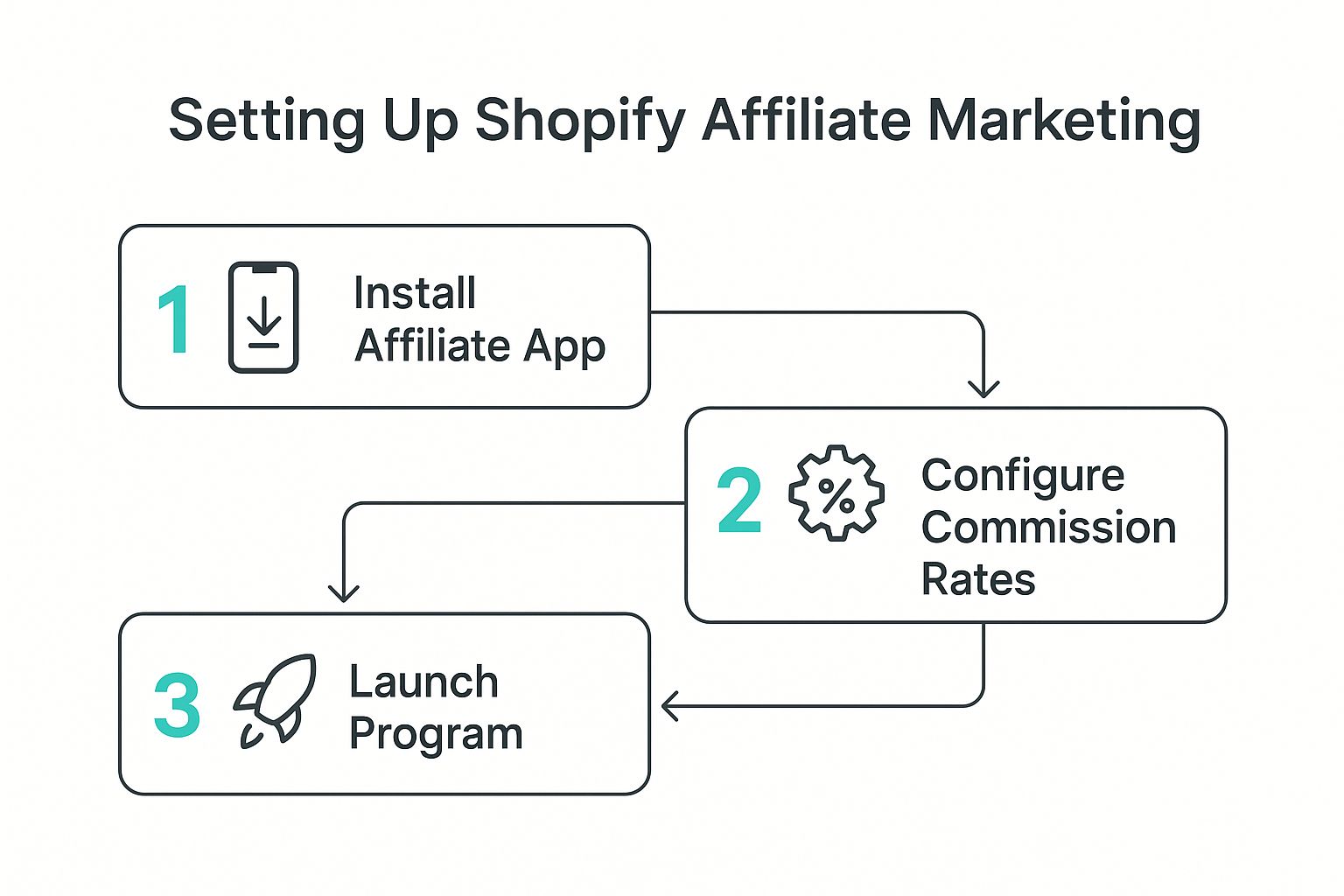
The best part? Getting a program off the ground is easier than ever. The Shopify App Store is packed with excellent affiliate marketing apps that automate everything from tracking links and clicks to managing commission payouts.
A quick browse through the app store shows you have plenty of options to find the perfect tool that fits your budget and feature requirements. You can dig deeper with this complete guide to affiliate marketing on Shopify.
Once you're set up, the next challenge is getting traffic to your website so affiliates can make sales. A lot of store owners hit a wall here. One of the most powerful, yet often overlooked, channels for driving purchase-ready traffic is Pinterest. It acts as a visual search engine where users actively look for products to buy.
To really put this strategy into overdrive, using a tool like Pin Generator is a great way to do this. It connects directly with your Shopify store, allowing you to automatically import your Shopify products into Pin Generator and generate Pins for them instantly. This gives both you and your affiliates an endless supply of fresh content to drive targeted buyers right back to your product pages.
Building Your Shopify Affiliate Program Foundation
Alright, let's get into the nuts and bolts. We’ve covered the why, now it’s time for the how. This is where you actually build the machine that will drive your affiliate marketing efforts.
Laying a strong foundation is everything. It’s the difference between a program that attracts top-tier creators who move the needle and one that just limps along. We're not talking about generic advice here; we’re diving into the specifics of building a professional, plug-and-play system that makes it a no-brainer for great partners to sign up.
The very first move is picking the right tool for the job. Your Shopify affiliate app is the engine of your entire program. It’s what handles everything from generating unique tracking links to monitoring sales and, most importantly, making sure your affiliates get paid correctly and on time. Get this choice right, and you'll save yourself a world of headaches down the road.
Choosing Your Affiliate App
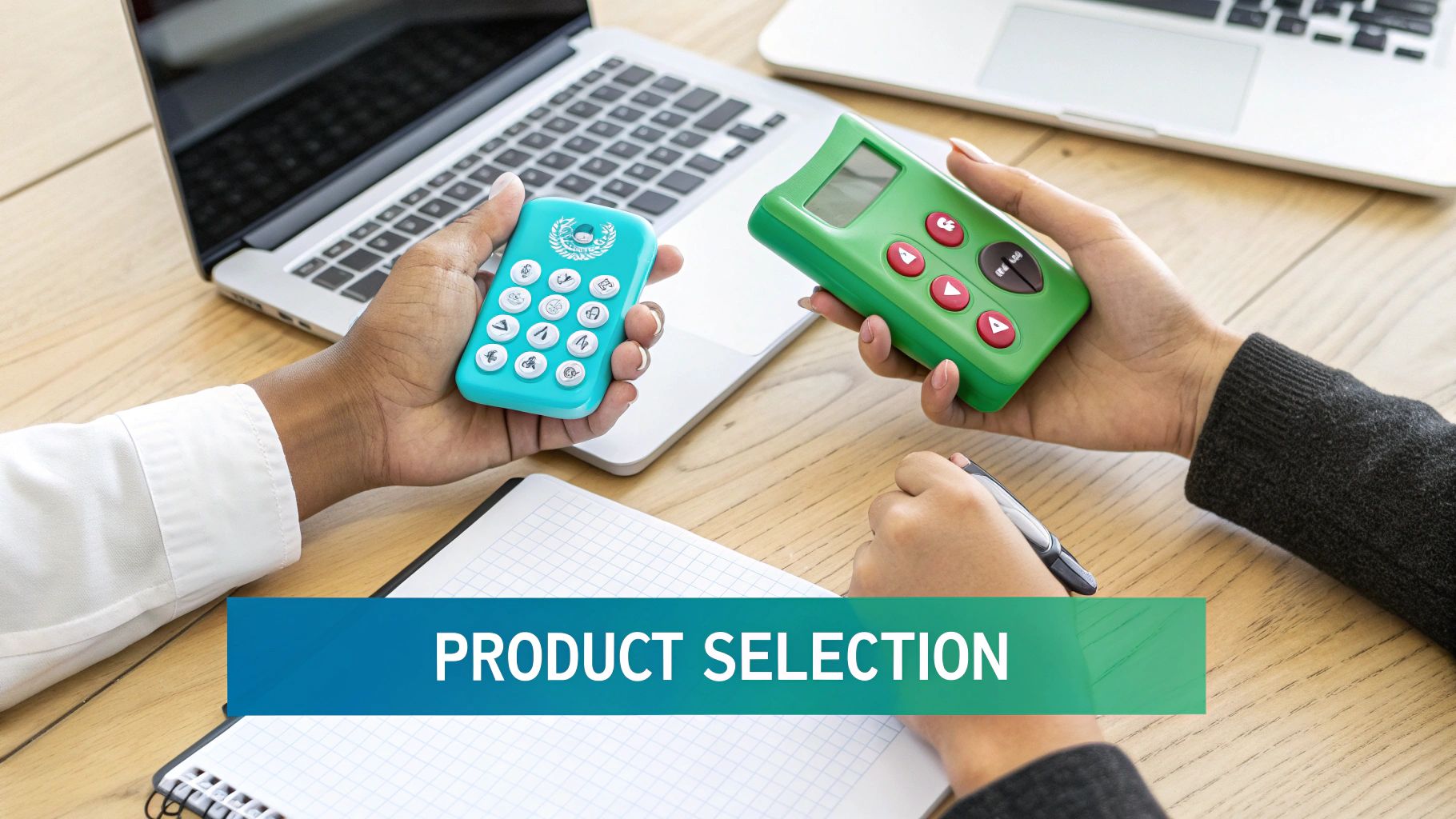
Hop into the Shopify App Store, and you'll see a bunch of options. It's easy to get fixated on the price, but you need to look deeper. How's the user interface? What's their customer support like? Can the app grow with you?
The good news is that the variety means there's a perfect fit for you, whether you need a simple link tracker or a full-blown partnership management platform. It also pays to look at what hasn't worked in the past. For instance, you can learn from the past challenges faced by Shopify Collabs to sidestep similar issues in your own strategy.
The sheer size of the affiliate marketing industry shows just how much is at stake. It's projected to be worth around $18.5 billion in 2025 and is on a trajectory to hit $31.7 billion by 2031. With North America accounting for over 40% of that revenue, a well-built program gives your Shopify store a real shot at grabbing a piece of the pie.
Structuring Commissions And Terms
Once you’ve got your app installed, your next big decision is the commission structure. This isn't just a number you pull out of thin air; it’s a strategic choice that needs to fire up your affiliates without tanking your profit margins.
A good starting point is usually a standard rate between 10-15%. But don't stop there.
Pro Tip: Think about using tiered commissions. You can offer a higher percentage—say, 20% or more—to top performers who drive a certain amount of sales each month. It's a fantastic way to incentivize your best partners to push even harder.
Your terms and conditions need to be crystal clear, too. No one wants to read a 50-page legal document. Draft a straightforward agreement that covers the essentials:
- Commission Rates: Spell out the exact percentages or flat fees. No ambiguity.
- Payout Schedule: Define when and how they get paid (e.g., Net-30 via PayPal).
- Cookie Duration: State the tracking window (a 30-day cookie is common) so affiliates know how long they have to get credit for a sale after a click.
- Promotional Guidelines: Lay down the ground rules. Can they run paid ads? Are there any restricted keywords (like your brand name)?
Finally, make it easy for them to promote you. Create a library of creative assets—high-quality product photos, pre-written email copy, a variety of banner ads, and your logos. The goal is to create a program that feels professional, polished, and irresistible to the kind of partners you want to work with.
Recruiting Affiliates Who Actually Drive Sales
Alright, you've got the technical bits of your affiliate program sorted. Now for the hard part—and honestly, the most important part: finding the right people to partner with.
An affiliate program with no affiliates is just a piece of software. A program with the wrong affiliates is a time-sucking headache. It's tempting to just open the floodgates and approve everyone who signs up, but that’s a quick way to manage a long list of partners who produce zero results.
The real secret to successful affiliate marketing on Shopify is finding partners who genuinely connect with your ideal customers. You're not just looking for people with a big follower count; you're looking for true brand advocates who create content that actually converts.
Find Your Best Advocates in Your Customer List
Your first stop should be the people who already know and love your brand: your customers. Seriously, this is the most underrated goldmine for finding amazing affiliates. They’re already using your products, and their recommendations are authentic because they're based on real-life experience.
Think about it. Who are your most loyal customers?
- The ones who consistently leave glowing reviews.
- The people who tag you in their social media posts without being asked.
- The repeat buyers who keep coming back for more.
These are your people. Reaching out with a personal invitation to join your affiliate program is almost always a home run. You're simply offering to pay them for what they're probably already doing—telling their friends how much they love your stuff. It’s a natural fit.
Target Niche Bloggers and Influencers
Once you've tapped into your customer base, it's time to look outward. The key here is to target niche bloggers and influencers whose audience is a perfect mirror of your target demographic.
Let's say you sell high-end, sustainable yoga mats. A fitness mega-influencer with millions of followers might seem like a big win, but their audience is broad. A micro-influencer who only talks about eco-friendly living and mindful yoga will have a much more dedicated and relevant community. Their recommendation will carry more weight, leading to way better conversion rates.
Don't get star-struck by follower counts. Engagement rate is the metric that matters. I’d take a creator with 10,000 highly engaged followers over one with 100,000 who barely get any comments or shares.
You can find these partners by searching relevant hashtags on Instagram, TikTok, or Pinterest. Look for creators producing quality content who have a genuine rapport with their followers.
The Power of Pinterest for Driving Affiliate Traffic
Here’s a pro tip: when you pitch potential affiliates, don't just tell them what commission they'll earn. Show them how they can be successful and get traffic to your website.
A fantastic, and often overlooked, channel for e-commerce affiliates is Pinterest. It's not just another social media platform; it’s a visual search engine where people are actively looking for things to buy. In fact, 63.8% of brands are planning to work with influencers on the platform for this very reason.
Many creators haven't yet cracked the code on Pinterest, which is where you can provide massive value. Guide them. Point them to great resources on how to sell effectively on Pinterest so they have a clear roadmap.
Better yet, give them a secret weapon. Using Pin Generator is a great way to do this. You can explain that by partnering with you, they get access to a tool that lets them automatically import your Shopify products into Pin Generator and generate pins for them instantly.
You’re solving their biggest problem: the endless grind of content creation. By offering a tool that automates the heavy lifting, you're not just offering a commission—you’re offering a streamlined path to earning it. This makes your program a no-brainer and sets everyone up for a win.
Alright, let's get into the nitty-gritty of fueling your new affiliate program. You can have the best commission structure and the most amazing products on Shopify, but without traffic, it's all for nothing. Your affiliates' success is your success, and that means you need to do more than just hand them a link and wish them luck.
You need to give them a real, actionable strategy. A secret weapon, even.
While most affiliates flock to the usual suspects like Instagram or their own blogs, you can point them toward a platform that's practically tailor-made for product promotion: Pinterest. Seriously. It’s not just another social media site; it’s a visual search engine where millions of people are actively looking for things to buy. This makes it an absolute goldmine for affiliate marketing on Shopify.
Why Your Affiliates Should Be on Pinterest
Think about why people use Pinterest. They're not there to see what their friends ate for lunch. They're planning, dreaming, and building shopping lists for everything from home decor to a new wardrobe. It's a high-intent environment.
When an affiliate pins one of your Shopify products, it doesn’t feel like a pushy ad. It feels like a helpful discovery. But here’s the catch: Pinterest rewards consistency. To get real traction, you need to be pinning fresh, quality content all the time. For a busy affiliate, that's a huge ask. Who has time to design hundreds of Pins?
This is where you swoop in and solve their biggest problem.
Give Them a Shortcut: Pin Generator
Imagine telling your new partners, "Hey, what if you could create a month's worth of Pinterest content in about 15 minutes?" That's the kind of value that makes top affiliates choose your program over someone else's. You're not just offering commissions; you're offering a smarter way to work.
That's exactly what Pin Generator does. It's a tool built to connect directly to a Shopify store and churn out an endless supply of high-quality, optimized Pins.
It's ridiculously simple:
- Connect Your Shopify Store: They can automatically import your Shopify products into Pin Generator by linking your store to their account.
- Generate Pins Instantly: With a click, the tool generates pins for them instantly, creating tons of unique designs based on proven, eye-catching templates.
This isn't just a time-saver; it's a traffic-driver. It ensures your products are consistently showing up on a platform where people are ready to spend money.
Just look at how easy the interface is. You plug in a product, and it spits out a whole variety of ready-to-go Pins.
The magic is in the variety. The tool uses different templates so the content never looks stale or spammy. This is exactly what you need to keep both the Pinterest algorithm and human users engaged.
The Automated Workflow in Action
Let’s make this real. Say you sell artisanal coffee beans on Shopify and you just onboarded a food blogger. Instead of the standard welcome email, you send them a quick guide on setting up this exact workflow.
Your blogger connects your store to her Pin Generator account. She selects your "Andes Mountain" single-origin roast. In seconds, Pin Generator creates 50 unique Pins for that one bag of coffee.
But these aren't just images. The tool automatically crafts SEO-friendly titles and descriptions using the data from your Shopify listing. Your affiliate then uses the built-in scheduler to drip these Pins out over the next month. Just like that, she’s set up an entire month of promotion in the time it takes to brew a cup of coffee.
The Big Idea: When you arm your affiliates with a tool like Pin Generator, you’re turning a passive income stream into an automated sales engine. You're not just hoping they figure it out; you're giving them a proven system for success.
This creates a powerful win-win. Your affiliate saves a ton of time and can promote more products, more effectively. You get a steady stream of warm traffic from a platform full of buyers. This is what modern, high-performing affiliate marketing on Shopify looks like—and it’s what will make the best partners want to work with you.
Nurturing and Optimizing Your Affiliate Engine
Getting your affiliate program off the ground is one thing. Turning it into a true revenue-driving machine for your Shopify store? That’s where the real work begins. The a ftermath of the launch—the daily, weekly, and monthly grind—is what separates a forgettable side project from a powerful growth channel.
Think of it this way: you’ve just hired a remote sales team. You wouldn’t just set them loose without any guidance, would you? Of course not. They need clear communication, fresh resources, and a reason to stay motivated. Your job now is to be their coach, their biggest supporter, and their strategic guide.
Tracking the KPIs That Actually Matter
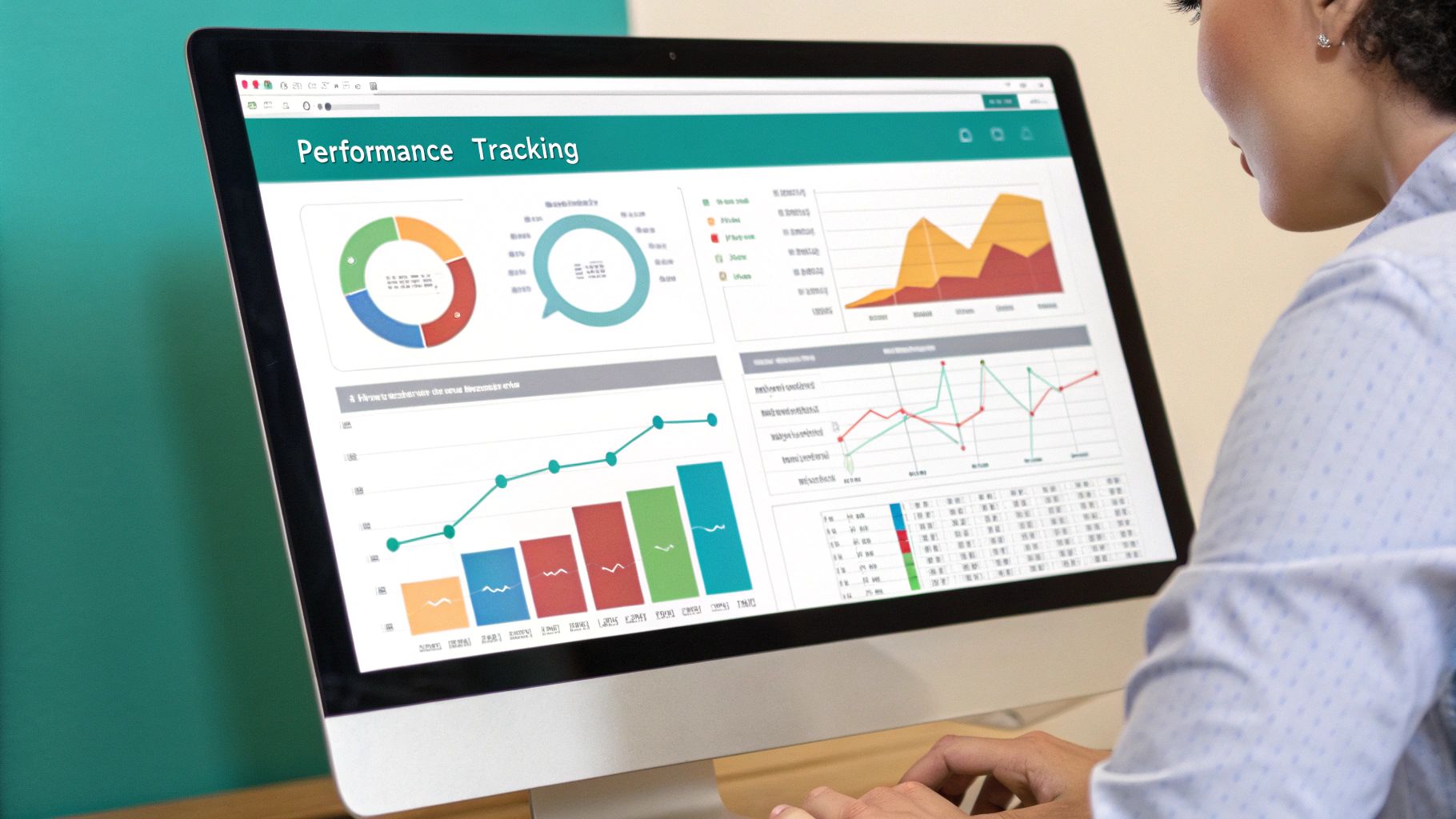
Your affiliate app's dashboard is probably overflowing with data, but it’s easy to get lost in the noise. To figure out what’s really working, you need to laser-focus on the key performance indicators (KPIs) that tell the whole story. Total sales are nice, but the real gold is hidden a layer deeper.
Here are the metrics I always keep on my radar:
- Affiliate Conversion Rate: This is the big one. It’s the percentage of clicks on an affiliate’s link that actually turn into a sale. A high conversion rate is a dead giveaway that their audience is a perfect fit for what you're selling.
- Average Order Value (AOV): Are your affiliates sending you customers who buy a single low-ticket item, or are they driving bigger carts? Knowing your AOV per affiliate helps you spot the partners bringing in the most valuable customers.
- Your Top Performers: Look for the 80/20 rule in action. It’s almost a guarantee that 20% of your affiliates will be driving 80% of your revenue. Find out who these rockstars are and learn everything you can from them.
- New vs. Returning Customers: Are affiliates bringing fresh eyes to your brand or just converting existing fans? Both have their place, but knowing the mix is critical for scaling your customer base.
By checking in on these KPIs regularly, you can graduate from just counting sales to making smart, strategic moves. You'll know exactly who to pour more resources into and what makes their promotions so darn effective.
Keeping Your Affiliates Engaged and Fired Up
Once you’ve identified your top partners, the game becomes about keeping them happy and motivated. At the same time, you want to nudge your mid-tier affiliates to step up their game. This takes more than just on-time commission payments—it requires creativity and genuine engagement.
A fantastic way to light a fire under your affiliates is to run performance-based contests. It can be as simple as offering a $500 bonus to the affiliate with the most sales in Q3 or unlocking a higher commission tier for anyone who breaks a certain revenue goal. A little friendly competition can go a long way.
Another killer tactic? Give them exclusive discount codes for their audience. It makes their followers feel special and gives the affiliate a unique angle that helps them stand out from the crowd.
A motivated affiliate is your best marketing asset. Treat them like a true partner—celebrate their wins, offer support when they struggle, and always keep the lines of communication open. A simple monthly newsletter with updates, tips, and a shout-out to top performers can work wonders.
The entire Shopify affiliate ecosystem is built on these kinds of symbiotic relationships. It's designed to support everyone from developers and agencies to content creators. In fact, affiliates who promote Shopify itself can earn an average of $58 per referral, with commissions sometimes hitting 200% of a customer’s first monthly payment. When you see referral conversion rates between 6% to 10% for targeted audiences, you realize the incredible potential of a well-run program. You can see a more detailed breakdown of affiliate marketing trends for more insights.
Ultimately, managing your affiliate engine isn't about running a network; it's about building a community. When you invest in your partners' success, you're investing directly in your own store's growth and profitability.
Your Shopify Affiliate Marketing Questions Answered
Jumping into affiliate marketing on your Shopify store can feel like a huge undertaking. I see it all the time with store owners I work with. They get tangled up in the details: How much commission should I offer? How do I even pay my affiliates? And the big one—how do I get them to send real traffic that actually converts?
Let's cut through the noise and tackle these common sticking points.
First things first, how do you even get an affiliate program set up on Shopify? The answer is simple: use a dedicated affiliate marketing app from the Shopify App Store. Seriously, don't even think about trying to manage this manually with spreadsheets and unique discount codes. It’s a complete nightmare, full of human error, and impossible to scale once you have more than two affiliates.
A proper affiliate app handles everything automatically—from generating unique tracking links and codes to monitoring every click, conversion, and commission payout. That small monthly fee is an investment in your sanity and the health of your partnerships.
Once the tech is sorted, you can focus on the real work: helping your affiliates solve their biggest problem. And what's that? Getting a consistent stream of high-quality traffic to your product pages.
Driving Traffic with Pinterest: The Visual Search Engine
Your affiliates need eyeballs on your products to earn commissions. It's that simple. While most affiliates default to Instagram or their blog, there's a powerhouse platform that's criminally underutilized for e-commerce: Pinterest.
Forget thinking of Pinterest as just another social network. It’s a visual discovery engine. People go there specifically to find ideas, plan purchases, and discover new products. This mindset makes it a goldmine for Shopify stores. When an affiliate Pins your product, it doesn't feel like a pushy ad; it feels like a helpful discovery, perfectly aligned with what the user was already looking for.
The secret to success on Pinterest is consistency. The algorithm loves fresh content, rewarding accounts that regularly add new Pins. For a busy affiliate juggling multiple channels, that can sound exhausting. This is where you, the savvy store owner, can step in and make your program irresistible.
A Secret Weapon for Your Affiliates: Pin Generator
Here’s how you set your affiliate program apart from the crowd. Introduce your partners to Pin Generator. It’s a tool I recommend constantly because it completely automates the most tedious parts of Pinterest marketing.
Here’s the workflow you can hand them on a silver platter:
- Connect Your Store: They link your Shopify store to their Pin Generator account just once.
- Auto-Import Products: The tool can automatically import your Shopify products into Pin Generator.
- Generate Pins Instantly: With a few clicks, they can generate pins for them instantly using professionally designed templates.
This single tool eliminates the biggest roadblock for most affiliates: the soul-crushing time it takes to create content. Instead of spending hours tinkering in Canva, they can schedule an entire month's worth of SEO-friendly Pins in a matter of minutes.
By offering this strategy (and the tool to execute it), you’re giving them far more than just a commission rate. You’re handing them a proven system for success. This not only makes your program more appealing to top-tier affiliates but also builds an automated traffic and sales pipeline for your store. This is how you win at affiliate marketing on Shopify in the real world.
Ready to give your affiliates the ultimate tool for driving traffic? With Pin Generator, you can automate your Pinterest marketing, create beautiful Pins in seconds, and drive more sales to your Shopify store. See how it works at Pin Generator.