
Build a Successful Affiliate Marketing on WooCommerce Platform
24 August 2025
Affiliate marketing on WooCommerce is pretty straightforward: you recruit partners to promote your products, and you pay them a commission for every sale they send your way. It’s like having a sales team that you only pay when they actually deliver results. For a growing eCommerce store, this is one of the most cost-effective ways to get the word out.
Why Affiliate Marketing Is a Growth Engine for Your Store
Before we jump into the "how-to," let's talk about why this is such a game-changer for a WooCommerce store. This isn't just another marketing channel to throw money at. It’s a completely different way of thinking. You stop paying for vague metrics like clicks or impressions and start rewarding actual, tangible sales. The financial risk drops to almost zero, because your marketing spend is directly tied to revenue coming in.
Think about it. A popular blogger in your niche posts a rave review about one of your products. With an affiliate program, you give them a special link to include in their post. Every time a reader clicks that link and buys something, the blogger gets a cut. It's a win-win. You just landed a sale from a trusted source, and the blogger got paid for their influence.
The Power of Social Proof and Targeted Traffic
One of the best parts of affiliate marketing is the built-in social proof. When a creator or influencer your target audience already follows recommends your product, it’s a powerful endorsement. It’s not an ad; it’s a genuine suggestion. That trust makes their followers way more likely to buy than some random person who saw a Facebook ad.
This approach also brings in incredibly targeted traffic. Your affiliates have already done the hard work of building an audience that’s interested in what you sell. Their followers are your ideal customers, so the traffic they send over is pre-qualified and ready to convert.
This pay-for-performance model really levels the playing field. It lets smaller WooCommerce stores compete with the big brands without needing a massive upfront advertising budget. You're paying for results, period.
A Scalable and Cost-Effective Strategy
The numbers don't lie. The affiliate marketing industry is on track to hit $31.7 billion globally by 2031. It’s a proven, effective model. And with WooCommerce powering over 6.1 million websites, setting up a program plugs you into a huge ecosystem.
In fact, over 80% of advertisers already run affiliate programs, which drive about 16% of all eCommerce sales. If you want to dig deeper, you can explore more about these industry trends to see just how big the opportunity is.
At the end of the day, an affiliate program is an efficient, scalable way to grow your WooCommerce store. You diversify your marketing, build your brand's authority through trusted partners, and create a revenue stream that’s directly tied to performance.
Choosing Your WooCommerce Affiliate Plugin
The engine that powers your affiliate program is just as critical as the partners you bring on board. Think of it this way: choosing the right plugin for your WooCommerce store is a major decision. It directly impacts how easily you can manage commissions, track who's sending you sales, and give your affiliates a great experience.
A clunky or unreliable system is a recipe for disaster. It'll frustrate your partners and could kill your program before it even gets off the ground.
This isn't about finding the plugin with the longest feature list. It's about zeroing in on what actually matters for long-term growth: rock-solid tracking reliability, simple commission management, and an intuitive dashboard that your affiliates will actually like using.
Let's look at how a well-run affiliate program can seriously move the needle for a WooCommerce store. This really shows the potential return you get from investing in the right tech from the start.
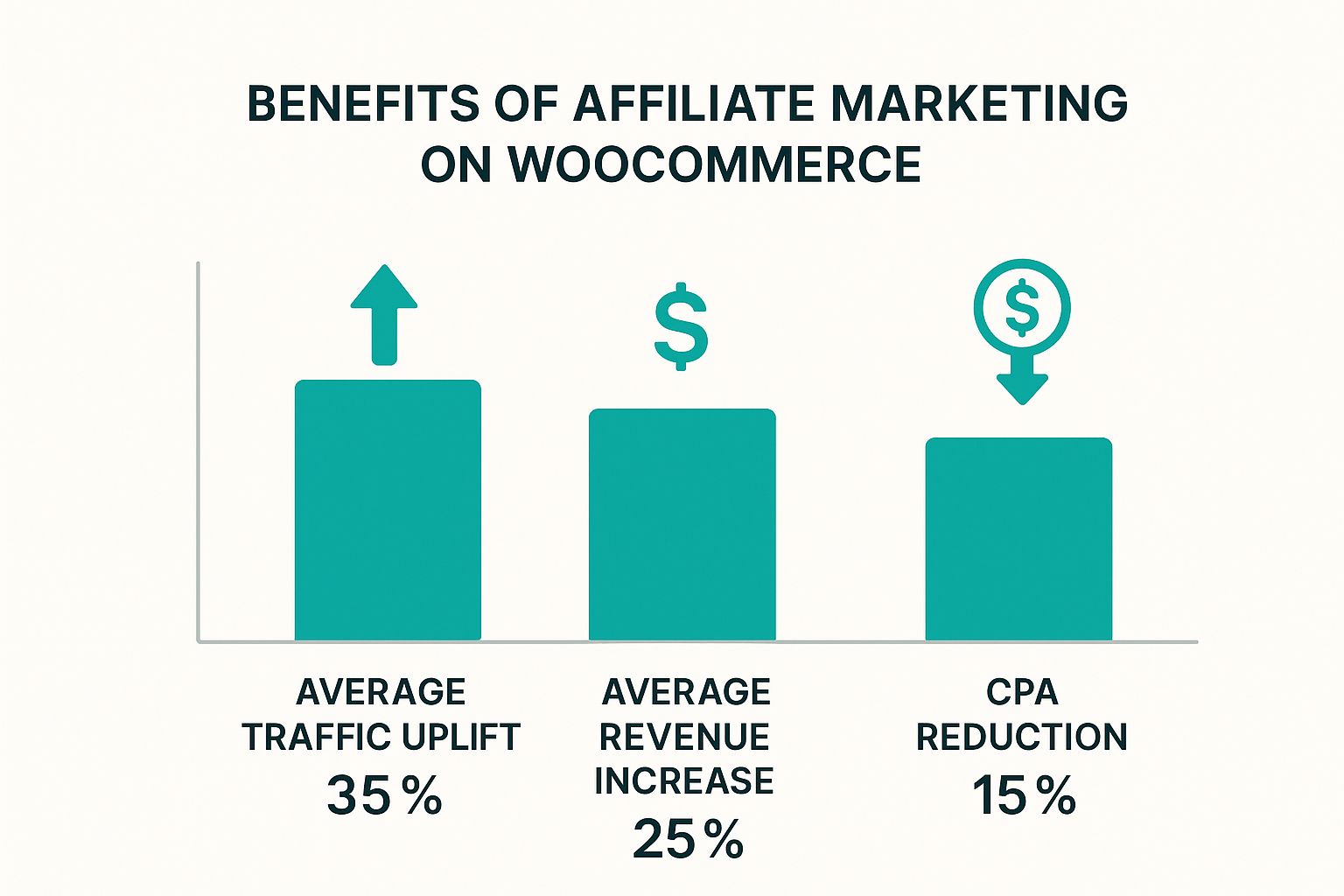
The numbers don't lie. A strong program delivers more than just revenue; it drives a ton of traffic and makes your customer acquisition way more cost-effective.
Core Features to Look For
When you're comparing your options, there are a few non-negotiables.
First, real-time reporting is a must. Your affiliates need to see their clicks, referrals, and commissions update quickly. A laggy dashboard is a huge demotivator and just looks unprofessional.
Second, the plugin has to integrate seamlessly with WooCommerce. This means it needs to automatically handle commission calculations (even on different products), process refunds by reversing commissions, and support cool features like coupon code tracking. Assigning an affiliate their own unique coupon code is a fantastic way to simplify promotion for everyone.
Finally, think about the affiliate experience. A dedicated affiliate area where your partners can grab links, check stats, and access marketing materials is essential. It's the difference between a hobby-level program and a professional, scalable one.
Comparing Top WooCommerce Affiliate Plugins
To help you get started, let's look at three of the most popular and reliable choices out there: AffiliateWP, Solid Affiliate, and Easy Affiliate. While they're all fantastic, they're built for slightly different needs.
Picking the right tool from the get-go is crucial. To make it easier, here's a side-by-side comparison of their key features to help you see which one aligns best with your store's needs and budget.
WooCommerce Affiliate Plugin Feature Comparison
| Feature | AffiliateWP | Solid Affiliate | Easy Affiliate |
|---|---|---|---|
| One-Click Payouts | ✅ | ✅ | ✅ |
| Real-Time Reporting | ✅ | ✅ | ✅ |
| Affiliate Coupon Tracking | ✅ | ✅ | ✅ |
| WooCommerce Integration | ✅ | ✅ | ✅ |
| Included Add-ons | Limited (Pro Add-ons) | All Included | All Included |
| Starting Price | $149.50/year | $99.50/year | $99.60/year |
| Free Version Available | ❌ | ❌ | ❌ |
| Best For | Scalability & Flexibility | All-in-One Simplicity | Beginners & Easy Setup |
As you can see, each plugin has its strengths. Your choice really depends on what you value most—the endless customization of AffiliateWP or the straightforward, all-inclusive nature of Solid Affiliate and Easy Affiliate.
When making your choice, think about where you'll be a year from now. Starting with a cheap or basic plugin might save a few bucks today, but migrating an entire affiliate program down the road is a massive headache. Investing in a scalable solution from day one is almost always the smarter long-term play.
All of these plugins operate right inside your WordPress dashboard, which is a huge plus. And if you want to explore the bigger picture, many of the strategies we discuss here apply platform-wide. For more on that, check out our complete guide on affiliate marketing on WordPress to get ideas that go beyond just your store.
Ultimately, the best plugin is the one that makes your life easier, freeing you up to focus on recruiting awesome partners and growing your sales.
Designing a Program Affiliates Want to Join
Alright, you've got your plugin installed. Now for the fun part—actually building a program people are excited to join. The tech is just the vehicle; the real engine of your affiliate marketing success is creating a partnership that high-quality affiliates can't wait to be a part of.
A killer offer isn't just about the commission rate. It’s the whole package: fair rewards, crystal-clear rules, and a smooth, hassle-free experience for your partners.
Step into your affiliates' shoes for a moment. They're putting their own time, effort, and reputation on the line to send people your way. Your program has to honor that by being both rewarding and trustworthy. A clunky, confusing, or cheap-looking program will scare off the very people who could drive serious revenue.
Crafting a Compelling Commission Structure
The commission structure is the heart and soul of your affiliate program. It's the number one reason people sign up, so it needs to be competitive without tanking your profit margins. There's no one-size-fits-all answer here—the right model really depends on your products and what's standard in your niche.
Here are the most common setups I see:
- Percentage-Based Commission: This is the most popular route, hands down. Affiliates earn a percentage of every sale they refer. It’s great because it scales perfectly—the more they sell, the more they make. For digital goods, a 10-20% commission is a pretty standard starting point. For physical products, it’s usually a bit lower, maybe around 5-10%.
- Flat-Rate Commission: This one's simple: you pay a set dollar amount for each sale, no matter the cart size. It works best if you have just a few products that are all priced similarly. Affiliates love the predictability.
- Tiered Commission: This is my personal favorite for incentivizing top performers. You create tiers that unlock higher commission rates as affiliates hit sales goals. For instance, everyone starts at 10%, but once they drive 25 sales, they automatically jump to 15%.
A tiered commission structure is a game-changer for motivation. It makes the partnership feel like a progressive career path, not just a one-off gig, encouraging your best people to stick around and keep pushing your products.
Defining Your Program's Rules of Engagement
Money is important, but so is trust. The "fine print" of your program can make or break your relationships with affiliates. Clear, fair terms build confidence and head off potential arguments down the road.
Two things you absolutely have to nail down are your cookie duration and your terms and conditions.
The cookie duration is the time window an affiliate has to get credit for a sale after someone clicks their link. A typical range is 30 to 90 days. Honestly, the longer, the better. A generous window shows you respect the buyer's journey and gives your affiliates a fair shot at earning their commission.
Your terms and conditions need to be written in plain English, not legalese. This is where you'll lay out everything they need to know, including:
- When and how they get paid (e.g., net-30, first Monday of the month)
- The minimum payout threshold (how much they need to earn before you send a payment)
- What's allowed and what's not (e.g., rules around PPC bidding on your brand name)
- What could get them kicked out of the program
Finally, don't overlook the onboarding process. Make signing up a breeze. Once an affiliate is approved, they should instantly get a welcome email with their login, unique affiliate link, and a quick-start guide. The less friction there is to get started, the faster they'll start making you money.
Recruiting and Empowering the Right Affiliates
Let's be honest, a world-class affiliate program is nothing without the right people promoting it. The real magic of affiliate marketing on WooCommerce ignites when you connect with promoters who genuinely love your brand and resonate with your audience. This isn't just about getting as many sign-ups as possible; it’s about building a small army of authentic brand advocates.
So, where do you find these people? The search should always start with those who already know and love what you sell. Your most loyal customers are your biggest untapped resource. They already get it. They can talk about your products with real passion, which makes them incredibly believable and effective.
Finding Your Ideal Partners
Your existing customer base is the lowest-hanging fruit. A simple email blast announcing your new affiliate program can turn happy customers into high-performing partners almost instantly. You can frame it as an exclusive chance for them to earn cash just by sharing the products they're already using.
Once you've tapped into your customers, it's time to look outward toward influencers and creators in your space.
- Industry Bloggers: Hunt down bloggers who write about topics related to your products. A single, well-written review or tutorial on their site can send a stream of highly qualified traffic your way.
- YouTube Creators: Video is huge. Find YouTubers who are creating product reviews, unboxings, or "best of" lists in your niche and get in touch.
- Social Media Influencers: Look for creators on platforms like Instagram, TikTok, or even Facebook whose audience looks a lot like your ideal customer.
Quick tip from the trenches: Always prioritize brand alignment over sheer audience size. A micro-influencer with a super-engaged, niche following will almost always drive more sales than a mega-influencer with a million followers who don't really care.
Vetting and Onboarding Affiliates Effectively
So, you have a list of potential partners. Great. Now comes the critical part: vetting. Take a good look at their content. Does their tone and style mesh with your brand? You're looking for authentic engagement and a community that genuinely trusts their recommendations. A quick scan of their past promotions can tell you if they're just in it for a fast buck or if they actually care about quality.
Once you approve someone, the onboarding process really sets the tone for the entire relationship. A messy or confusing start can completely derail their motivation. Your job is to make it dead simple for them to get started and start earning.
Make sure your welcome sequence nails these points:
- A personal welcome email with their unique affiliate link and login info.
- A simple quick-start guide that clearly explains your commission rates, when they get paid, and any important rules.
- Easy access to a resource center packed with all your marketing materials.
Empowering Affiliates for Long-Term Success
Getting an affiliate signed up is just the beginning. The programs that really crush it are the ones that actively support their partners. This is about more than just a contract; it's about building a collaborative relationship where you help them win.
Start by providing a solid library of creative assets. This means giving them high-quality product photos, pre-written social media captions (often called swipe copy), slick banners, and maybe even some short video clips. The easier you make it for them to create awesome content, the more they'll promote you. It's that simple.
Regular communication is also a game-changer. Think about sending out a monthly affiliate newsletter. You can share updates on new products, let them know about upcoming sales, and even suggest content ideas. It's also a great idea to highlight your top-performing affiliates—a little friendly competition never hurts and can give others great ideas. When you invest in your partners' success, you're really investing in the long-term growth of your entire WooCommerce affiliate program.
Tracking Performance and Optimizing for Growth
Getting your affiliate program live is a huge first step, but it’s really just the starting line. The real magic—and the real growth—happens when you dig into the data, see what's clicking (literally), and fine-tune your strategy.
You simply can’t improve what you don’t measure. Think of your affiliate plugin’s dashboard as the command center for your entire operation. This is where affiliate marketing on WooCommerce truly comes alive, moving beyond guesswork and into data-driven decisions that actually impact your bottom line.
Key Metrics to Keep an Eye On
Your dashboard is probably overflowing with data, and it's easy to get lost in the weeds. To avoid that, I recommend focusing on a handful of key performance indicators (KPIs) that tell you the most important stories about your program's health.
Here are the metrics I check religiously:
- Click-Through Rate (CTR): This is the percentage of people who actually click an affiliate's link. A high CTR tells you their content is resonating and doing a great job of grabbing their audience's attention.
- Conversion Rate: This is the big one. It shows how many of those clicks are turning into paying customers. A healthy conversion rate means the affiliate is sending you high-quality traffic that's ready to buy.
- Average Order Value (AOV): This metric shows how much customers are spending, on average, when they come from an affiliate's link. You're looking for partners who bring in customers with deep pockets, not just one-off bargain hunters.
By looking at these three KPIs together, you get a crystal-clear picture of an affiliate's real performance. It's not just about who sends the most traffic; it's about who sends the most profitable traffic.
For example, a 10% conversion rate is a fantastic sign of strong buyer intent—say, if your affiliates drive 2,000 sales from 20,000 clicks. If those sales generate $10,000 in revenue from 100 orders, the average order value is $100. Ideally, you want this AOV to be right up there with your other marketing channels, proving that affiliates are bringing in truly valuable customers.
Turning Your Data into Action
Data is worthless if you don't do anything with it. So, let's walk through a common scenario.
Imagine you spot an affiliate—a popular blogger—who is sending you thousands of clicks (great CTR!), but their conversion rate is hovering below 1%. That’s a classic red flag that something is getting lost in translation between their site and yours.
Your first instinct might be to cut them loose, but hold on. Reach out and start a conversation. The fix could be incredibly simple, like a broken link or an outdated promo code. Maybe they're promoting you on a platform like Pinterest but aren't quite nailing the strategy. In fact, our guide on using Pinterest and affiliate links covers exactly these kinds of platform-specific nuances.
By working with them, you could suggest a new call-to-action or give them some fresh banners. This simple, data-informed conversation can turn a low-performing affiliate into a top earner and build a much stronger, more profitable partnership for the long haul.
Answering Your Top WooCommerce Affiliate Program Questions
Jumping into affiliate marketing for your WooCommerce store can bring up a lot of questions. It's totally normal. Getting the answers sorted out before you launch will save you a ton of headaches and help you build a program that actually works.
Let's clear up some of the most common questions I hear from store owners.
Can I Run an Affiliate Program Without a Plugin?
Technically, yes, you could try to build a custom solution. But honestly, I would never recommend it.
Trying to manually track affiliate clicks, make sure the right person gets credit for a sale, figure out commissions, and handle payouts is a nightmare waiting to happen. It's incredibly time-consuming and prone to expensive errors that can damage your relationships with your partners.
A dedicated affiliate plugin handles all of that heavy lifting for you. It automates the entire process, provides accurate tracking, and gives your affiliates a professional dashboard to see their stats. This frees you up to focus on what really matters: growing your business.
How Much Should I Pay My Affiliates?
This is the million-dollar question, and there's no single perfect answer. The right commission rate really depends on your industry, your products, and especially your profit margins.
For digital products, a commission between 10-20% is a pretty standard starting point. If you're selling physical goods, you'll likely be looking at something closer to 5-10%.
A great tip is to do a little recon. See what your competitors are offering their affiliates. You want your program to be competitive enough to attract the best partners.
Here's a pro tip: Think about setting up a tiered commission structure. You could start affiliates at 10%, but automatically bump them up to 15% once they drive 25 sales. It's a fantastic motivator for your top performers and builds serious loyalty.
What's the Difference Between an Affiliate Program and a Referral Program?
People often use these terms interchangeably, but they're built for different purposes. Knowing the distinction is key.
- Affiliate Programs are structured marketing partnerships. You team up with bloggers, influencers, and content creators who promote your products to their audiences. It’s a performance-based model designed to scale your reach far and wide.
- Referral Programs are usually much simpler and aimed at your existing customers. Think of it as a digital "word-of-mouth" system. A customer refers a friend and gets a small reward, like store credit or a discount on their next purchase.
Both have their place, but if your goal is to build a powerful, scalable marketing channel, an affiliate program is what you're looking for.
Ready to drive traffic and sales on autopilot? Pin Generator helps you automate your Pinterest marketing in seconds. Start growing your business with Pin Generator today.