
Pinterest Affiliate Marketing for Beginners 2026 - Step by Step Guide
13 June 2026
If you’re curious about Pinterest affiliate marketing and whether it’s a realistic way to make money in 2026, this article is going to clear everything up. We’re sharing the beginner’s guide to Pinterest affiliate marketing, including how to get set up, how to choose the right programs, and the top mistakes to avoid.
With over 619 million monthly users, Pinterest continues to be one of the most powerful platforms for search and discovery, so if you’re looking to make money online, Pinterest is a great opportunity to get your content, products, or affiliate links in front of the right people.
Unlike Instagram or TikTok where content disappears within a day or two, a well-optimized Pinterest pin can drive traffic and commissions for months or even years after you post it, which makes it one of the most sustainable platforms for building passive income over time.
What is Affiliate Marketing
Affiliate marketing is when you recommend a product, share a unique link to that product, and when someone clicks your link and makes a purchase, you earn a commission on the sale. There is no product to create, no inventory to manage, and no customer service to deal with. You are simply connecting the right person to the right product at the right time.
It is one of the most accessible ways to earn money online, but it does take time to build. Becoming a trusted source of recommendations in your niche, growing your Pinterest presence, and finding the programs that convert well for your specific audience are all part of the process. The good news is that once you have a system in place, the content you create keeps working for you long after you post it.
Prefer to watch instead of read? We’re walking through the step-by-step process on our YouTube channel.
Why Pinterest is Great for Affiliate Marketing
Pinterest is an excellent platform for affiliate marketing because it’s a search engine, not social media. Similar to Google or YouTube, Pinterest is used to answer questions that people are actively searching for. Whether someone is looking for the best products for sensitive skin, a home office setup on a budget, or a gift idea for a specific occasion, people come to Pinterest with search intent and usually the desire to buy. This makes Pinterest an excellent place to share links, resources, reviews, and guides that provide real value to the reader while promoting a product at the same time.
Pinterest is also designed to send people off the platform, which is opposite of how Instagram and TikTok work. Every pin has a destination link built into it, and the whole point is for someone to click through to your affiliate product, blog post, or recommendation page. For affiliate marketers, that means the platform is actively working in your favor rather than against you.
And unlike social media posts that disappear within a day or two, a well-optimized Pinterest pin can drive traffic and commissions for months or even years after you post it. That long content lifespan is what makes Pinterest one of the more sustainable platforms for building passive income over time.
How to Find the Right Affiliate Program
Finding the right affiliate program is one of the most important steps, and it’s worth taking some time here before you start creating pins. Not every program works well for Pinterest specifically, and some have restrictions on direct linking from social platforms that can catch you off guard after you’ve already signed up.
Amazon Associates is the most common starting point for beginners because it covers nearly every product category, buyers already trust the platform, and the approval process is relatively accessible. Commission rates run between 1% and 10% depending on the category, and the cookie window is 24 hours, meaning a purchase needs to happen within a day of someone clicking your link for you to earn credit. And if you’re looking to learn more about Amazon, here’s how to get started.
For higher commission rates and longer cookie windows, affiliate networks like AWIN (ShareASale), CJ Affiliate, and Impact are worth exploring too. These networks give you access to thousands of individual brand programs in one place, with commissions that often range from 5% to 30% or more. The longer cookie durations are particularly useful for Pinterest, where users tend to discover something and come back to purchase it days later.
There are also niche-specific programs worth knowing about depending on your content area. For example, LTK is a strong option for fashion and beauty creators and TravelPayouts is a great platform with travel-focused programs. And if you’re promoting software or digital products, SaaS affiliate programs tend to offer some of the highest commission rates available.
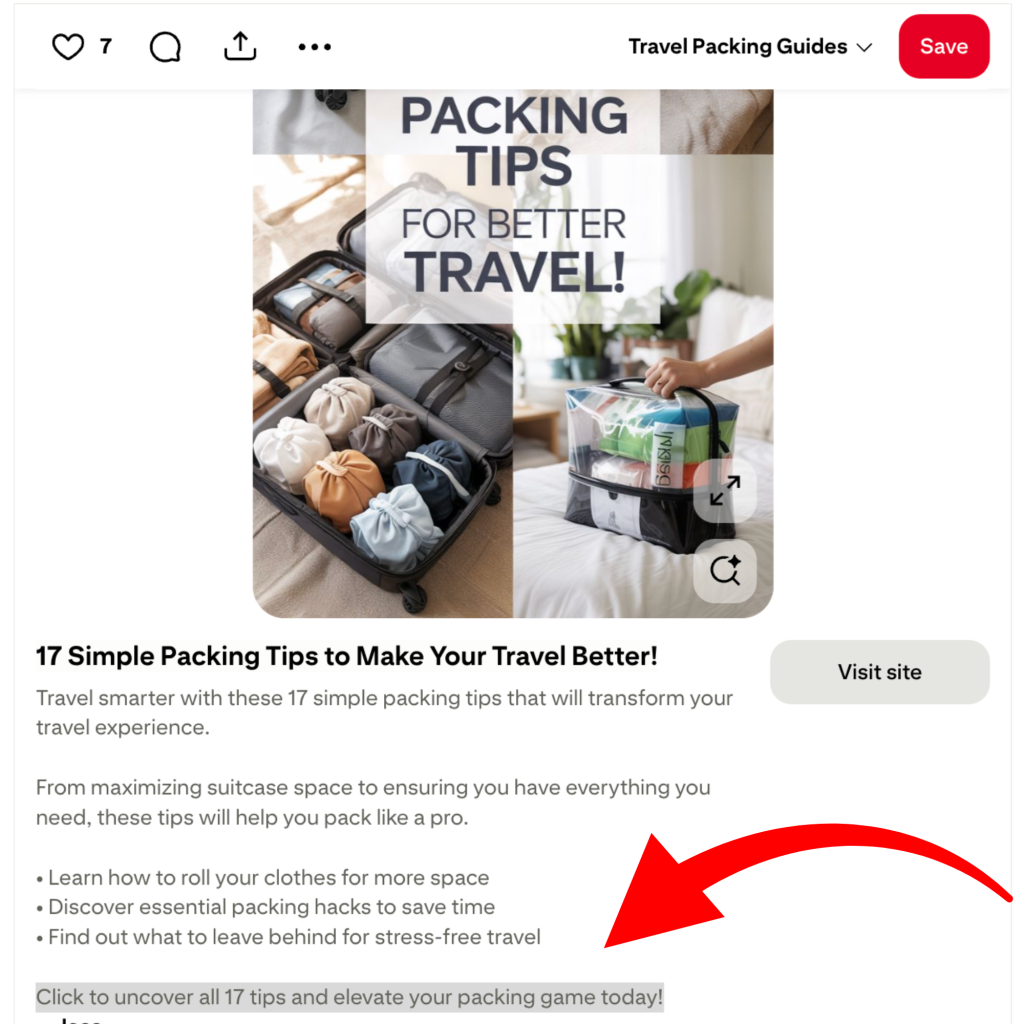
The simplest way to find programs in your niche is to start with brands you already use or genuinely recommend, then search the brand name alongside the words “affiliate program.” Most companies list this in their website footer, and if you can’t find it there, searching for the brand on ShareASale or Impact will often surface programs that aren’t widely advertised.
How to Get Approved and Stay Compliant
Most affiliate programs want to see an existing online presence before they approve you, whether that’s a Pinterest account with content already published, a blog, a YouTube channel, or another active social profile.
Once you’re approved, you must also follow the rules to stay compliant with your program’s terms and Pinterest’s policies too. For example:
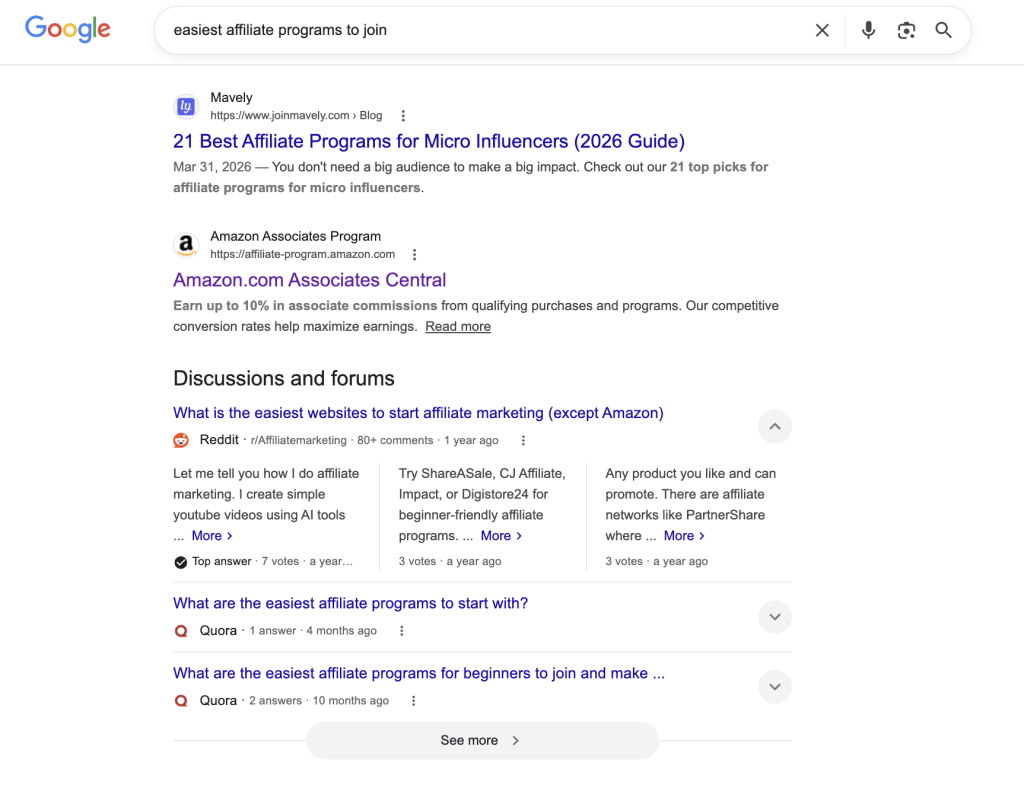
- You must disclose affiliate links in your pin descriptions, either by writing something like “this pin contains affiliate links” or by including #affiliate or #ad. This is both a Pinterest platform requirement and an FTC legal requirement, so it applies regardless of where you’re based.
- You should avoid link shorteners such as Bitly or TinyURL, as they can get your pins flagged as spam. Always use your full affiliate URL.
- You should avoid posting the same affiliate link repeatedly in a short period, as it also raises red flags with Pinterest’s algorithm. Space your pins out and mix affiliate content in with helpful, non-promotional pins to keep your account looking natural and balanced.
Top Tools to Stay Consistent
Consistency is what drives results on Pinterest, and it’s also the part that most people struggle with the most. Manually designing pins, writing descriptions, and scheduling everything by hand takes more time than most people have available, and it’s usually what leads to the inconsistent posting patterns that slow down account growth.
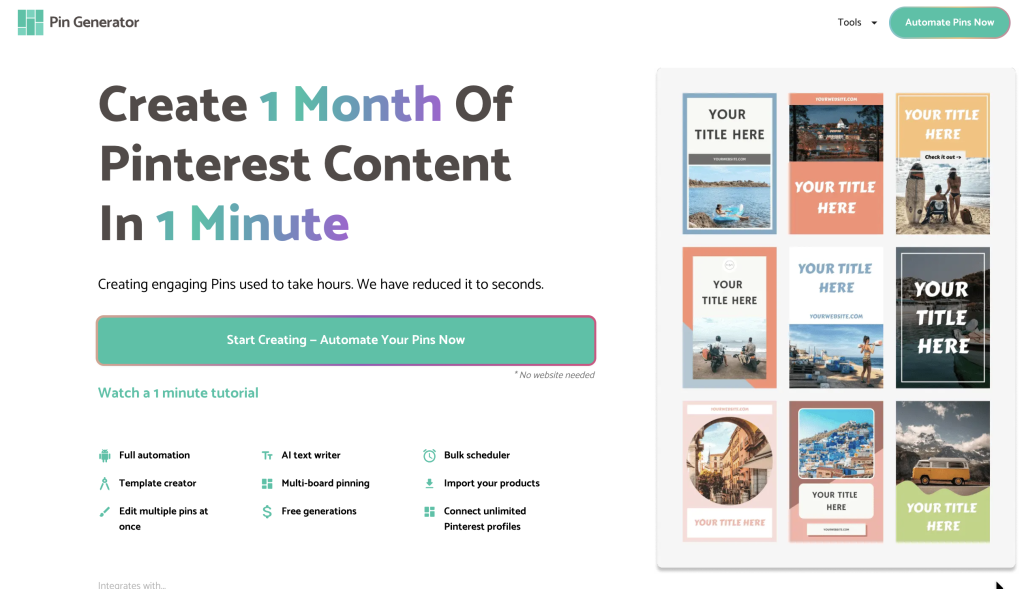
Pin Generator is our favorite tool to simplify the workflow. Simply connect your affiliate links or blog posts, choose from a library of templates, and generate multiple pin variations quickly. From there you can schedule everything to publish gradually over days or weeks, which keeps your account active and gives Pinterest the steady, natural activity it rewards. The automation workflow inside Pin Generator also makes it possible to set up a publishing schedule that largely runs itself, which is especially useful if you’re just getting started and want to focus on building your content rather than managing the logistics of posting every day.
Ready to Get Started?
Pinterest affiliate marketing takes time to build, but it’s one of the more sustainable income models available for creators in 2026. The pins you create today can still be driving traffic and earning commissions a year from now, and that kind of compounding return is hard to replicate on any other platform. If you’ve been looking for a way to monetize your content without starting from scratch every day, this is a system worth building. Try Pin Generator for free and see how much easier it is to stay consistent when the workflow is already built for you.
Let’s get generating!