
Master Your Pinterest Marketing Strategy for Growth
15 September 2025
A successful Pinterest marketing strategy isn't just about pinning pretty pictures. It's about tapping into a visual discovery engine where millions of people are actively planning what to do or buy next. Think of it as a massive, ongoing brainstorming session for shoppers, and your brand has the chance to provide the exact inspiration they’re searching for.
Why Pinterest Is Your Untapped Growth Engine
So many marketers make the mistake of lumping Pinterest in with other social media platforms. They treat it as a place to share what’s already happened—a past event, a recent product launch, a completed project. But that completely misses the point. Pinterest is fundamentally different because it’s a platform for the future.
People don't jump on Pinterest to scroll through feeds of what their friends did last weekend. They come with a purpose. They're actively searching for ideas and products for what’s next in their lives. They are planning weddings, dreaming up home renovations, looking for next week's dinner recipes, or finding the perfect outfit for an upcoming vacation. This forward-looking mindset is an absolute goldmine for businesses.
The Power of Purchase Intent
On most social media, users are just passively scrolling. Your marketing is often an interruption. On Pinterest, it’s a completely different story. The platform is built around active discovery and planning, which means marketing feels less like an ad and more like a helpful suggestion. The user is already in a buying or planning mode, making them incredibly open to branded content that helps them achieve their goals.
The numbers tell the same story. As of early 2025, Pinterest had over 570 million monthly active users. Get this: a staggering 85% of its weekly users reported making a purchase influenced by Pins they saw from brands. That's a direct line from discovery to real-world sales. You can find more incredible stats about Pinterest's user base over on thunderbit.com. This sky-high purchase intent is exactly what makes a dedicated Pinterest strategy so ridiculously effective.
At its core, Pinterest isn't about connecting with friends; it's about connecting with your future self. For marketers, this means you can reach customers at the precise moment they are making decisions about what to buy, do, and create.
A Visual Search Engine for Commerce
It helps to think of Pinterest less as a social network and more as a visual search engine. Every single Pin is a chance to answer someone's visual query. When a user searches for "minimalist living room ideas," they are basically shopping for furniture, decor, and a specific vibe. Your brand can be the solution they stumble upon and fall in love with.
This unique position makes Pinterest a must-have tool for:
- E-commerce Brands: Show your products in real-life settings, create shoppable Pins, and guide users straight from inspiration to checkout. It's a natural fit.
- Service-Based Businesses: Build authority and reel in qualified leads by offering valuable visual guides, checklists, and infographics that solve a potential client’s problem.
- Content Creators and Bloggers: Drive huge waves of targeted traffic to your articles and tutorials by creating Pins that promise valuable, click-worthy information.
Ultimately, building a solid Pinterest marketing strategy isn’t just another task to check off your list. It’s a direct line to a high-intent audience that’s ready to take action.
Building Your Strategic Foundation on Pinterest
Jumping onto Pinterest without a solid plan is a lot like setting sail without a map. You might float around and see some pretty things, but you’ll never actually get where you want to go. A killer Pinterest marketing strategy doesn't start with your first Pin—it starts way before that, with a solid foundation built on clear goals, knowing your audience inside and out, and some smart keyword research.
Think of your goals as your North Star. They're what guide every single decision you make, from the content you dream up to the boards you create. Vague wishes like "get more followers" just won't cut it. You need specific, measurable targets that actually connect to your business's bottom line.
Define Your Business Objectives
First things first: what do you actually want Pinterest to do for your business? Your goals need to be real and trackable. For instance, you could aim to:
- Increase website traffic by 25% over the next three months.
- Generate 50 new email subscribers every month from a lead magnet Pin.
- Boost sales for a specific product line by 15%.
- Drive 100 sign-ups for your next webinar.
Setting these kinds of clear benchmarks is what turns your Pinterest activity from a hobby into a real marketing machine. It lets you see what's working and what's not, making sure your time and effort are paying off. This clarity is the bedrock of any good Pinterest strategy.
Understand Your Pinterest Audience
Once you've got your goals locked in, it's time to get inside the head of your ideal customer on Pinterest. Who are they? And more importantly, what are they looking for? This goes beyond basic demographics; it’s about understanding their dreams, their problems, and what inspires them. Remember, they're on the platform actively searching for solutions and ideas.
The image below shows just how critical it is to dig into demographic data to really nail down who you're talking to.
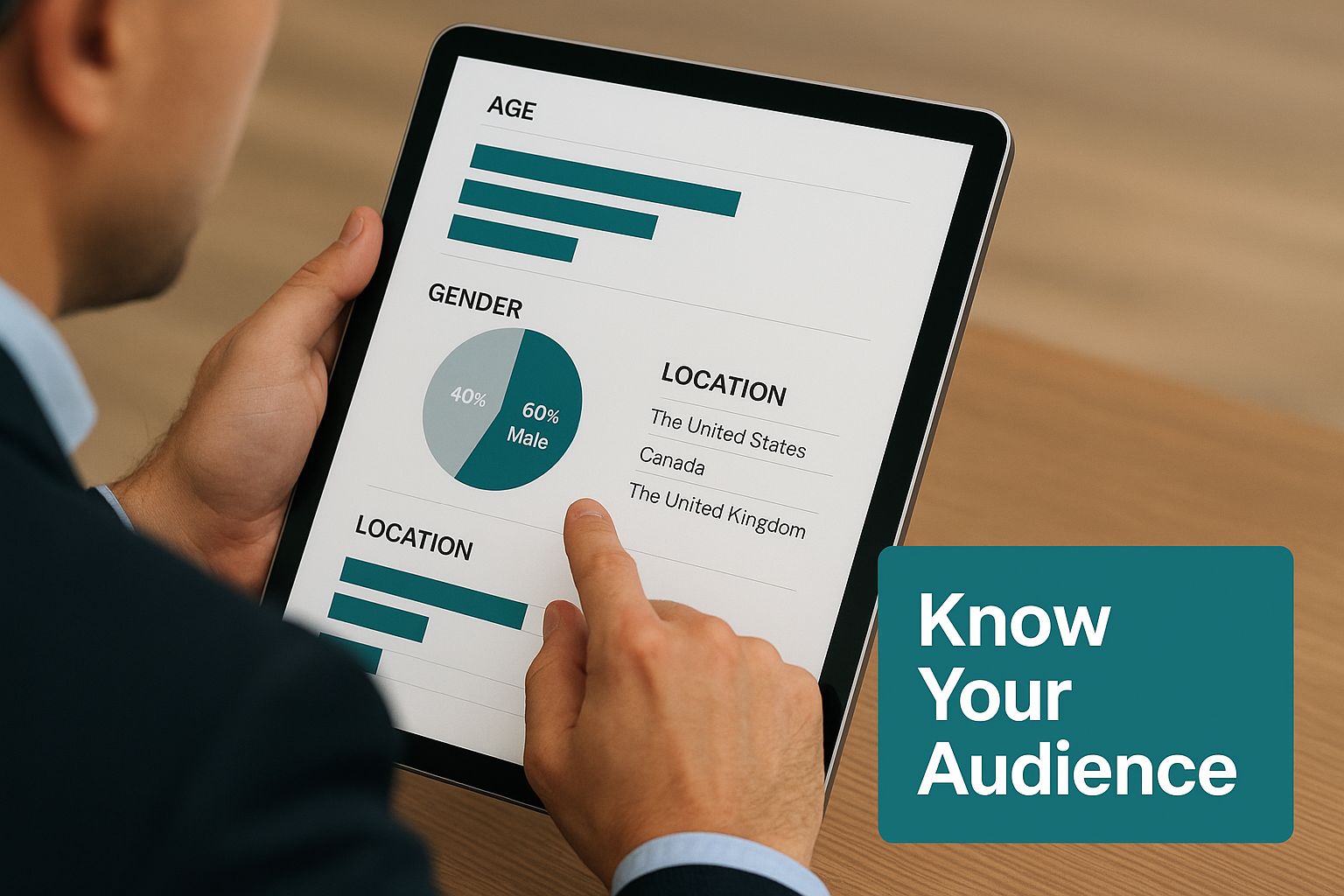
This kind of deep dive helps you stop guessing and start creating content that genuinely connects. You have to know what problems they're trying to solve—whether that’s finding a quick weeknight dinner recipe or planning a full-blown home remodel.
A huge mistake I see people make is creating content for the audience they already have on other platforms. Your Pinterest audience might have totally different interests and search habits. Always tailor your strategy for the unique planning-and-discovery mindset of a Pinner.
Master Pinterest SEO and Keyword Research
Okay, this is where your strategy gets its real horsepower. Pinterest isn’t just a social network; it’s a visual search engine. And just like Google, it runs on keywords. Uncovering the exact words and phrases your audience is typing into that search bar is the secret to getting your content discovered. Skipping this step is like whispering your message in a packed stadium.
The best place to start your research is right inside the Pinterest search bar. Type in a broad term related to your niche, like "home decor," and watch the auto-suggested phrases pop up. These are real, popular searches that give you a direct peek into what users want. You might see things like:
- "home decor ideas living room"
- "home decor on a budget"
- "home decor minimalist"
Each one of these is a golden long-tail keyword you can build content around. Your mission is to gather a list of these terms to guide your Pin titles, descriptions, and even the text you put on your Pin images. To make this way easier, Pin Generator has a built-in Pinterest keyword research tool that helps you find high-impact keywords in a fraction of the time.
Before you start pinning, it's crucial to have these core components locked down. Think of them as the essential prep work that sets you up for long-term success. The table below breaks down these foundational pillars and gives you a clear starting point for each.
Core Components of Your Pinterest Strategy
| Component | Key Objective | Actionable First Step |
|---|---|---|
| Business Goals | To define what success looks like and how to measure it. | Set 2-3 S.M.A.R.T. goals (e.g., "Increase website traffic by 20% in Q3"). |
| Audience Profile | To understand who you're talking to and what they need. | Create a detailed "Pinner Persona," including their pain points and aspirations. |
| Keyword Research | To get your content discovered by the right people. | Use the Pinterest search bar to find 10-15 relevant long-tail keywords for your niche. |
Nailing down these fundamentals ensures every single Pin you create has a clear purpose. This data-driven approach is what transforms your Pinterest profile from a simple collection of nice pictures into a predictable engine for growing your business.
Creating Pins That Actually Drive Action
Once you've got your strategy sorted, it's time for the fun part: making the content that will actually get you noticed. A winning Pinterest marketing strategy isn't about just pinning random stuff; it's about creating content with a clear purpose. Think of every Pin as a tiny digital billboard—its job is to stop the scroll, make people curious, and push them to do something.
This means every single element has to work together, from the image itself to the text on top and the description you write. You're not just making pretty pictures. You're crafting a compelling piece of content that connects with your ideal customer and nudges them toward the next step, whether that's saving your Pin, clicking over to your blog, or buying your product.
Designing Pins That Stop the Scroll
On a platform as visual as Pinterest, your design is everything. It's your first impression. A clunky, poorly designed Pin will get scrolled past in a heartbeat, no matter how great the idea behind it is.
First thing's first: always use a vertical aspect ratio. The sweet spot is a 2:3 ratio (think 1000 x 1500 pixels). This format takes up the most screen real estate on phones, where most people are browsing Pinterest. It instantly makes your Pin stand out.
Next, you need bold, easy-to-read text overlays. This is your headline, and it needs to spell out the value of clicking through. Use your brand's fonts and colors to build consistency. Over time, your followers will start recognizing your content instantly in their crowded feeds.
Choosing the Right Pin Format for Your Goals
Pinterest has simplified its formats over the years, but knowing your options is still super important. While Standard Pins are the bread and butter of the platform, other formats can help you hit specific goals.
- Standard Pins: These are your classic static images that link out to a URL. They're perfect for driving traffic to blog posts, product pages, or any kind of landing page.
- Video Pins: Short videos are fantastic for grabbing attention. Use them to show a process, demo a product in action, or tell a quick story. They can really pump up your engagement.
- Product Pins: If you sell physical goods, these are a must. They pull info like real-time pricing and availability straight from your e-commerce site.
The format you choose should tie directly back to your goal for that Pin. Want more website traffic? A Standard Pin with a killer call-to-action is your best bet. Trying to build brand awareness? A catchy Video Pin will likely get you better results.
The best Pinterest strategies don't just stick to one type of Pin. They mix it up with different formats to keep things fresh, appeal to different people in their audience, and hit a variety of business goals.
Writing Compelling Titles and Descriptions
Your visuals grab the attention, but it’s your words that seal the deal. Your Pin title and description are what convince people to click, and they're also crucial for helping the Pinterest algorithm figure out what your content is about. This is prime real estate for your keywords.
Your title needs to be direct and show a clear benefit. Instead of something vague like "Kitchen Decor," try "10 Budget-Friendly Kitchen Decor Ideas You Can Do This Weekend." See the difference? It's specific, uses a keyword, and promises real value.
The description is where you can add more context for both users and the algorithm. Weave your main keywords in naturally, explaining what someone will find when they click. A good description reads like a helpful tip, not a paragraph stuffed with keywords. To really figure out what works, consider using principles of A/B split testing to see which headlines and images get the most clicks.
Balancing Creation and Curation
A smart Pinterest strategy isn't just about shouting about your own stuff all the time. You also want to build boards that become go-to resources for your followers. This is where a balanced content calendar comes in, mixing your own original Pins with curated content from other creators.
- Original Content (80%): The lion's share of your Pins should be fresh content you created that links back to your website, products, or email opt-ins. This is what drives your business forward.
- Curated Content (20%): Sprinkle in some high-quality, relevant Pins from other people. This makes your profile a more valuable resource for your audience and shows Pinterest you're an active, helpful member of the community.
This 80/20 mix helps establish your profile as an authority in your niche without looking spammy. And that reach is only growing; Pinterest's advertising audience hit an incredible 340 million users worldwide by January 2025, a number that shot up by 10.6% in just one year.
Using a tool like an AI-powered Pinterest Pin maker can seriously speed up the creation of your original content, making it way easier to hit that ideal ratio without spending all day on it.
Optimizing Your Profile for Maximum Discovery
Think of your Pinterest profile as your brand’s digital storefront. It's the very first impression you make on a potential follower or customer. And just like a real-world shop, its layout and curb appeal can either draw people in or send them walking. A messy, confusing profile is like a cluttered shop with no clear signs—it won’t attract the right crowd or show them where to go. A killer Pinterest marketing strategy starts right here, by turning this space into a magnetic, keyword-rich hub that works around the clock.
Before you can get down to the nitty-gritty of optimizing, you need the right setup. The absolute first step is to get a Pinterest Business account. This is non-negotiable. It’s free to switch, and it unlocks a treasure trove of essential tools, including detailed analytics, the power to run ads, and access to special content formats. Without it, you’re basically flying blind, with no real way to see what's working or who you're even reaching.

Crafting a Keyword-Driven Profile Identity
Once you're set up with a business account, it's time to focus on the core elements of your profile: your name and bio. These aren’t just placeholders for your brand name; they're prime real estate for Pinterest SEO. The goal is simple: tell both users and the Pinterest algorithm exactly who you are and what you offer, all in a matter of seconds.
Your display name should be a combination of your brand name plus your most important keyword. So, instead of just "The Cozy Home," you’d use something like "The Cozy Home | Budget Farmhouse Decor." This simple tweak immediately signals your niche to anyone who stumbles across your profile.
Next up is your bio. This is your elevator pitch. You've only got a little bit of space, so every single word needs to pull its weight. Make sure you clearly state:
- Who you serve: Are you helping busy moms, new homeowners, or aspiring photographers?
- What you provide: Do you offer vegan recipes, handmade jewelry, or digital marketing tips?
- A call-to-action: Tell them what to do next! Point them to your free guide, your blog, or your shop.
Weave your primary keywords into this description naturally. This helps Pinterest recommend your profile to people searching for those exact topics, giving your organic discovery a serious boost.
Your Pinterest bio should function like a mini-landing page. In just a few lines, it needs to capture attention, explain your value, and guide the user to the next logical step. It’s a small space with a huge strategic job.
Structuring Your Boards for Users and SEO
If your profile is the storefront, your Pinterest boards are the shelves. A random jumble of boards will just confuse visitors, but a logical, well-organized structure guides them on a journey through your content. The secret is to create super-specific, niche boards that speak directly to what your audience is searching for.
Every single board title should be a keyword phrase people are actually typing into the search bar. Ditch the cute, clever names like "My Happy Place" and go for descriptive, SEO-friendly titles like "Minimalist Living Room Ideas." This makes your boards discoverable in search results.
But don't stop there. Each board needs a keyword-rich description. This is your chance to elaborate on the board's theme using related long-tail keywords. This gives Pinterest even more context about the content you're pinning, which helps the algorithm show your Pins and boards to the right people. For example, a board titled "Quick Weeknight Dinners" could have a description like: "Find easy 30-minute meals and healthy family dinner ideas. Perfect for busy parents looking for simple recipes and meal prep inspiration."
Finally, organize your boards logically on your profile page. Drag your most important or popular boards right to the top. This creates a clear path for new visitors, encouraging them to dive deeper into your content and, ultimately, click through to your website. This kind of thoughtful structure is the backbone of a powerful Pinterest marketing strategy.
How to Measure What Matters on Pinterest
Trying to build a Pinterest marketing strategy without tracking your results is like trying to drive to a new city without a map. Sure, you're moving, but are you even going in the right direction? This is where a data-backed strategy separates the people just pinning aimlessly from those getting predictable growth for their business.
It's time to pull back the curtain on Pinterest Analytics and figure out what really matters.
Think of your Pinterest Analytics dashboard as the control panel for your entire operation. It's the place you get instant, direct feedback on what your audience loves and what's… well, falling flat. By getting a handle on just a few key metrics, you can ditch the guesswork and start making smart moves that actually lead to more traffic and sales.
Understanding Your Core Pinterest Metrics
When you first pop open your analytics, the wall of numbers can feel a bit overwhelming. Don't sweat it. You really only need to laser-focus on a few key performance indicators (KPIs) to get a crystal-clear picture of how you're doing.
These are the big three you need to watch:
- Impressions: This is simply the total number of times your Pins have been shown on someone's screen. High impressions are a fantastic sign that you're getting discovered and building brand awareness. It’s the first step.
- Saves: This metric counts how many people saved your Pin to one of their boards. A save is a huge signal to Pinterest that your content is valuable and high-quality, which in turn helps boost its reach to even more people.
- Outbound Clicks: For most businesses, this is the golden metric. It tracks every single time someone clicks through from your Pin to your website, blog, or product page. This is the most direct measure of the traffic Pinterest is sending your way.
Honestly, focusing on these three will tell you almost everything you need to know. Got high impressions but barely any clicks? Your Pin design or headline might need a refresh. Lots of saves but hardly any outbound clicks? Your content might be giving everything away on the Pin itself, leaving no reason for people to visit your site.
Your Pinterest data tells a story. Impressions are the opening line, saves are the building suspense, and outbound clicks are the climax where the user finally takes the action you wanted. Learning to read this story is the secret to a killer strategy.
Conducting a Monthly Performance Review
Data is completely useless if you don't do anything with it. Carve out some time each month to really dive into your analytics and ask yourself a few tough questions. This simple review process is how you turn raw numbers into smart, actionable insights.
Start by looking at your top-performing Pins and boards. What do they all have in common?
- Content Topics: Are your top Pins all clustered around a specific topic, like "vegan recipes" or "DIY home decor"? That's your audience screaming what they want more of.
- Pin Formats: Are your video Pins blowing your static images out of the water? Or maybe Pins with big, bold text overlays are getting all the clicks?
- Visual Styles: Have you noticed that certain color palettes or photography styles always seem to do better than others?
Answering these questions helps you spot the patterns in your success. It allows you to double down on what’s working and quietly phase out what isn't. If you want to go even deeper, you can check out our complete guide to understanding Pinterest Analytics for a more detailed walkthrough. This monthly check-in is your chance to tweak and refine, ensuring your strategy just keeps getting better.
And the potential is massive. Pinterest's revenue shot past $3 billion in 2023, a 9% jump from the year before. While the global average revenue per user (ARPU) is $6.44, that number explodes to $25.52 in the US and Canada. This shows just how effectively brands are reaching and converting users in these key markets. You can find more fascinating stats about Pinterest's financial performance and user statistics on adamconnell.me. It's proof that there's a huge commercial opportunity waiting for businesses that get a handle on their analytics.
Common Pinterest Marketing Questions Answered
Jumping into any new platform feels like you're immediately hit with a dozen questions. As you start piecing together your Pinterest marketing strategy, you'll probably run into a few common hurdles that trip up almost everyone at the beginning.
Getting straight answers is the key to building momentum. Let's cut through the noise and tackle the big questions that pop up when marketers get serious about using Pinterest.
How Often Should I Post on Pinterest?
This is the big one, isn't it? But the answer isn't some magic number. The real secret is consistency over sheer volume. Pinterest's algorithm loves creators who show up regularly, not just those who dump a ton of Pins in one go and then disappear.
Think of it like watering a plant. You wouldn't pour a month's worth of water on it all at once and expect it to thrive. It needs a steady, consistent schedule to grow. Your pinning schedule works the exact same way.
A solid starting point for most businesses is aiming for 5 to 15 new, fresh Pins per day. This is manageable for most people and it’s enough to signal to the algorithm that you’re an active contributor. What truly matters isn't the exact count, but finding a rhythm you can stick with, week in and week out.
What Is the Real Difference Between Idea Pins and Standard Pins?
This used to be a point of major confusion, but thankfully, Pinterest has been simplifying its formats. Still, knowing the history of these two Pin types helps you understand the strategy behind them.
-
Standard Pins: These are the classic workhorses. A simple image or video that links out to your website, blog post, or product page. Their one job? To drive outbound traffic.
-
Idea Pins: Think of these as Pinterest's version of Instagram Stories. They were designed as multi-page videos to tell a full story right there on the platform, keeping users engaged without clicking away. Originally, they didn't even have an outbound link.
Pinterest is now merging these into a single, more flexible Pin format. The strategic lesson, however, is as important as ever: some of your content needs to build your brand on Pinterest, while other content needs to be an irresistible click-magnet to your site.
The best strategies mix both. You need Pins that grow your audience on the platform, alongside Pins that are engineered to get that crucial click-through.
How Long Does It Take to See Results from Pinterest?
This might be the most important question because it gets to the heart of what Pinterest is. It’s not social media, where a post is old news in a few hours. Pinterest is a search engine.
Just like with Google, it takes time for your content to get indexed, gain traction, and start showing up in searches. A Pin you create today could be driving traffic for you months—or even years—from now. That’s the incredible, evergreen power of the platform.
Generally, you can expect to see the first real signs of consistent traffic after about 3 to 6 months of dedicated effort. That initial period is all about building your foundation: optimizing your profile, creating great content, and teaching the algorithm what you're all about. Once you get past that point, the results often start to snowball.
Patience isn't just a virtue here; it's the entire game.
Stop spending hours manually creating content and start seeing real results. Pin Generator helps you create and schedule dozens of beautiful, optimized Pins in minutes, so you can focus on growing your business. Get started today at https://pingenerator.com.