
Does Pinterest Affiliate Marketing Work? An Honest Answer for Beginners
20 October 2026
You joined an affiliate program, created a few Pinterest pins, and waited for the commissions to arrive, but now you’re starting to feel nervous because hardly anyone is clicking. So you question, does Pinterest affiliate marketing actually work, or is it another way to make money online that looks much easier than it really is?
Pinterest affiliate marketing does work, but simply adding a product image and an affiliate link is not enough. You need to promote products that make sense for your audience, reach people with the right search intent, and create pins that give them a genuine reason to click.
Pinterest now reaches more than 640 million monthly active users, and Pinterest Business reports that 96% of its top searches are unbranded, which means people often know what they need without having a particular company in mind. This gives affiliate marketers an opportunity to introduce a relevant product while those buying decisions are still being made, but turning that visibility into commissions depends on what happens after someone sees the pin.
Does Pinterest Affiliate Marketing Actually Work?
Pinterest behaves more like a visual search engine than a traditional social media platform. People use it to plan projects, compare products, find gifts, and solve problems, often long before they decide what to purchase. Someone searching for small-kitchen storage ideas, carry-on essentials, or gifts for a new homeowner is likely interested in buying something, so a useful pin can introduce the right affiliate product while that person is researching their options.
Pinterest then sends the shopper to your blog post, affiliate link, or another approved destination. However, you only earn a commission if they click, like what they find, complete a qualifying purchase, and meet the requirements of your affiliate program. This means several parts of your strategy need to work together. The product should suit your audience, the keyword needs to reflect the shopper’s intent, and the pin must accurately explain what someone will find after clicking.
If you would rather watch instead of read, we’re explaining all of this in our latest YouTube video:
Why Pinterest Impressions Do Not Always Lead to Clicks
Watching your impressions increase without earning commissions can make it feel as though your strategy is working and failing at the same time. An impression only means that your pin appeared on someone’s screen. It does not tell you whether they stopped scrolling, understood the offer, opened the pin, or visited your link.
Pinterest analytics separates those actions into several stages. Impressions show how often the pin appeared, clicks show how often someone opened or interacted with it, and outbound clicks show how often someone continued to your website or product page.
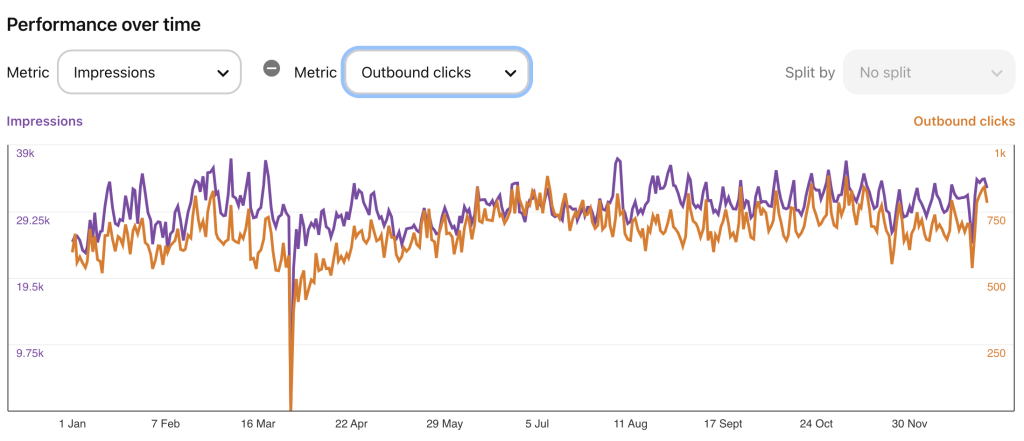
If your impressions are increasing but your clicks remain low, the image or headline may not be attracting enough attention. Try a clearer benefit, more specific text, or an image that makes the product easier to understand.
If people open the pin but do not leave Pinterest, strengthen the description and call to action. Give them a reason to continue with wording such as “See the complete list,” “Compare the options,” or “Shop the product.”
When outbound clicks are healthy but sales remain low, look at what happens after the click. The product’s price, reviews, availability, shipping, and landing page can all influence whether someone purchases.
Our guide to optimizing Pinterest pins for sales explains how each part of the pin can move someone closer to clicking.
Choose Affiliate Products That Suit Pinterest
A high commission may sound appealing, but the payout means very little when the product has no connection to your audience or what people search for on Pinterest. Begin with your audience rather than the commission percentage. A home organization account might recommend storage products, labels, and space-saving furniture, while a travel account could promote luggage, packing accessories, or products that solve a specific travel problem.
Visual products naturally suit Pinterest because shoppers can quickly understand what they are looking at and imagine using it themselves. The product still needs a clear purpose. Instead of promoting a random water bottle, connect it to hiking essentials, practical gifts for runners, or products that make it easier to drink more water at work.
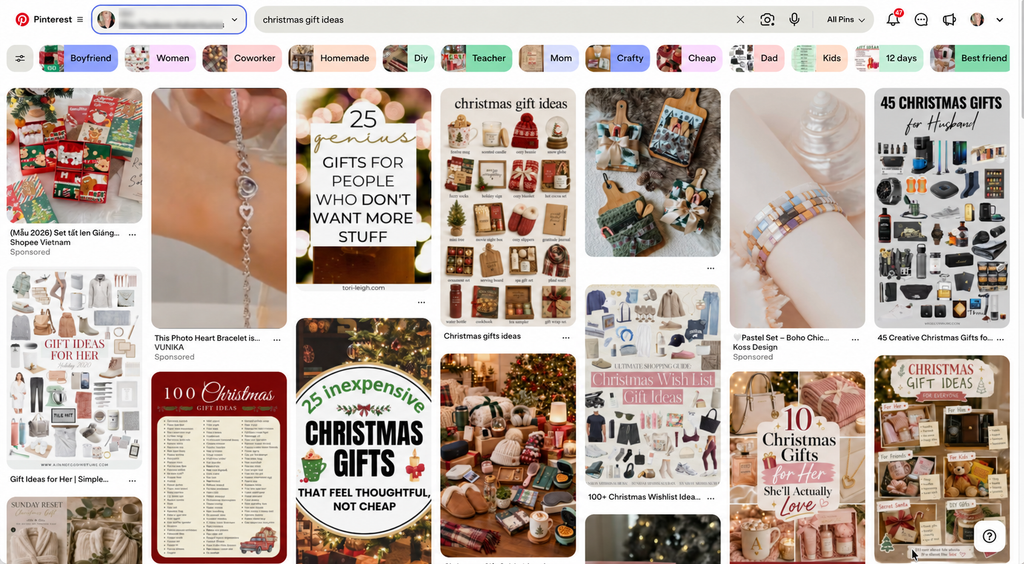
The same product can also appeal to several searches without requiring you to repeat the same promotion. A planner might be positioned as a tool for managing a busy family, preparing for a new school year, or organizing a small business, provided it genuinely serves those purposes.
Before creating pins, confirm that the affiliate program permits the promotional method you intend to use. Pinterest allows affiliate content, but individual retailers and affiliate networks set their own rules for direct links, product images, and social media promotion.
If you are still deciding how to structure your links, our guide to adding affiliate links on Pinterest explains what to consider before sending users directly to affiliate offers.

Avoid Making Your Pinterest Account Look Spammy
Affiliate marketing is allowed on Pinterest, but the content should be original, transparent, and helpful. Problems begin when an account appears to exist only to distribute the same affiliate links repeatedly.
Avoid publishing a large batch of nearly identical pins leading to one product. Changing the background color or moving the headline does not necessarily give the user something new. Each pin should explore a different image, feature, keyword, audience, or reason to consider the product.
You should also avoid adding popular but irrelevant keywords simply to gain more impressions. Reaching people who have no interest in your offer will not generate useful traffic, and keyword stuffing can make the content appear misleading.
Your images and claims must accurately represent the product. An AI-generated lifestyle image should not change the product’s color, shape, features, or design, and the destination should match what the pin promises.
Finally, do not skip the affiliate disclosure or hide it among unrelated hashtags. People should clearly understand when you may earn a commission. Follow the disclosure requirements of your affiliate program and any applicable regulations in your location.
Create Pinterest Affiliate Marketing Pins Consistently
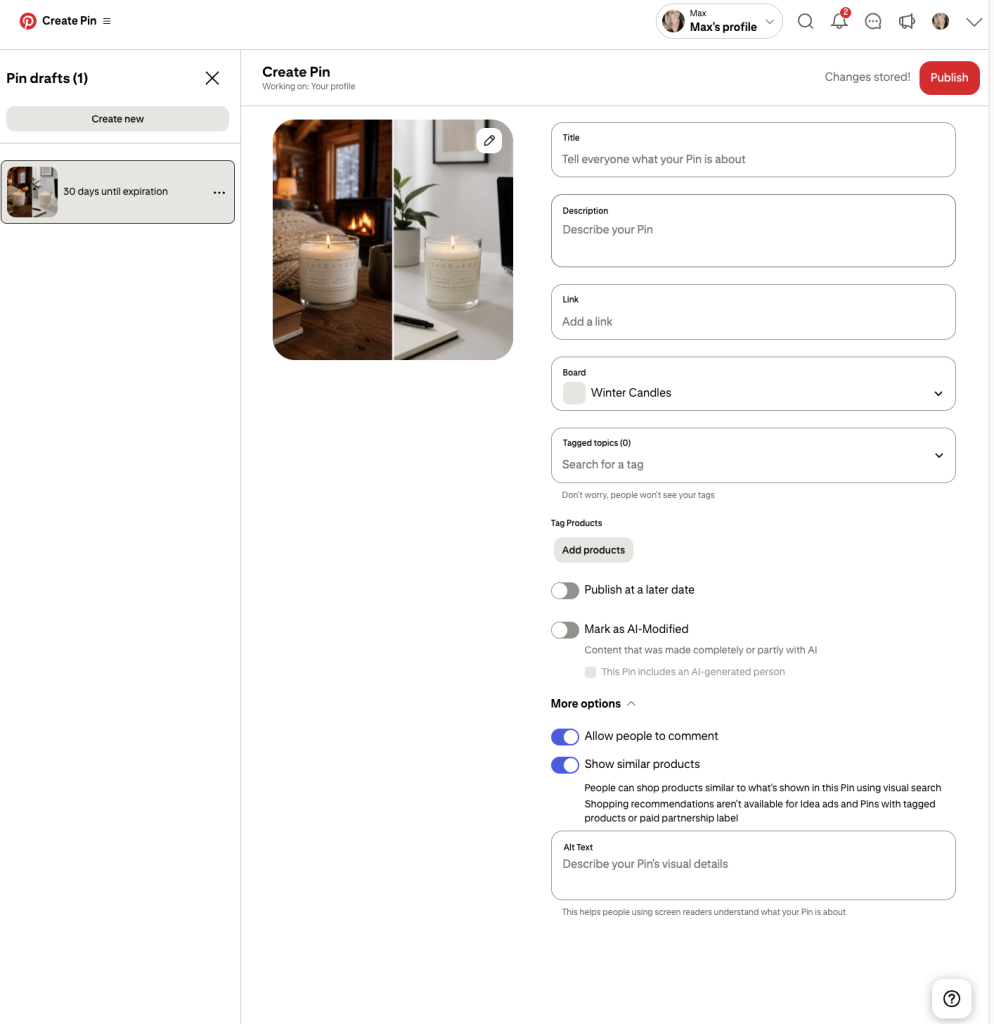
Once you have products that suit your audience, the next challenge is consistently creating fresh pins for them. Designing images, researching keywords, writing descriptions, selecting boards, and managing a schedule quickly becomes time-consuming when you have several offers to promote.
Pin Generator brings those tasks into one workflow. You can begin with supporting content from your website or a supported affiliate product link, depending on how you promote the offer.
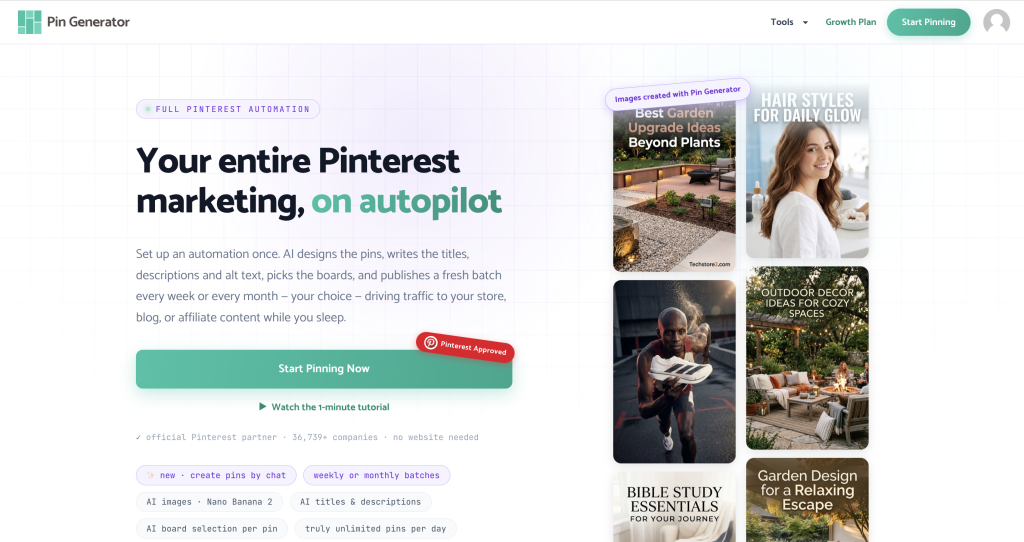
Templates make it possible to use existing product images in different branded layouts, while AI-generated designs provide more visual variety when they are appropriate for the offer. Every image should still be reviewed to make sure it accurately represents what the customer will receive.
Pin Generator also helps create keyword-focused titles and descriptions, select relevant Pinterest boards, and organize your publishing schedule. If every affiliate pin requires the same disclosure, you can add it as pinned description text so it remains part of each batch.
Before anything publishes, review the images, wording, destination links, boards, and dates. Pin Generator handles much of the repetitive work, but you remain responsible for choosing the products and approving the finished content.
Build a Sustainable Affiliate Marketing Strategy
If we were starting a Pinterest affiliate marketing strategy today, we would begin with approximately six to ten products or supporting blog posts. We would create around five distinct pins for each destination, giving us enough variety to test different images, headlines, and keyword angles.
From there, we might publish two pins per day, rotate through different URLs, and avoid promoting the same destination every day. These are starting points rather than official Pinterest limits, so your schedule should reflect the amount of useful content you can maintain.
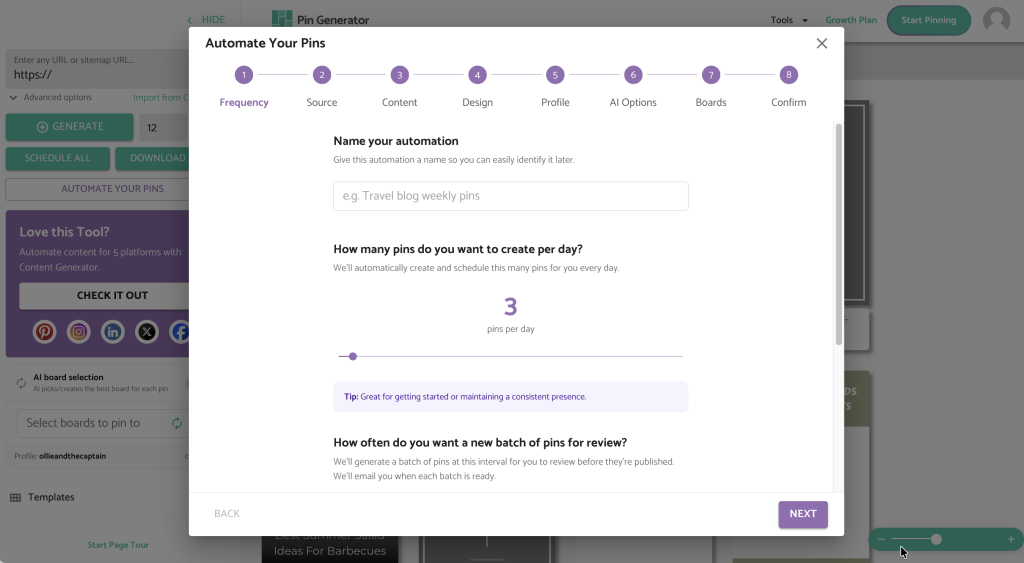
We would review the results monthly instead of reacting to daily changes. At the end of each month, compare your clicks, outbound clicks, and conversions. Create more variations of the designs and offers generating results, then adjust the ones people are seeing without clicking.
The initial testing phase often takes one to three months, while meaningful traffic and sales may take six to nine months to develop. Pinterest affiliate marketing is not a shortcut to immediate passive income, but a process of learning what your audience searches for and what persuades them to act.
If you’re ready to get started with Pinterest affiliate marketing and scale your Pinterest efforts, try Pin Generator for free today to get an idea of what you can create.