
How To Improve SEO on Pinterest: Your Complete Success Guide
11 June 2025
Understanding Pinterest's Search Algorithm (The Foundation)
Pinterest isn't just a social media platform; it's a visual discovery tool. Understanding how to optimize your content for Pinterest's search algorithm is crucial for visibility. Unlike platforms like Instagram, where chronological feeds and follower counts are important, Pinterest prioritizes content based on user searches and engagement. This makes Pinterest a powerful tool for directing traffic to your website or online store.
How Pinterest's Algorithm Differs From Google
While both Pinterest and Google are search engines, their functionalities differ. Google primarily uses text-based searches, analyzing keywords and backlinks to determine relevance. Pinterest, however, is visually driven. The algorithm analyzes images, descriptions, and board context to understand the content of a pin and its relevance to a user's search. User behavior, such as saves and repins, plays a significant role in determining which pins rank higher. This means engagement is key for Pinterest SEO.
Key Ranking Factors: Domain Quality, Pin Quality, and Pinner Quality
Pinterest SEO success relies on three core factors: domain quality, pin quality, and pinner quality. Domain quality refers to how well your website is perceived by Pinterest based on the engagement your pins receive. Pin quality is measured by the engagement and likes your pins get, showcasing user interest. Finally, pinner quality assesses the overall activity and engagement of your Pinterest account. A consistently active and engaging account tells Pinterest you’re a valuable contributor. For more in-depth information, check out this resource: Learn more about Pinterest SEO here.
To better understand the distinct approaches of Pinterest SEO and traditional SEO, let's examine a comparison table:
Pinterest SEO vs Traditional SEO Comparison
| Factor | Pinterest SEO | Traditional SEO | Impact Level |
|---|---|---|---|
| Primary Focus | Visual content (images, videos) | Text-based content (keywords, backlinks) | High |
| Keywords | Used in pin descriptions and titles | Used in website content, meta descriptions, and title tags | High |
| Backlinks | Less important, focus on repins and saves | Crucial for ranking | Medium |
| User Engagement | Saves, repins, and clicks are vital | Time on site, bounce rate, and click-through rate are important | High |
| Content Freshness | Fresh pins are favored | Fresh content is important but evergreen content can also perform well | Medium |
This table highlights the core differences between optimizing for Pinterest and optimizing for traditional search engines. While keywords are still important, the emphasis on visuals and engagement makes Pinterest SEO unique.
The Impact of Optimization: A Visual Representation
The following infographic visually represents the impact of implementing effective Pinterest SEO strategies. It compares key metrics before and after optimization.
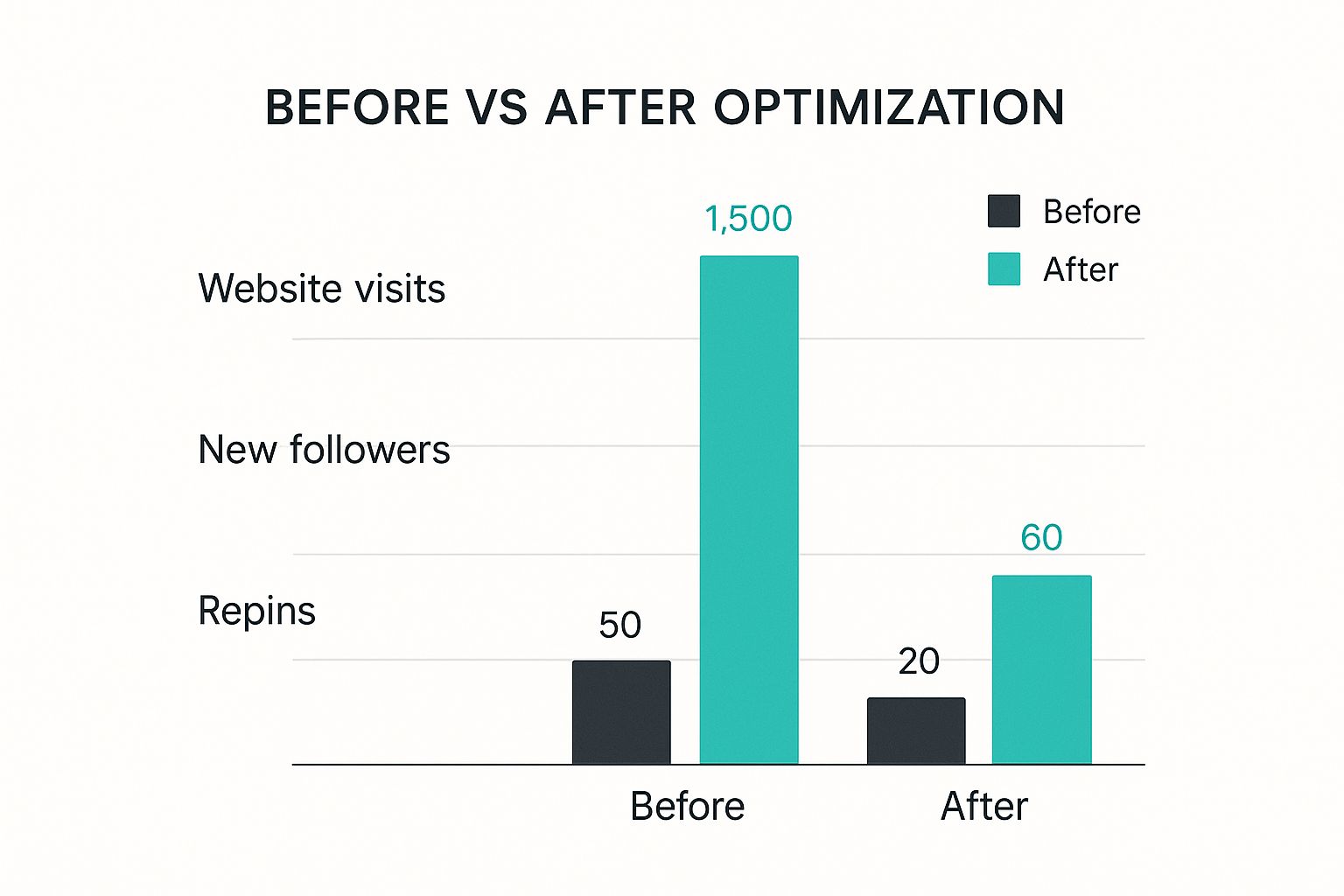
As the infographic demonstrates, targeted optimization dramatically improved website visits, new followers, and repins. Website visits increased from 500 to 1500, a 200% increase. New followers grew from 50 to 150, a 200% boost. Repins jumped from 20 to 60, another 200% surge. This data clearly shows how a strong Pinterest SEO strategy can significantly boost your online presence and drive meaningful results.
Building a Profile That Gets Found and Followed
Your Pinterest profile is your brand's online storefront. A compelling profile attracts followers and drives traffic, while a neglected one can easily get lost in the shuffle. Let's look at how to optimize your Pinterest profile for search and visibility.
Optimizing Your Business Name and Bio
Keywords are essential for Pinterest SEO. Just like on Google, using relevant keywords helps Pinterest understand your business. Naturally incorporate these keywords into your business name and bio description. For example, if you sell handmade jewelry, a business name like "Handcrafted Jewels by [Your Name]" is much more effective than just "[Your Name] Designs." This clearly communicates what you offer to both users and the Pinterest algorithm.
Your bio should provide more detail, incorporating relevant keywords such as "handmade jewelry," "unique necklaces," or "artisan earrings." Remember to avoid keyword stuffing; your bio should sound natural and encourage users to follow you.
Choosing the Right Profile Categories
Pinterest offers a variety of categories to help users find what they're looking for. Selecting the right categories refines your niche and makes your profile more discoverable. Choose categories that truly reflect your content and align with your target audience. For example, if you focus on healthy recipes, select categories like "Food and Drink" and subcategories like "Healthy Recipes" or "Vegan Cooking."
Optimizing Your Profile Image
Your profile image is the first thing users see. Choose a high-quality image that’s easily recognizable and represents your brand. For businesses, using your logo is generally recommended. For personal brands, a professional headshot works well. Make sure your image is clear, well-lit, and visually appealing.
Technical Essentials for Credibility
Beyond the visuals, certain technical elements are crucial for building trust and authority. Website verification links your website to your Pinterest profile, adding your profile picture to your pins and increasing your credibility. Setting up Rich Pins provides additional context to your pins, displaying extra information directly on the pin.

Finally, claiming your other social media accounts connects them to your Pinterest profile, creating a more unified online presence. By optimizing each of these elements – from your business name and bio to the technical setup – you create a Pinterest profile that attracts followers, drives traffic, and supports your marketing goals. This foundation prepares you for success as you explore keyword research and pin creation.
Mastering Pinterest Keyword Research That Actually Works
Forget generic keyword advice. Pinterest keyword research demands a different strategy than traditional SEO. This section reveals how successful Pinterest marketers discover high-opportunity keywords.
Leveraging Pinterest's Search Suggestions
Pinterest's guided search is a goldmine for keyword research. Start by entering a broad term related to your niche in the search bar. Pinterest will then suggest related keywords based on what people are searching for. These suggestions offer valuable insights into user intent. For example, if you search for "wedding," Pinterest might suggest "wedding dresses," "wedding invitations," or "wedding decorations." This helps you refine your focus and identify specific keywords to target.
Analyzing Your Niche and Competitors
Understanding your niche and what's working for your competitors is also essential. Explore relevant Pinterest categories and subcategories to understand how your competitors are using keywords. Examine their pin descriptions, board titles, and profile bios for keyword inspiration. This competitive analysis can uncover hidden keyword opportunities. A strong online presence is essential for success, and that starts with a polished profile. Consider checking out this helpful resource: LinkedIn Profile.
Identifying Seasonal Trends
Pinterest is heavily influenced by seasonal trends. Pay attention to upcoming holidays, events, and seasonal shifts. Adding relevant seasonal keywords to your pins and boards can significantly increase your visibility. For example, if you sell handmade crafts, consider keywords like "Christmas gifts," "Halloween decorations," or "summer crafts." Identifying trends early allows you to create relevant content before the peak search volume arrives. You might be interested in this resource on Pinterest keyword research: How to master Pinterest keyword research.
Using Keyword Research Tools
While Pinterest’s built-in search suggestions are valuable, keyword research tools can provide further data. Some tools offer information on search volume, keyword difficulty, and related keywords specifically for Pinterest. These tools can help you prioritize keywords and create a more strategic approach to your Pinterest SEO.
Incorporating Keywords Naturally
Once you've identified your target keywords, it’s important to incorporate them naturally into your Pinterest presence. This includes your pin descriptions, board names, board descriptions, and profile bio. Avoid keyword stuffing, which can negatively impact your visibility. Instead, use clear, concise language that accurately describes your content and includes your keywords organically. Consider how your target audience would search for your content and use those phrases in your descriptions and titles.
Tracking Keyword Performance
Finally, tracking your keyword performance is critical for continuous improvement. Pinterest Analytics offers valuable data on which keywords are driving traffic to your profile and website. Monitor your impressions, clicks, and saves for each keyword to understand what's working and what's not. Use this information to refine your keyword strategy and constantly improve your Pinterest SEO results. Regularly analyzing your performance allows you to adapt to changes in user behavior and algorithm updates, ensuring your Pinterest strategy remains effective.
Creating Pins That Dominate Search Results
High-ranking pins on Pinterest aren't accidental; they're strategically designed. Many Pinterest users miss key principles that contribute to a successful pin. Let's explore the essential elements, from dimensions and design to the psychology that drives saves and clicks.
Visual Format and Design Elements
The visual format you choose significantly impacts your pin's success. Different content thrives in different formats. For instance, long, vertical infographics excel at presenting data or step-by-step guides. Product pins shine with high-quality lifestyle images showing the item in action. Knowing your content and selecting the right visual format is crucial.
Consider the design elements next. Eye-catching graphics are essential for grabbing attention. Think about color: research suggests warmer colors outperform cooler ones. Examine your text layout: is it readable and complementary to the image? These small details can make a big difference.
Crafting Titles and Descriptions That Convert
A pin's title and description blend keyword optimization with user engagement. Keywords are vital for being found, but they should feel natural. Your title should be concise, descriptive, accurately reflecting the content while including relevant keywords. "10 DIY Home Decor Ideas on a Budget" is much better than "Decor Ideas."
The description provides room for more detail. Expand on the title and emphasize the value of clicking. Tell users what they'll gain. This is your chance to draw them to your website or online store.
Advanced Strategies for Pin Optimization
To truly excel in search results, explore advanced techniques. Consider seasonal pin creation. Pinterest trends heavily toward holidays and events. Creating timely pins can capture significant search traffic, like a "Holiday Gift Guide" or "Summer Outfit Inspiration."
A/B testing is another effective strategy. Create different versions of the same pin, changing elements like the image, title, or description. Analyze which performs best to refine your approach. Pinterest is a major platform for boosting SEO, with over 522 million monthly active users as of early 2025. This massive user base offers considerable opportunities for greater visibility. More detailed statistics can be found here. Also, consider user-generated content. Sharing pins from other users in your niche can boost your credibility and engagement. These advanced strategies, combined with strong foundational pin creation principles, will position your pins for success on Pinterest.
Strategic Board Organization for Maximum Discovery
Your Pinterest board strategy is essential for SEO success. Think of your boards as carefully organized collections showcasing your expertise. This strategic organization helps Pinterest understand your niche and direct your pins to the right audience.
Optimal Board Number and Naming Strategies
How many boards should you have? There's no perfect number, but aim for a balance. Too few boards can limit your visibility, while too many might spread your efforts too thin. Start with 5-10 boards focused on the core aspects of your business.
Board names are critical for attracting search traffic. Use specific keywords that accurately describe your content. For instance, instead of a general "Recipes" board, consider using "Healthy Dinner Recipes" or "Easy Vegan Desserts." These targeted names are much better at capturing relevant user searches.
Crafting Compelling Board Descriptions
Board descriptions provide a valuable opportunity to connect with both users and the Pinterest algorithm. Use keywords naturally in a concise and interesting summary of your board's content. A thoughtfully written description helps Pinterest grasp the board's theme, boosting its visibility in search results.
Advanced Board Strategies for Expanded Reach
Beyond the basics, advanced strategies can significantly enhance your board's performance. Board sections offer further categorization within a board. For example, a "Home Decor" board might feature sections like "Living Room Ideas," "Bedroom Inspiration," and "DIY Projects." This detailed organization improves the user experience.
Collaborative boards are another valuable tool. Inviting influencers or related businesses to contribute extends your reach to their followers. Creating seasonal boards for holidays or special events is another impactful strategy. These temporary boards can capitalize on trending searches and attract new followers.

Pin Organization and Topic Clusters
How you organize your pins within a board plays a key role in SEO. Group similar pins together to create a smooth and enjoyable browsing experience. Maintain a good pin-to-board ratio. Avoid overwhelming boards with too many pins, but consistently add new, high-quality content.
This organized approach creates topic clusters that cement your authority in particular niches. Similar to standard SEO practices, focusing on specific topics within your boards helps Pinterest recognize your expertise. This, in turn, increases your visibility. Combining these strategies with a consistent pinning schedule leads to improved search rankings and more user engagement. Learn more about optimizing your boards here: Pinterest SEO Best Practices.
Advanced Optimization Techniques and Analytics Mastery
Ready to take your Pinterest SEO to the next level? This section explores the advanced strategies used by successful Pinterest marketers. We'll cover how to use Rich Pins, optimize for visual search, and understand how Pinterest Analytics can shape your overall strategy.
The Power of Rich Pins and Visual Search
Rich Pins enhance your pins by including extra details directly from your website. This means information like pricing, product availability, and article summaries appear on the pin itself, boosting user engagement and click-through rates. Think of them as a small preview of your website content, encouraging users to explore further.
Pinterest is, at its core, a visual search engine. Optimizing for this means using high-quality, visually attractive images relevant to your target keywords. For instance, if you're promoting a "vegan chocolate cake" recipe, a vibrant picture of a beautifully decorated cake will perform better than a blurry, unappetizing one. Also, consider the composition and colors in your images, as these factors influence how Pinterest interprets your content.
Sophisticated Pinning Strategies and Creator Tools
Timing matters. Use Pinterest Analytics to determine the optimal posting times based on your audience's activity. This personalized strategy ensures maximum reach for your pins.
Pinterest's Creator tools offer several features to improve your content. These tools provide information on trending topics, audience demographics, and pin performance, enabling you to refine your approach over time. See our guide on Pinterest SEO Best Practices for more detailed information.
Mastering Pinterest Analytics
Pinterest Analytics offers more than just surface-level metrics. It provides actionable data that can significantly influence your SEO. Track key metrics like impressions, clicks, and saves to understand what connects with your audience. Also, keep an eye on your top-performing pins to find patterns and repeat their success.
For example, if you find that video pins consistently outperform static images, you might focus on creating more videos. Likewise, analyzing your click-through rates helps you identify the most effective keywords for driving traffic to your website. Transforming these insights into actionable strategies is key to Pinterest marketing success. This means consistently testing and adjusting your approach, responding to trends and algorithm updates, and prioritizing high-quality, resonant content for your target audience.
Measuring Growth and Scaling Your Pinterest Success
Success on Pinterest isn't about getting lucky; it's about having a smart SEO strategy and consistently measuring your progress. This section explores the most important metrics for checking how well your Pinterest SEO is working. We'll move past surface-level numbers and focus on key performance indicators (KPIs) that truly impact your business. We'll also discuss how to scale your Pinterest strategy for ongoing growth.
Identifying Key Pinterest SEO Metrics
While the number of followers you have might seem important, it's essential to look beyond that. Real success is about understanding how your Pinterest activity leads to website traffic, leads, and ultimately, sales. This means tracking metrics like:
-
Impressions: This shows how often your pins appear in search results and home feeds. High impressions usually mean your pins are easy to find.
-
Clicks: This tracks how many times users click on your pins to go to your website. It indicates how engaging your pin titles and visuals are.
-
Saves: This shows how often users save your pins to their boards. This is a great sign of engagement, showing users find your content helpful and want to keep it for later.
-
Outbound Clicks: This specifically measures the clicks that take users from Pinterest to your linked website. A high outbound click rate means your pins are effectively optimized.
-
Closeups: This shows how often users tap on your pin to see a larger version. It tells you users are interested in the details of your pin.
To make the most of Pinterest for SEO, you need to know how it fits into your overall social media strategy. For helpful advice, see this article about managing multiple social media accounts.
Setting Up a Pinterest SEO Success Metrics Dashboard
A Pinterest SEO success metrics dashboard helps you visualize your progress. It provides a clear overview of your performance. The table below shows some examples of important metrics to monitor.
Here's a table outlining key metrics to track:
| Metric | Good Performance | Excellent Performance | Tracking Method |
|---|---|---|---|
| Impressions | 10,000+ per month | 50,000+ per month | Pinterest Analytics |
| Outbound Clicks | 500+ per month | 2,000+ per month | Pinterest Analytics |
| Saves | 200+ per month | 1,000+ per month | Pinterest Analytics |
| Website Traffic from Pinterest | 1,000+ per month | 5,000+ per month | Google Analytics |
This dashboard provides a valuable snapshot of your Pinterest SEO performance, enabling you to identify areas for improvement and celebrate successes.
Scaling Your Pinterest Strategy Without Burning Out
Once you've built a solid foundation, scaling your Pinterest activities requires more than just pinning more often. This is where automation tools become incredibly useful.
-
Scheduling Tools: Tools like Tailwind let you schedule pins ahead of time, picking the best posting times for maximum visibility. This frees up your time so you can focus on creating great content and planning your strategy.
-
Content Batching: Create multiple pins and board graphics at once to make your workflow more efficient. This "batching" approach saves time and ensures a consistent stream of content.
Adapting to the Evolving Pinterest Landscape
Pinterest's algorithm, how users behave, and seasonal trends are always changing. Staying ahead of the curve requires regular monitoring and adapting your strategy. Frequently check your Pinterest Analytics data to see what's working well and adjust your strategy as needed. Don't hesitate to experiment with new pin formats, different types of content, and board organization to maximize your reach and engagement.
Ready to simplify your Pinterest marketing and see significant growth? Pin Generator offers robust automation tools, keyword research features, and helpful resources to elevate your Pinterest presence. Check out Pin Generator today at https://pingenerator.com and transform your Pinterest marketing.