
How to Earn Passive Income with Affiliate Marketing on Pinterest (2025 Guide)
13 June 2026
If you’re looking for ways to make money online, chances are you’ve heard about earning passive income with affiliate marketing. But how passive is it really? How do you get started? And what are the best ways to turn it into something sustainable?
Affiliate marketing has been around for years, and while the concept hasn’t changed, the way you get your links in front of people has. Ranking on Google is tougher than ever, and social platforms like Instagram or TikTok aren’t designed to send users off-site.
That’s where Pinterest comes in.
With more than 578 million people using it each month to search for ideas, inspiration, and products, Pinterest is one of the most powerful yet overlooked platforms for affiliate marketers. Unlike social media, content here has staying power. A single well-optimized pin can keep driving traffic for months or even years, making it an ideal foundation for building true passive income.
What Is Passive Income and Affiliate Marketing?
Before diving into strategies, let’s get clear on the basics.
Passive income doesn’t mean no work, it means doing the work up front. For example, creating a product and building a marketing system that continues to promote it for you, even while you’re sleeping. There is effort required in the beginning to set everything up, but over time it can generate results without needing your constant attention.
Know that passive income can come from a variety of sources such as selling digital products, investments like rental properties, or even earning commissions on affiliate products (which is the focus of this article).
Affiliate marketing is the practice of promoting someone else’s product and earning a commission when people purchase through your unique link. You don’t have to handle inventory, shipping, or customer support. Your role is to connect the right audience with the right product.
When you put the two together, passive income with affiliate marketing means creating content and systems that keep putting your links in front of people long after you publish them. With the right setup, your audience can keep discovering your content, clicking through, and generating commissions for you in the background.
If you’d prefer to watch instead of read, we’re walking through all of these topics and our exact strategy in our YouTube video. You can watch it here:
The Strategy Behind Passive Income on Pinterest
If you want to make passive income with affiliate marketing, the strategy comes down to two things: putting in the work up front and setting up systems that keep working for you over time.
One of the best platforms to get your affiliate links seen is Pinterest. Unlike social media, Pinterest is a search engine. People go to Pinterest with intent, meaning they’re actively typing in searches for ideas, inspiration, and products. And when your content is optimized with the right keywords, Pinterest can keep showing it to new people long after you’ve published it.
Instead of fighting to rank first on Google, where competition is tough, Pinterest gives you faster visibility and a longer shelf life. A well-optimized pin can keep driving traffic to your site and clicks to your affiliate links for months, even years.
Best Platforms for Affiliate Marketing Links
While Pinterest on its own can drive traffic to your affiliate links, combining it with a simple blog amplifies your ability to earn passive income.
Instead of being limited to pinning a handful of direct affiliate links, a blog gives you more URLs to work with, meaning more opportunities to get discovered and more ways to add value for your audience. For example, a single blog post could include dozens of affiliate links within a roundup, review, or tutorial, so every click to that post gives your readers multiple chances to buy.
Some great types of blog posts for affiliate marketing include:
- Gift guides
- Product roundups
- Detailed reviews
- Resource pages
- Tutorials that naturally feature products
Pinterest also tends to favor content that links back to blogs or websites, rather than repeatedly pinning the same affiliate link. Having at least 5-10 well-written blog posts gives you a strong foundation of URLs to cycle through, which keeps your content fresh and increases your visibility.

Driving Traffic with Pinterest Keywords
One of the most important things to remember about Pinterest is that it’s a search engine, which means keywords are the backbone of getting your content discovered.
When someone types “meal planner printable” or “budget spreadsheet template” into Pinterest, the platform looks for pins, boards, and profiles that match those keywords. If your content is optimized, your pins have a much better chance of showing up in search results and driving traffic back to your site.
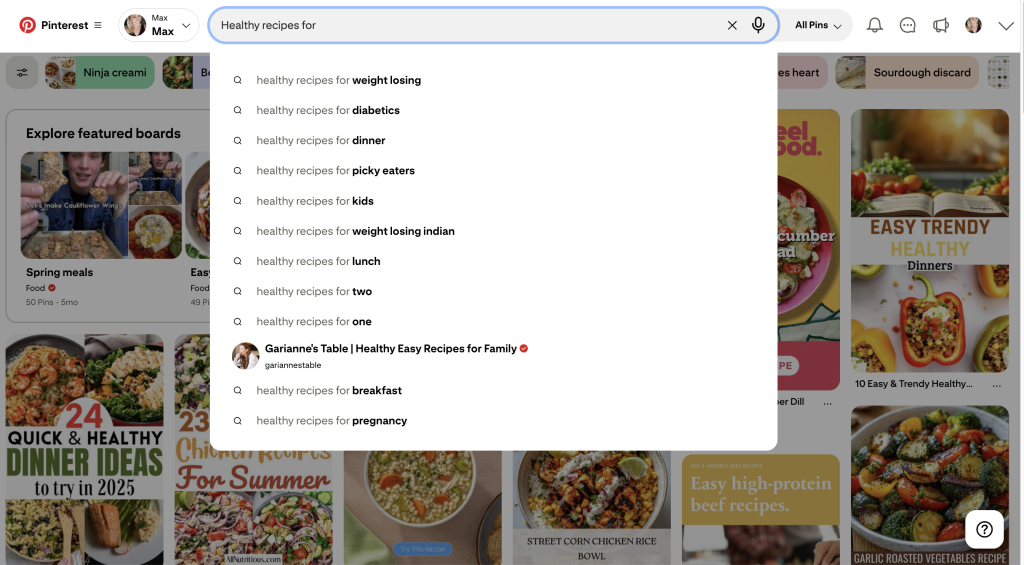
Finding keywords is simple. Start by typing a word or phrase related to your niche into the Pinterest search bar. As you type, Pinterest will suggest autocomplete options. These are real search terms people are actively using, making them perfect to include in your content.
Once you’ve got your keywords, place them strategically:
- In your profile name and bio
- In board names and descriptions
- In pin titles and descriptions
- On the pin image itself (text overlay)
The more clear you are with your keywords, the better Pinterest can match your content to the right audience. And the more relevant your pins are, the more clicks you’ll get back to your blog or affiliate links. We’ve walked through our preferred methods for finding Pinterest Keywords here.
Pinterest Marketing Automation
In order for passive income to truly feel passive, the process needs to run on its own. This means automating how your affiliate links, blog posts, or product pages get marketed on Pinterest. Without automation, you end up spending hours designing pins, writing descriptions, and manually uploading, which isn’t sustainable long term.
We recommend a tool called Pin Generator to automate the process. This tool connects directly to your online store, blog, or affiliate links and automatically pulls in titles, descriptions, images, and URLs to create pins for you.

Not only does it offer ready-to-use templates, but you can also import your favorite Canva designs if you prefer those. Additionally, you can take things one step further with the Create AutoPin feature. This uses AI to generate fresh titles, descriptions, and images, so your account is always publishing new content. You set the frequency (daily, weekly, or whatever works for you) and Pin Generator handles the rest.
It’s as simple as setting it up once and letting it run. For anyone looking to scale their marketing strategy or build true passive income, this is a no-brainer.
If you’re interested in making passive income with affiliate marketing, we recommend checking out our beginner’s guide for affiliate marketing so you can get yourself set up the right way. And once you do, try out Pin Generator for free so you can see for yourself just how easy it is to create fresh pins and automate your marketing.