
Pinterest Keyword List: 10 Types to Grow Reach in 2026
19 November 2026
Pinterest reported more than 80 billion monthly searches in its 2025 results release. That's a lot of discovery happening before someone ever reaches your website. Yet a single, undifferentiated Pinterest keyword list can leave your pins describing everything vaguely and answering nothing precisely.
The problem isn't usually a shortage of keywords. It's assigning the same job to every phrase. A broad category belongs on a board, a specific product phrase belongs in a pin title, and an image description belongs in alt text. Pasting the same keyword bundle into all those fields doesn't make them interchangeable.
Practical rule: Give every keyword a job before you give it a place.
Organize your list by what people want and what your content delivers. Someone browsing bedroom aesthetics needs inspiration; someone searching for a washable bedroom rug needs product details. Both might buy a rug, but they shouldn't receive identical pins.
The categories below combine keyword types with discovery methods and placement rules. Use them to build a working list that connects search intent, creative, metadata, and landing pages, rather than a spreadsheet that mostly collects dust.
Table of Contents
- 1. Long-Tail Keyword Phrases
- 2. Pinterest Search Autocomplete Suggestions
- 3. Pinterest Trends Keywords
- 4. Product Attribute Keywords
- 5. Problem and Solution Keywords
- 6. Style and Aesthetic Keywords
- 7. Occasion and Event Keywords
- 8. Recipe and Ingredient Keywords
- 9. Board Title and Board Description Keywords
- 10. Alt Text and Descriptive Image Keywords
- Pinterest Keyword Types at a Glance
- Turn This Pinterest Keyword List Into a Publishing Routine
1. Long-Tail Keyword Phrases
Specific searches deserve specific pins. A coffee table is a category. A mid-century modern walnut coffee table describes something a shopper can recognize, compare, and potentially buy.
Long-tail phrases help you make that distinction. Don't assume they automatically have low competition or measurable demand, though. Their immediate value is clearer intent, not a guaranteed ranking shortcut.
Brand-first wording also misses discovery opportunities. The Shelf's Pinterest analysis reports that 97% of Pinterest searches don't include a specific brand name, supporting a descriptive approach rather than relying on your shop's name.
Match the phrase to the destination
For a home retailer, neutral boho bedroom rug could lead to a relevant product or curated collection. For a food blogger, gluten-free banana bread for beginners should lead to a recipe with beginner-friendly instructions, not a gluten-free recipe index.
Build the pin around that promise:
- Title: Put the main phrase near the beginning, while keeping the wording readable.
- Description: Explain the benefit and add related details that apply.
- Creative: Show the product, outcome, or technique that makes the phrase specific.
- Board: Choose the relevant topic category, not necessarily an exact-match board.
Create separate pins when variations represent meaningfully different needs. A minimalist home office and a shared family workspace may use overlapping products, but their buyers need different examples.
Don't generate a new pin for every adjective shuffle. Different intent warrants a different angle; reordered words usually don't.
2. Pinterest Search Autocomplete Suggestions
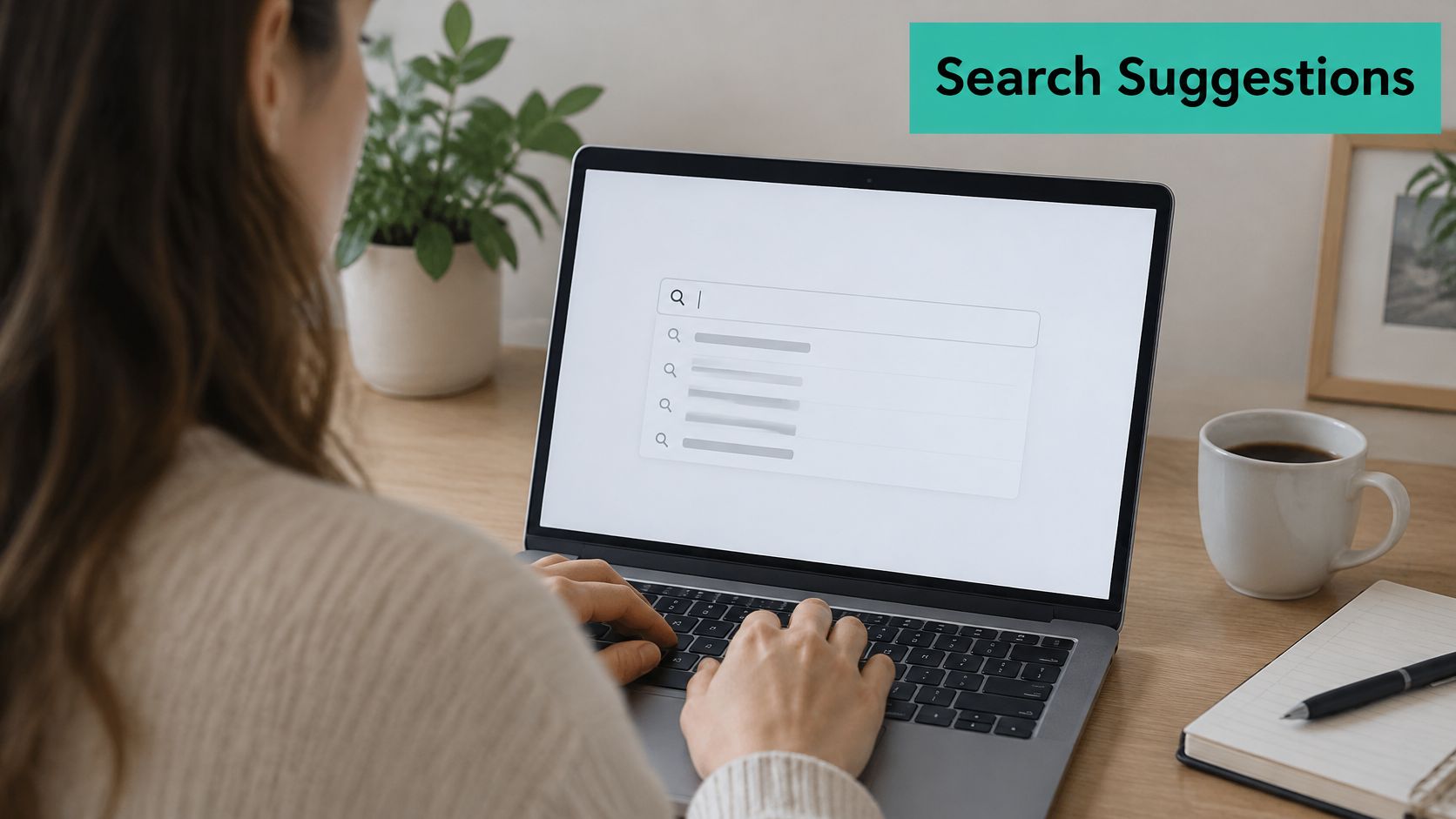
Start typing small kitchen into Pinterest and inspect the suggestions before completing the search. You're looking for language worth investigating, not instructions to copy every phrase the interface displays.
Pinterest identified autocomplete as a way to refine queries when it introduced its Pinterest Trends search insights tool. Use those suggestions to expand your vocabulary, then check whether each phrase fits your content.
Capture wording, then separate intent
Say you sell kitchen organizers. A suggestion about small kitchen storage might suit a product-led pin, while a kitchen renovation phrase would require broader planning content.
Use a simple research sequence:
- Expand the seed: Add relevant words such as for, with, or without to explore more specific needs.
- Group the results: Separate shopping phrases from tutorials, inspiration, and unrelated topics.
- Check the fit: Open the results and inspect what users would reasonably expect.
- Validate the opportunity: Use a Pinterest keyword research workflow before committing to a large content batch.
Autocomplete is a qualitative signal, not a monthly search-volume report. Suggestions can also vary with context, so keep the market and research date alongside your notes.
Place a suitable suggestion in a pin title when it accurately describes the destination. Use adjacent suggestions as ideas for future content, not as a comma-separated tail on the same description.
3. Pinterest Trends Keywords
A rising line isn't a count of potential customers. Pinterest Trends shows relative search interest, which makes it useful for comparing timing but easy to misread as absolute demand.
The Pinterest Trends help guide explains how to explore interest over time, regional differences, and changes in searches. Keep comparisons within the same market and date range so you're comparing like with like.

For a bakery, comparing pumpkin spice cookies with apple cider donuts can inform which seasonal content to prepare first. It doesn't establish how many orders either product will generate.
Use trends to decide when, not just what
Record whether a phrase appears evergreen, predictably seasonal, or newly rising. Then assign it a publishing window based on when interest starts building, rather than waiting for the peak.
Keep these signals separate:
- Trend interest: Helps assess direction and seasonal timing.
- Advertising estimates: Help assess potential advertising reach, not an exact count of organic queries.
- Autocomplete wording: Helps identify useful language without establishing volume.
A narrower phrase that matches your product can be more useful than a dramatic trend you can't serve.
Use this Pinterest search trends guide to develop a repeatable comparison process. Put relevant trend phrases in timely pin titles and descriptions, but don't rename evergreen boards every time a new aesthetic spikes.
4. Product Attribute Keywords
Your supplier may call a pillow Meadow Collection Cushion. Your customer may search for sage green linen throw pillow. Keep the product name on the product record, but write discovery copy in language the shopper can understand.
Attribute keywords describe material, color, shape, finish, fit, size, or compatibility. They're especially useful when a product photograph alone doesn't communicate the detail a buyer needs.
Translate the catalog into search language
Consider an insulated stainless steel water bottle. A useful title might emphasize the product type, insulation, and leak-resistant lid, provided those details are accurate.
Don't turn every available specification into a title:
- Lead with identity: Make the product category immediately clear.
- Select useful attributes: Prioritize characteristics that change the buying decision.
- Explain the benefit: Use the description to connect features with everyday use.
- Preserve accuracy: Confirm that the image and landing page show the advertised variant.
A linen pillowcase isn't interchangeable with a complete pillow. A brushed brass finish isn't the same promise as solid brass. These distinctions matter more than squeezing in another keyword.
Attribute phrases belong primarily in product pin titles and descriptions. Broader attribute groupings, such as linen bedding or walnut furniture, can support boards when you have enough relevant content.
For catalog-based production, map your product fields before generating copy. Separate customer-facing color names from internal variant codes, and review material claims carefully. Automation can distribute a clean catalog efficiently, but it can also distribute a messy one.
5. Problem and Solution Keywords
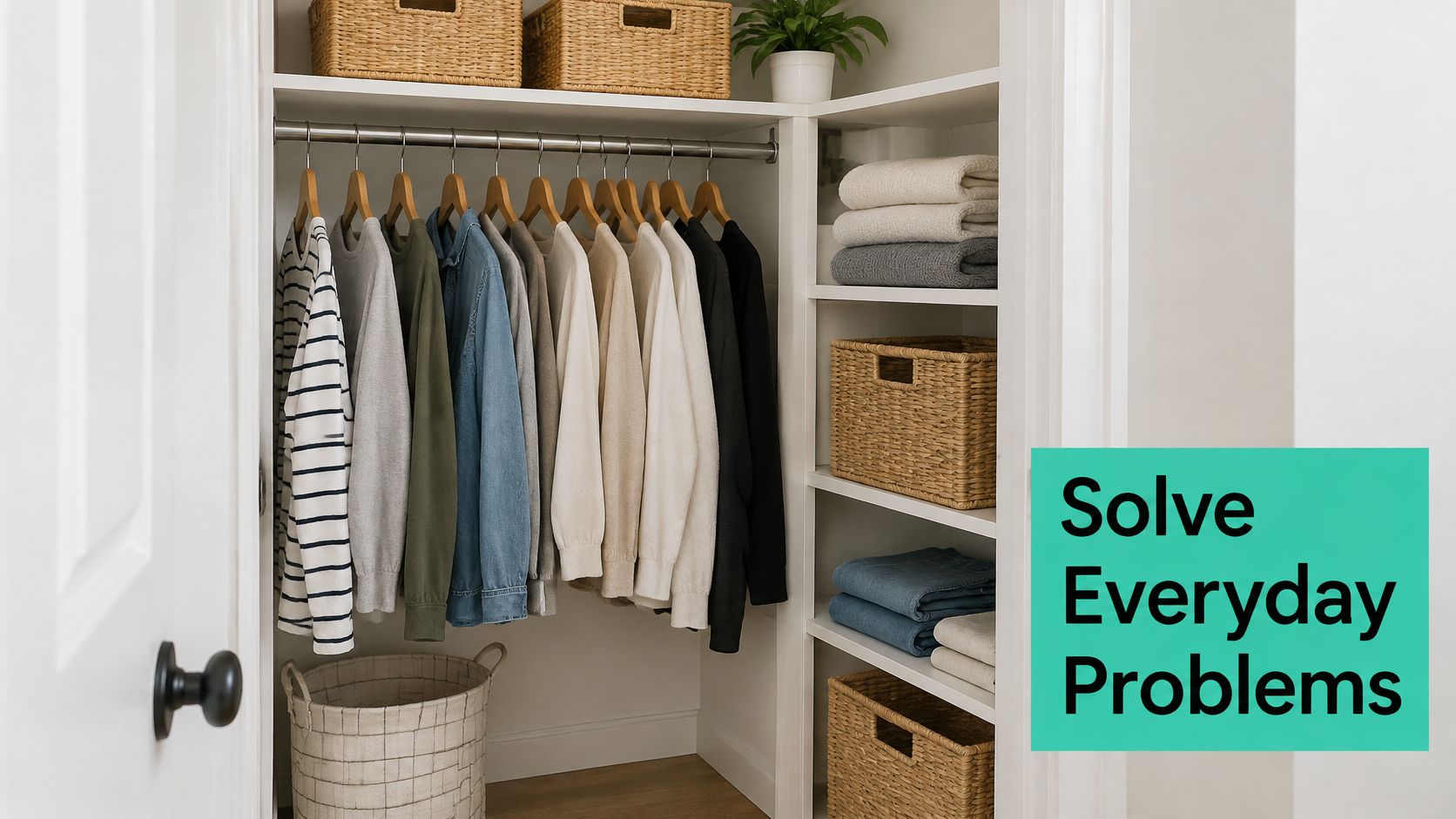
How to organize a small closet describes a task. Closet organizer describes a product. Both can work, but they require different promises and different destinations.
A problem-led pin should help someone make progress. If the creative promises a closet organization method, a bare product listing usually won't finish the job.
Put the problem in the title
For a cable organizer, use a phrase such as how to keep desk cables organized. Open the description with the method, then explain where the organizer fits.
A practical pin might show cables grouped by device, secured beneath the desk, and labeled for easy access. The landing page should provide the promised instructions, with a relevant product recommendation where it helps.
- Title: Name the specific frustration or task.
- Overlay: Show the useful outcome or a concise instructional promise.
- Description: Explain what the reader will learn.
- Destination: Deliver the method before asking for a purchase.
Destination test: If someone clicks for instructions, don't make them hunt through a storefront to find the answer.
Problem-solution keywords suit tutorials, comparisons, and educational product content. They're less suitable when you can't demonstrate a credible solution.
Be especially careful with cleaning, health, or repair claims. Don't promise that a generic method works for every material or condition. A useful qualification builds more trust than a sweeping claim your destination can't support.
6. Style and Aesthetic Keywords
Japandi bedroom ideas with warm wood tones tells a different visual story from coastal bedroom decor with blue accents. The product category may overlap, but the styling, palette, and supporting details shouldn't.
Pinterest's discovery environment includes image-based exploration, so aesthetic phrases need visual proof. A minimalist title on a crowded, heavily decorated graphic sends mixed messages.
Make the image earn the adjective
Pair a recognizable style with a room, product, or project. Farmhouse lighting is more actionable than farmhouse alone; minimalist entryway storage adds both a setting and a practical purpose.
For a tile retailer, a pin about choosing grout colours for subway walls could demonstrate how contrasting grout creates a different effect from a closely matched finish. That's a useful aesthetic angle because the image can show the decision.
Apply style language consistently:
- Pin title: Combine the aesthetic with the specific subject.
- Description: Explain the colors, materials, or arrangement that create the look.
- Board: Group a coherent style category if it supports your content plan.
- Creative: Show the promised aesthetic clearly, without relying on the label.
Don't attach every fashionable style term to the same product. A plain wooden chair might fit several rooms, but each pin needs a credible presentation.
Keep your brand typography recognizable while letting the photography demonstrate the aesthetic. Brand consistency doesn't mean every room must wear your brand colors. Sometimes the most effective template is the one that gets out of the image's way.
7. Occasion and Event Keywords
An occasion changes why someone wants a product. A candle can be home decor, a housewarming gift, or part of a wedding favor display. The keyword should identify the reason for the purchase.
Build phrases around event, recipient, and use, then include budget language only when the linked offer supports it. Occasion targeting works poorly when the seasonal headline is the only relevant thing about the pin.
Start with the recipient's decision
For a gift publisher, Mother's Day gifts for music fans offers a clearer angle than gifts for her. A guide featuring music and footy fan gifts can connect the occasion with the recipient's interests instead of relying on generic floral imagery.
Other useful combinations include:
- Milestone plus recipient: Graduation gift ideas for new teachers.
- Event plus practical need: Outdoor birthday party decorations for windy gardens.
- Gathering plus food requirement: Make-ahead holiday side dishes for a crowd.
Use the occasion phrase in the pin title and overlay, then explain the selection criteria in the description. Choose an event-specific board only if you can maintain a useful collection.
Plan publication around the beginning of relevant interest, not just the event date. Keep delivery restrictions and product availability in mind before scheduling shopping content.
After the occasion, review the destination. Update expired offers, remove unavailable products, and keep evergreen planning advice useful. A well-written seasonal pin shouldn't lead to a page that still advertises last season's promotion.
8. Recipe and Ingredient Keywords
A recipe title has to describe food someone can make. One-pot lemon chicken promises a dish, a flavor, and a method. Add dietary or timing claims only when the recipe supports them.
Ingredient keywords can serve recipe publishers, food brands, and cookware stores, but those businesses shouldn't all send visitors to the same kind of page.
Separate the recipe from the equipment angle
For a recipe publisher, air fryer salmon with garlic butter should link directly to the recipe. For a cookware retailer, cast iron skillet dinner ideas can lead to a useful cooking guide that introduces the pan naturally.
Build phrases from relevant components:
- Dish: Salmon dinner, banana bread, or breakfast muffins.
- Ingredient: Lemon, chickpeas, oats, or seasonal vegetables.
- Method: Air fryer, sheet pan, slow cooker, or stovetop.
- Need: Make-ahead, beginner-friendly, or a supported dietary requirement.
Put the main recipe phrase in the title. Use the description for texture, flavor, preparation context, and substitutions that the recipe explains.
Don't label a recipe gluten-free just because its main ingredient doesn't contain gluten. Check sauces, seasonings, and other components before making the claim.
Choose photography that shows the finished dish clearly. A useful ingredient overlay can help explain the recipe, but a dense text block shouldn't hide the meal.
When refreshing a recipe pin, try a different presentation, such as an overhead serving image versus a close-up. Keep the recipe promise consistent rather than inventing new benefits for the same dish.
9. Board Title and Board Description Keywords
Small Apartment Storage Ideas tells visitors what they'll find. Clever Little Things makes them guess. Save the personality for supporting copy, not at the expense of the board's subject.
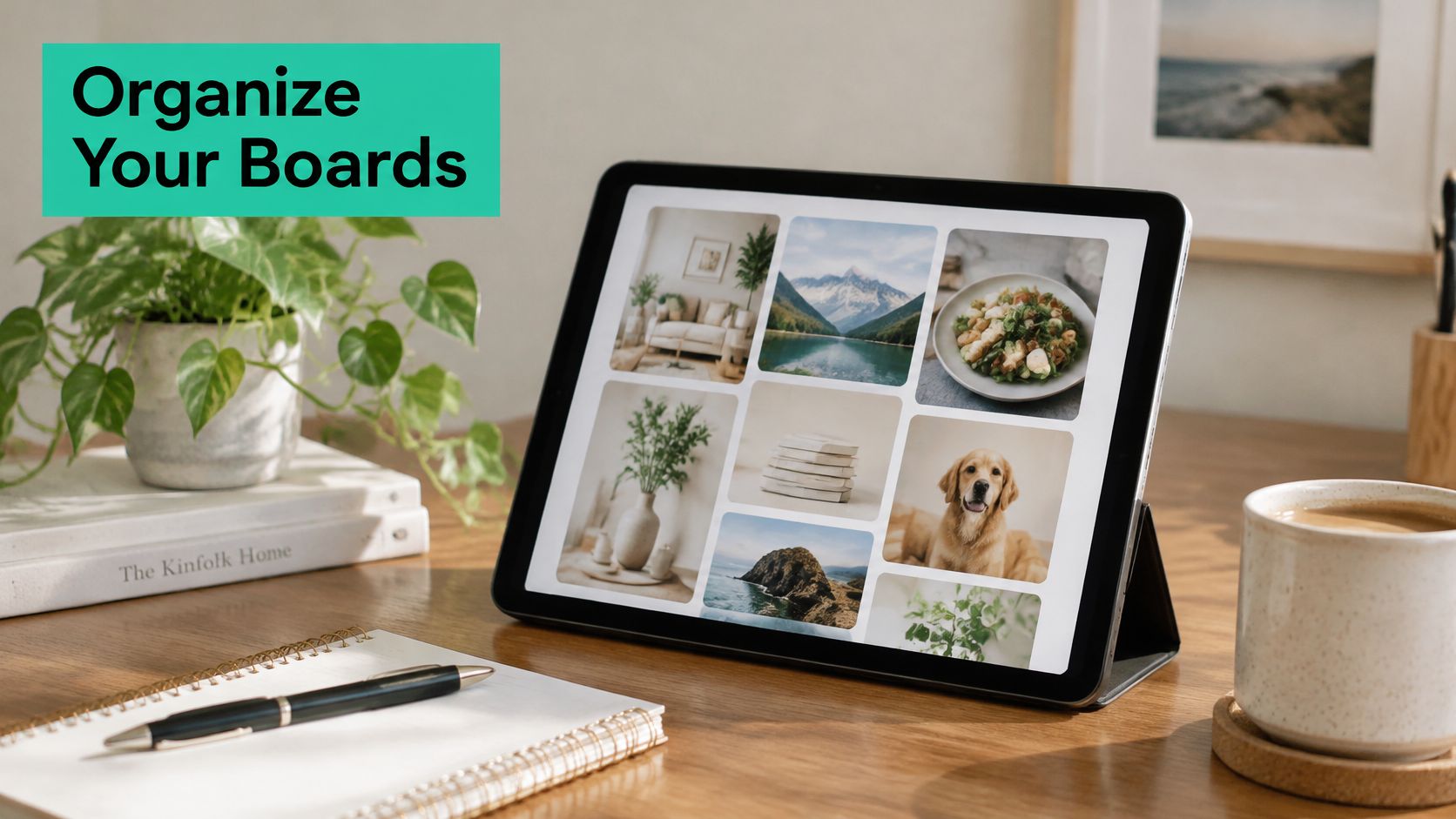
Board keywords work at a broader level than individual pin phrases. Think of the board as a recognizable category and the pins as specific examples within it.
Give the board a clear boundary
A beauty brand might use Sensitive Skin Care Routines as a board title. Its description could explain that the collection covers gentle cleansing, moisturizing, and simple routines, provided the saved content matches those topics.
Use a concise structure:
- Title: State the main subject in ordinary language.
- Description: Explain the scope and include related topics naturally.
- Contents: Save pins that belong in that category.
For interiors, the process resembles building an interior design mood board. The collection needs a coherent purpose, not merely attractive images.
Avoid creating a separate board for every long-tail variation. A board narrowly named around a particular pillow color may become difficult to maintain, while bedroom textiles leaves room for related, useful content.
The opposite mistake is a catchall board containing recipes, office furniture, and skincare. Choose the narrowest useful category you can sustain, then let individual pins provide the detail.
Review board relevance before expanding your keyword list. More phrases won't fix a profile whose categories don't match what you publish.
10. Alt Text and Descriptive Image Keywords
Alt text is an accessibility field, not spare advertising space. Describe what the image shows so someone who can't see it can understand the relevant content.
A ceramic vase with dried pampas grass on a white oak shelf is a useful description. A string of home decor, farmhouse accessories, best vase, living room inspiration isn't.
Describe the visible evidence
For a recipe pin, write something like overhead view of baked salmon with roasted broccoli on a sheet pan. If the image includes essential instructional text, communicate that information rather than describing only the decorative background.
Use this order when drafting:
- Subject: Identify the main object, person, dish, or setting.
- Relevant details: Add material, color, arrangement, or action when useful.
- Essential message: Include important information conveyed by the graphic.
A relevant keyword may appear naturally because it names the subject. It doesn't need to be inserted separately.
Don't add attributes the viewer couldn't verify. A photograph may show a wooden shelf, but it may not establish the wood species. Likewise, a meal image doesn't establish its nutritional properties.
Keep alt text distinct from the pin description. The description can explain benefits and invite a click; alt text should help someone understand the image.
Write alt text for the person who needs the description, not for an imagined keyword counter.
Review generated descriptions against the actual creative, especially when templates combine product photography, text overlays, and decorative elements. Accuracy matters more than exact-match repetition.
Pinterest Keyword Types at a Glance
| Keyword Type | Best Placement | Search Intent | Effort Level |
|---|---|---|---|
| Long-Tail Keyword Phrases | Pin titles, descriptions, and board names | Specific, high-intent purchase or project research | Medium: find and target multiple variations |
| Pinterest Search Autocomplete Suggestions | Pin topics, titles, and descriptions | Discover existing searches and phrasing | Low: gather suggestions; verify demand |
| Pinterest Trends Keywords | Seasonal content calendars and pin titles | Timely and trend-driven discovery | Medium: monitor trends and publish ahead |
| Product Attribute Keywords | Product pin titles and descriptions | Specific, high-intent shopping | Low: use accurate product details |
| Problem and Solution Keywords | Tutorial, guide, and comparison pins | Solve a specific user problem | Medium: create content that delivers the solution |
| Style and Aesthetic Keywords | Pin titles, descriptions, and visual templates | Inspiration and style discovery | Medium: pair specific style terms with strong imagery |
| Occasion and Event Keywords | Seasonal pins, gift guides, and collections | Plan for an event, holiday, or activity | Medium: research timing and publish in advance |
| Recipe and Ingredient Keywords | Recipe pin titles, descriptions, and visuals | Find recipes by dish, ingredient, or dietary need | Medium: provide tested content and relevant visuals |
| Board Title and Board Description Keywords | Board titles and descriptions | Browse and discover content by topic | Low: organize boards with clear, relevant terms |
| Alt Text and Descriptive Image Keywords | Pin image alt text | Understand image content and improve accessibility | Medium: write accurate, image-specific descriptions |
Turn This Pinterest Keyword List Into a Publishing Routine
A useful Pinterest keyword list connects a phrase to a destination and a publishing decision. It shouldn't become a larger pile of words every time you research a topic.
Start by auditing your current pins against these keyword types. Identify whether each pin primarily serves product discovery, inspiration, instruction, or event planning, then check whether the title, image, and landing page agree.
Choose the categories you can serve well
Pick the categories that best match your catalog or content library. An apparel shop might prioritize attributes and occasions; a home organization publisher might start with long-tail phrases and problem-solution searches.
Create a working sheet with clear fields:
- Search phrase: The wording you intend to target.
- Intent: What the searcher wants to accomplish.
- Destination: The product, collection, recipe, or guide that fulfills it.
- Placement: Where the phrase belongs in the title, description, or board structure.
- Timing: Whether the topic is evergreen, seasonal, or dependent on current interest.
- Creative angle: What the image must demonstrate.
Batch pins around those decisions rather than producing a collection of nearly identical creatives. Change the angle when the intent changes, and preserve consistency when the same product appears in different contexts.
Automate production, not editorial responsibility
Pin Generator is an official Pinterest partner. Our Keyword Research tool helps surface high-performing phrases and trending topics, while Automatic SEO researches keywords for each batch.
Our AI writes keyword-aligned titles, descriptions, alt text, and board choices for each pin. Combined with reusable templates, connected content sources, and scheduling, that lets you turn a structured keyword plan into a repeatable production workflow.
You still need to check the promise. Review product attributes, dietary labels, seasonal availability, image accuracy, and destination relevance before publishing.
Use Pinterest Analytics to compare impressions, saves, and outbound clicks by keyword family. Saves can help you understand planning interest; outbound clicks show whether people want to continue to your site, and conversion tracking helps assess the business result.
Don't abandon a relevant keyword because another phrase produced more impressions. Compare pins with similar goals, inspect the creative, and check whether the destination meets expectations. Start with the strongest content you already own, build intent-specific variations, and use the results to decide what deserves another batch.
Pin Generator helps you research Pinterest keywords, create on-brand pins, and schedule publishing from your products or content. Visit Pin Generator to turn your strongest keyword categories into a reviewed, keyword-driven batch of pins today.